Vacuum Accessories
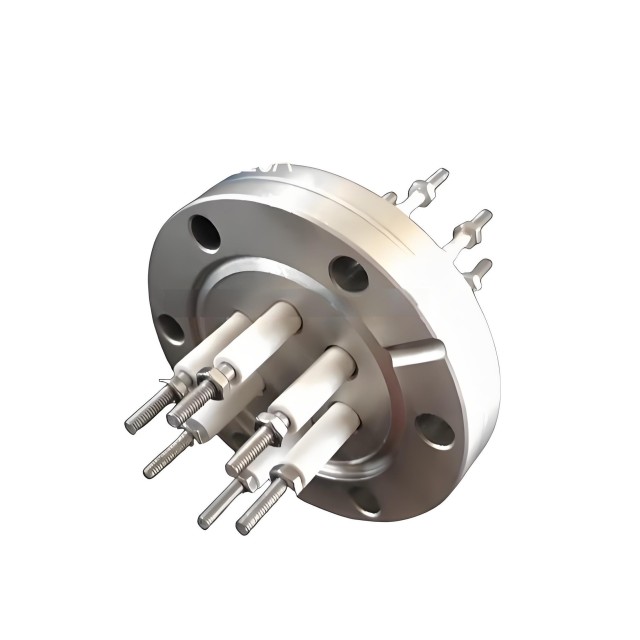
CF KF Flange Vacuum Electrode Feedthrough Lead Sealing Assembly for Vacuum Systems
Item Number : KT-VA08
Price varies based on specs and customizations
- Flange specifications
- CF16, CF25, CF40, CF63, CF100, KF16, KF25, KF40, KF50, KF63 (customizable)
- Lead length
- 100mm~1000mm (customizable)

Shipping:
Contact us to get shipping details Enjoy On-time Dispatch Guarantee.
Why Choose Us
Easy ordering process, quality products, and dedicated support for your business success.
Product Application
The CF/KF flange vacuum electrode feedthrough lead sealing assembly is an essential component in various vacuum systems, designed to connect electrodes to external circuits while maintaining the integrity of the vacuum environment. This assembly is widely utilized in industries such as vacuum coating, vacuum smelting, and vacuum heat treatment. In vacuum coating equipment, it ensures the precise control of electrode connections, facilitating the deposition of thin films with high accuracy. Vacuum smelting equipment benefits from its high vacuum sealing capabilities, which are crucial for maintaining the purity of the metal during the smelting process. Similarly, in vacuum heat treatment, this assembly supports the efficient transfer of electrical signals without compromising the vacuum seal, thereby optimizing the treatment conditions for materials. Additionally, it finds applications in vacuum electronic devices and other areas where vacuum-sealed electrode connections are required.
Product Feature
The CF/KF flange vacuum electrode feedthrough lead sealing assembly boasts several key features that make it a superior choice for vacuum systems:
-
High Vacuum Sealing: Utilizing special ceramic or metal sealing technology, this assembly ensures that the vacuum sealing performance reaches an exceptional level, typically above 10^-8 Pa. This high level of sealing is critical for maintaining the integrity of the vacuum environment.
-
Excellent Conductivity: The lead material is crafted from high-purity oxygen-free copper or silver-plated copper, offering superior conductivity with minimal resistivity. This ensures efficient transfer of electrical signals without significant energy loss.
-
High Temperature and High Pressure Resistance: The sealing material is engineered to withstand high temperatures and pressures, allowing the assembly to operate stably for extended periods in demanding high-temperature vacuum environments.
-
Multiple Specifications Available: A wide range of CF/KF flange specifications and lead lengths are available, catering to the diverse needs of different vacuum systems. Common flange specifications include CF16, CF25, CF40, CF63, CF100, KF16, KF25, KF40, KF50, and KF63, with customizable options to suit specific requirements.
-
Easy Installation: The assembly features a well-thought-out structural design, facilitating quick and hassle-free installation. Its ease of maintenance further enhances its practicality in real-world applications.
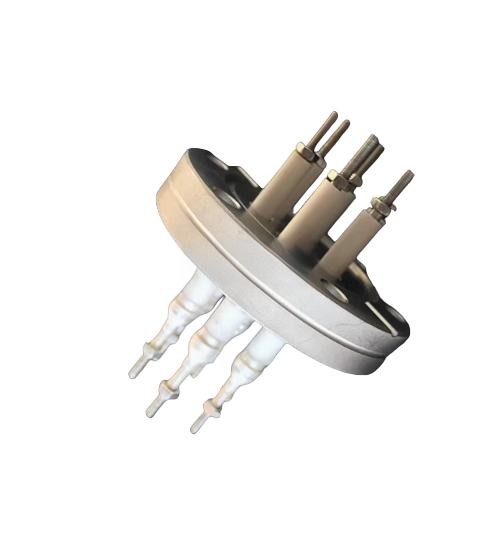
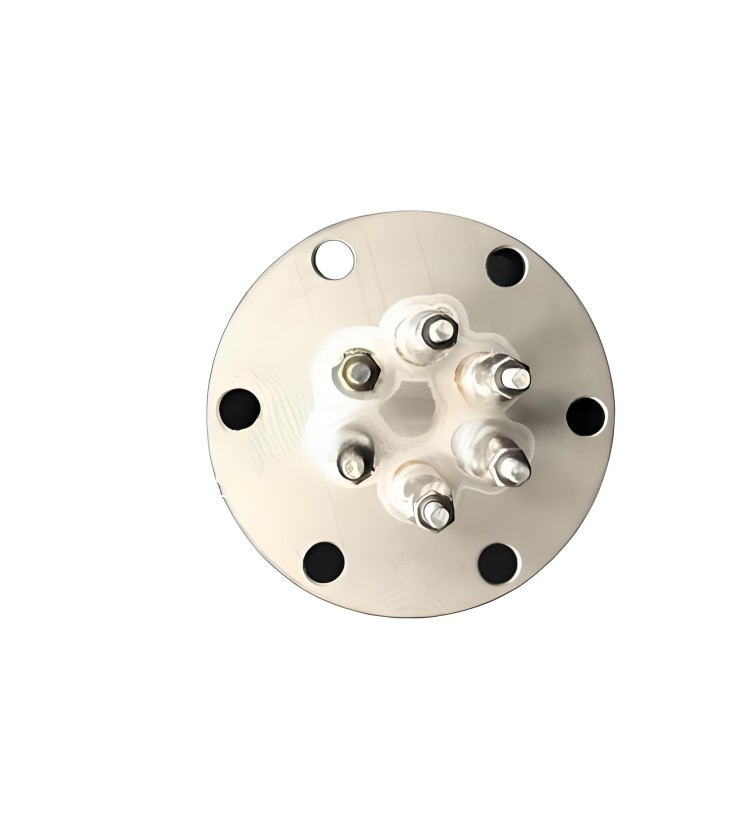
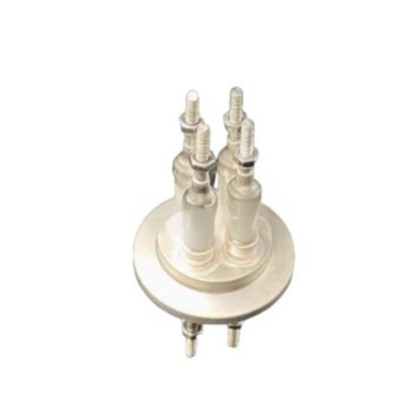
Detail & Parts

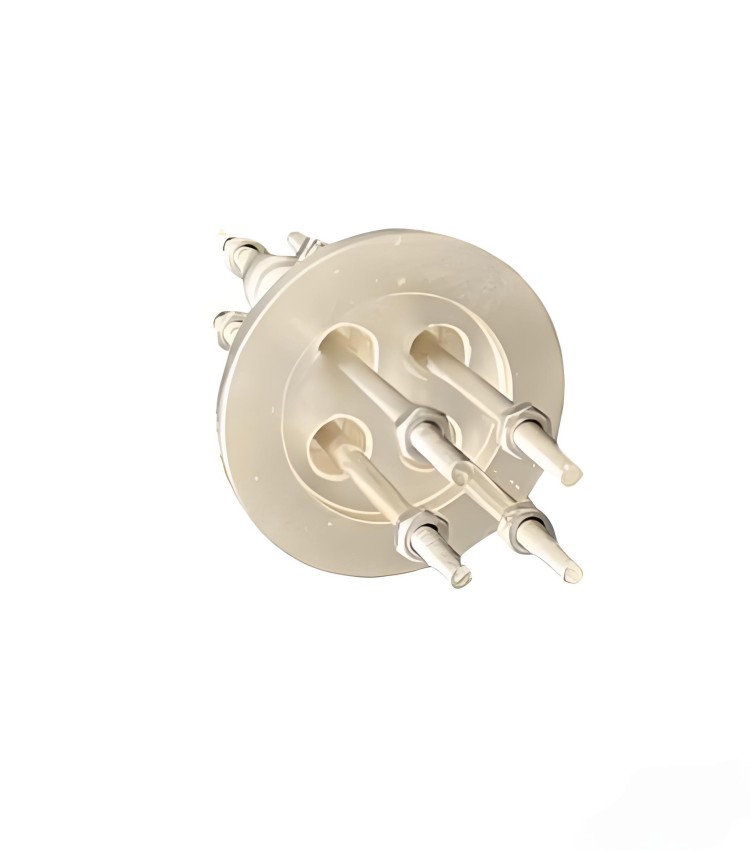
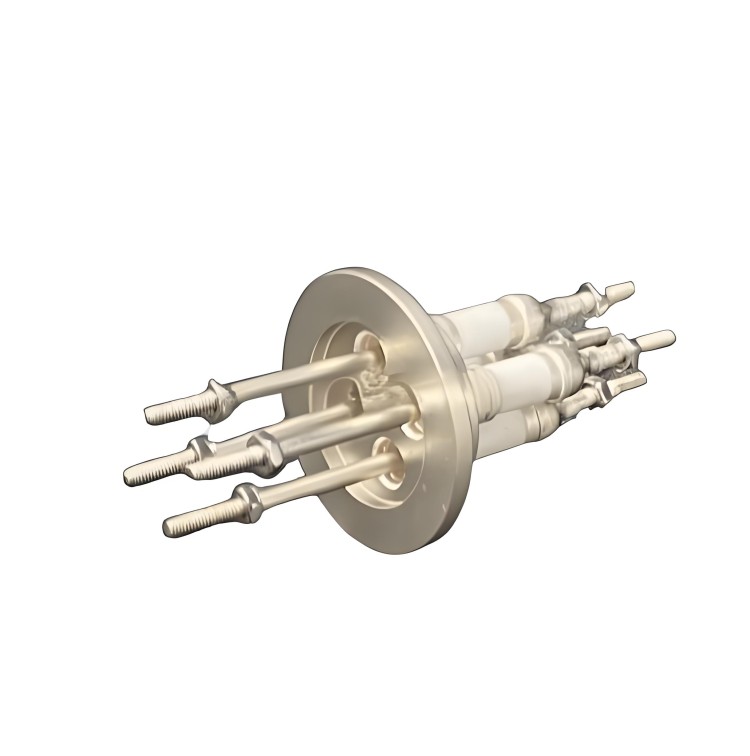
Working Principle
The CF/KF flange vacuum electrode feedthrough lead sealing assembly operates on the principle of maintaining a high vacuum environment while securely connecting electrodes to external circuits. The assembly employs advanced sealing technologies, such as ceramic or metal seals, to achieve ultra-high vacuum levels (above 10^-8 Pa). These seals are designed to withstand high temperatures and pressures, ensuring long-term stability in demanding environments.
The lead material, made from high-purity oxygen-free copper or silver-plated copper, ensures minimal electrical resistance, facilitating efficient signal transfer. The assembly's modular design allows for various flange sizes and lead lengths, enabling customization to meet specific system requirements. During installation, the assembly's well-designed structure ensures that it can be quickly and easily integrated into existing systems, with minimal disruption to the vacuum environment.
Product Advantage
The CF/KF flange vacuum electrode feedthrough lead sealing assembly offers several compelling advantages:
-
Professional Customization: The assembly can be tailored to meet specific customer needs, with customizable options for flange specifications, lead materials, and lengths. This flexibility ensures that the product perfectly aligns with the requirements of diverse vacuum systems.
-
Quality Assurance: Crafted from high-quality raw materials and manufactured using advanced production processes, the assembly delivers stable and reliable performance. This commitment to quality ensures that the product can withstand the rigorous demands of various industrial applications.
-
Reasonable Price: Despite its high performance and durability, the assembly is offered at competitive prices, providing excellent value for money. This cost-effectiveness makes it an attractive option for businesses looking to optimize their equipment investments.
In summary, the CF/KF flange vacuum electrode feedthrough lead sealing assembly stands out for its superior sealing capabilities, excellent conductivity, high temperature and pressure resistance, and customizable options, making it an ideal choice for a wide range of vacuum system applications.
Technical specifications
| Parameter Description | Options / Specifications |
|---|---|
| Flange specifications | CF16, CF25, CF40, CF63, CF100, KF16, KF25, KF40, KF50, KF63 (customizable) |
| Lead length | 100mm, 200mm, 300mm, 500mm, 1000mm (customizable) |
| Maximum operating temperature | 400°C (customizable) |
| Maximum operating pressure | 10^-8 Pa |
| Sealing material | Ceramic, metal |
Designed for You
KinTek provide deep custom made service and equipment to worldwide customers, our specialized teamwork and rich experienced engineers are capable to undertake the custom tailoring hardware and software equipment requirements, and help our customer to build up the exclusive and personalized equipment and solution!
Would you please drop your ideas to us, our engineers are ready for you now!
Trusted by Industry Leaders

FAQ
What Is An Electrode In Electrochemistry?
What Are The 3 Electrodes In Electrochemistry?
What Are The Different Types Of Electrochemical Electrodes?
What Materials Are Commonly Used For Electrochemical Electrodes?
What Factors Should Be Considered When Selecting An Electrochemical Electrode?
How Can Electrochemical Electrodes Be Used In Various Applications?
REQUEST A QUOTE
Our professional team will reply to you within one business day. Please feel free to contact us!
Related Products

Ultra-Vacuum Electrode Feedthrough Connector Flange Power Electrode Lead for High-Precision Applications
Discover the Ultra-Vacuum Electrode Feedthrough Connector Flange, perfect for high-precision applications. Ensure reliable connections in ultra-vacuum environments with advanced sealing and conductive technology.

KF/ISO/CF Ultra-High Vacuum Stainless Steel Flange Pipe/Straight Pipe/Tee/Cross
Discover KF/ISO/CF ultra-high vacuum stainless steel flange pipe systems, engineered for advanced applications. Ideal for laboratory, industrial, semiconductor, aerospace, and research needs.

Ultra-High Vacuum Flange Aviation Plug Glass Sintered Airtight Circular Connector for KF ISO CF
Discover the Ultra-High Vacuum CF Knife-Edge Flange Aviation Plug, engineered for superior airtightness and durability in aerospace and semiconductor applications.
KF Ultra-High Vacuum Observation Window Stainless Steel Flange Sapphire Glass Sight Glass
Discover the KF Ultra-High Vacuum Observation Window, featuring sapphire glass and stainless steel flange for clear, reliable observation in ultra-high vacuum environments. Ideal for semiconductor, vacuum coating, and scientific research applications

KF ISO Stainless Steel Vacuum Flange Blind Plate for High Vacuum Systems
Discover KF/ISO stainless steel vacuum flange blind plates, ideal for high vacuum systems in semiconductor, photovoltaic, and research labs. High-quality materials, efficient sealing, and easy installation.<|end▁of▁sentence|>
CF Ultra-High Vacuum Observation Window Window Flange High Borosilicate Glass Sight Glass
Discover CF ultra-high vacuum observation window flanges with high borosilicate glass, perfect for semiconductor manufacturing, vacuum coating, and optical instruments. Clear observation, durable design, easy installation.
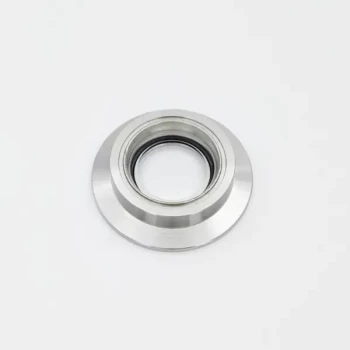
KF Ultra-High Vacuum Observation Window 304 Stainless Steel Flange High Borosilicate Glass Sight Glass
Discover KF Ultra-High Vacuum Observation Window: 304 Stainless Steel Flange & High Borosilicate Glass Sight Glass, Ideal for precise observation in ultra-high vacuum environments.
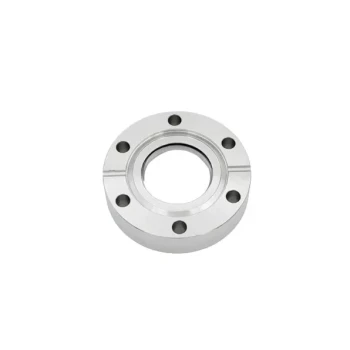
CF Ultra-High Vacuum Observation Window Stainless Steel Flange Sapphire Glass Sight Glass
Discover CF ultra-high vacuum observation windows with sapphire glass and stainless steel flanges. Ideal for semiconductor manufacturing, vacuum coating, and more. Clear observation, precise control.

Reference Electrode Calomel Silver Chloride Mercury Sulfate for Laboratory Use
Find high-quality reference electrodes for electrochemical experiments with complete specifications. Our models offer resistance to acid and alkali, durability, and safety, with customization options available to meet your specific needs.

Vacuum Arc Induction Melting Furnace
Discover the power of Vacuum Arc Furnace for melting active & refractory metals. High-speed, remarkable degassing effect, and free of contamination. Learn more now!

Electrolytic Electrochemical Cell Gas Diffusion Liquid Flow Reaction Cell
Looking for a high-quality gas diffusion electrolysis cell? Our liquid flow reaction cell boasts exceptional corrosion resistance and complete specifications, with customizable options available to suit your needs. Contact us today!
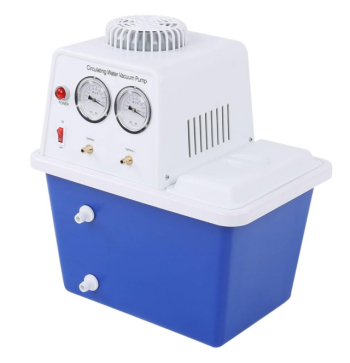
Circulating Water Vacuum Pump for Laboratory and Industrial Use
Efficient circulating water vacuum pump for labs - oil-free, corrosion-resistant, quiet operation. Multiple models available. Get yours now!
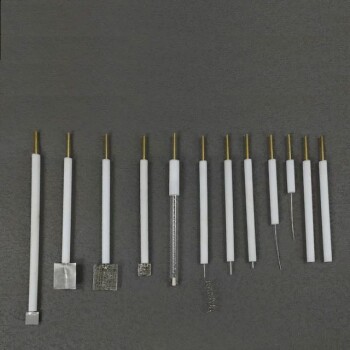
Platinum Auxiliary Electrode for Laboratory Use
Optimize your electrochemical experiments with our Platinum Auxiliary Electrode. Our high-quality, customizable models are safe and durable. Upgrade today!
Related Articles

The Architecture of Emptiness: Why Vacuum Level is a Decision, Not Just a Number
Vacuum levels define material purity. We explore the engineering trade-offs between rough vacuum and ultra-high vacuum, and how to choose the right system.
Lessons Learned from a Laboratory Vacuum Pump Oil Change Fire Incident
A detailed account of a fire incident during a vacuum pump oil change, highlighting the importance of proper maintenance and safety procedures.
Introduction to Common Laboratory Vacuum Pumps
An overview of various vacuum pumps used in laboratories, including molecular and rotary vane pumps.
Optimized Selection of Vacuum Pumps for Object Adsorption
Guidelines for selecting miniature vacuum pumps considering theoretical calculations, practical flow, and safety factors.
Electrode Fixture Guide: Types, Design, and Applications
Discover the comprehensive guide to electrode fixtures, covering various types, design considerations, and their indispensable role in industries like electroplating, welding, and electrochemical cells.
Why Your High-Strength Brazed Joints Are Failing—And How to Fix It Permanently
Tired of inconsistent, weak, or failed brazed joints? Discover the invisible root cause of failure and learn how vacuum brazing provides a permanent solution.
Selecting Vacuum Coating Materials: Key Factors and Considerations
Guidelines on choosing the right vacuum coating materials based on application, material properties, deposition methods, economy, substrate compatibility, and safety.
Application of Vacuum Coating on Architectural Glass
An in-depth look at the methods and benefits of vacuum coating on architectural glass, focusing on energy efficiency, aesthetics, and durability.
Vacuum Coating Technology: Development and Application
Explores the evolution, methods, and applications of vacuum coating technology, focusing on PVD and its impact on industrial tools and molds.
A Comprehensive Guide to Vacuum Coating: Enhancing Performance and Aesthetics
Discover the world of vacuum coating, a process that creates protective and aesthetic layers on metal and plastic surfaces. Explore its types, uses, and benefits, including enhanced performance, extended lifespan, and improved aesthetics.
Electrode Materials for Rotating Ring-Disk Electrodes
Rotating ring-disk electrodes (RRDEs) are used in a wide range of applications, from fuel cells to sensors, and they require careful selection of electrode materials for optimal performance.