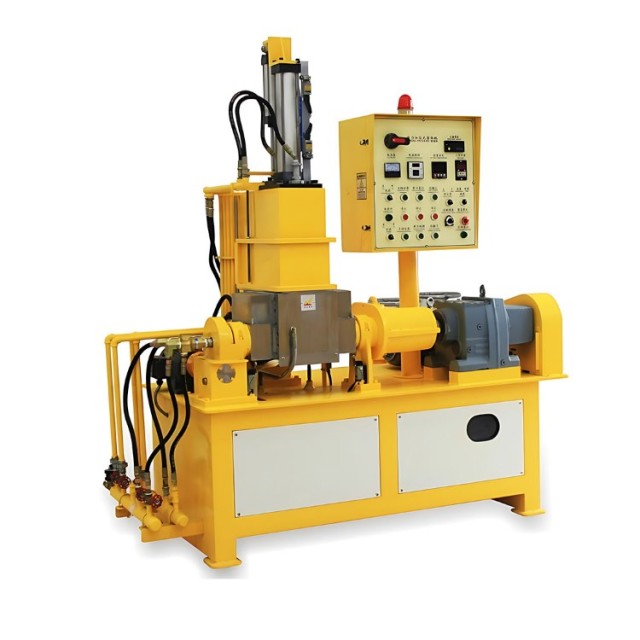
Rubber processing machine
Lab Internal Rubber Mixer Rubber Kneader Machine for Mixing and Kneading
Item Number : RPM-07
Price varies based on specs and customizations
- Mixing volume
- 1 / 3 / 5 / 10 L
- Control Mode
- Key Control/PLC Control (Optional)
- Discharge method
- Reverse discharge or open close type
- Flip angle
- 110℃
- Air pressure
- 0.5-0.8Mpa

Shipping:
Contact us to get shipping details Enjoy On-time Dispatch Guarantee.
Why Choose Us
Easy ordering process, quality products, and dedicated support for your business success.
Introduction
Lab internal rubber mixer is suitable for mixing, kneading and dispersing various chemical raw materials such as plastics, rubber, synthetic rubber, hot melt adhesive and various low-viscosity materials.
Detail & Parts


Application
- It is used for mixing, kneading and dispersing various chemical raw materials such as plastics, silicone rubber, synthetic rubber, metal powder, ceramic powder, etc.;
- New heating and cooling system, fast heating and good cooling effect;
- For metal powder and ceramic industries, the material contact part is sprayed with super wear-resistant alloy treatment to greatly improve the service life of the machine;
Principle
Two stirring blade shafts with spiral edges on the surface are enclosed in a "W"-shaped chamber. Under certain pressure and temperature conditions, the two shafts operate at a relative differential speed to stir and disperse the rubber.
Features
- The local device automatic temperature and time control system, precise operation, simple and easy, mixing up and take the best uniform dispersion effect
- The mixing tank to be dumped style, mixing shaft mechanical seal leak dry cleaning so easy to change colors easily
- Pressurized sealed mixing chamber to ensure the quality of the mixture outside and prevent environmental pollution
- Mixing tank using advanced alloy steel, wear-resistant steel surfaces are treated by surface abrasion particularly good, hard chrome plating
- Electronic control requires adjustments according to customer requirements
Technical specifications
| Model No. | RPM-07A | RPM-07B | RPM-07C | RPM-07D |
|---|---|---|---|---|
| Mixing volume | 1L | 3L | 5L | 10L |
| Control Mode | Key Control/PLC Control (Optional) | |||
| Discharge method | Reverse discharge or open close type | |||
| Drive motor | 3.75KW | 7.5KW | 11KW | 18.5KW |
| Flip motor | 0.75KW | 0.75KW | 0.75KW | 0.75KW |
| Rotor speed (front/rear) | 40/31r min(adjustable ) | |||
| Flip angle | 110℃ | |||
| Air pressure | 0.5-0.8Mpa | |||
| Volume (H*W*D) | 1800*900*1900mm | 1900*1300*1500mm | 1900*1300*1500mm | 2100*1100*2300mm |
| Weight (kg) | 850kg | 1300kg | 1500kg | 1800kg |
| Power Supply | 3∮,AC380V | |||
| ※Special models can be designed according to customers 'requirements. | ||||
Trusted by Industry Leaders

FAQ
What Is A Rubber Calender?
What Is A Lab Internal Mixer Used For?
How Does A Lab Internal Mixer Work?
What Are The Key Components Of A Lab Internal Mixer?
What Types Of Materials Can Be Mixed Using A Lab Internal Mixer?
How Does Temperature Control Work In A Lab Internal Mixer?
What Are The Benefits Of Using A Lab Internal Mixer Over Other Mixing Methods?
What Safety Precautions Should Be Taken When Operating A Lab Internal Mixer?
What Are The Main Applications Of A Rubber Calender?
What Types Of Rubber Calenders Are Available?
What Are The Advantages Of Using A Rubber Calender?
How Does A Rubber Calender Work?
REQUEST A QUOTE
Our professional team will reply to you within one business day. Please feel free to contact us!
Related Products
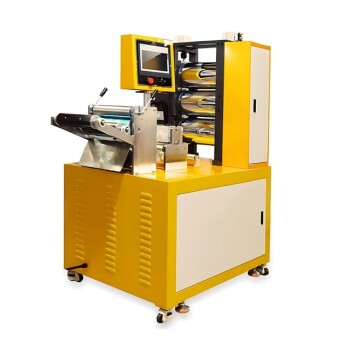
Small Lab Rubber Calendering Machine
Small lab rubber calendering machine is used for producing thin, continuous sheets of plastic or rubber materials. It is commonly employed in laboratories, small-scale production facilities, and prototyping environments to create films, coatings, and laminates with precise thickness and surface finish.
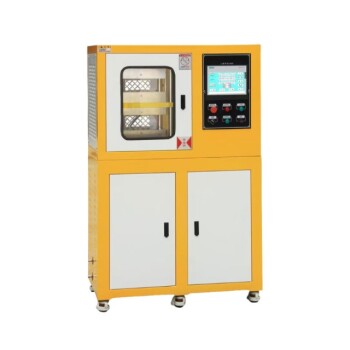
Rubber Vulcanizer Vulcanizing Machine Plate Vulcanizing Press for Lab
The Plate vulcanizing press is a kind of equipment used in the production of rubber products, mainly used for the vulcanization of rubber products. Vulcanization is a key step in rubber processing.
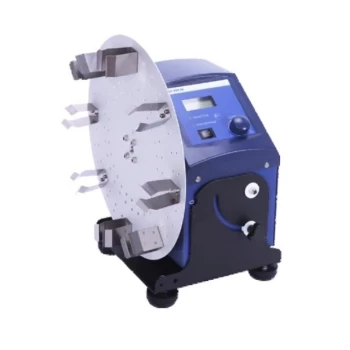
Laboratory Disc Rotary Mixer for Efficient Sample Mixing and Homogenization
Efficient Laboratory Disc Rotary Mixer for Precise Sample Mixing, Versatile for Various Applications, DC Motor and Microcomputer Control, Adjustable Speed and Angle.
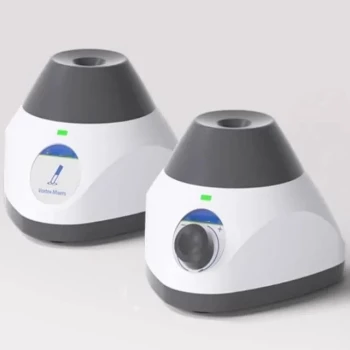
Laboratory Vortex Mixer Orbital Shaker Multifunctional Rotation Oscillation Mixer
The inching mixer is small in size, mixes quickly and thoroughly, and the liquid is in a vortex shape, which can mix all the test solutions attached to the tube wall.
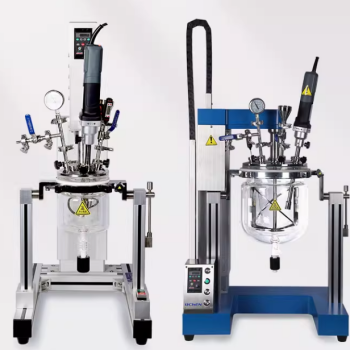
High Performance Lab Homogenizer for Pharma Cosmetics and Food R&D
Lab vacuum homogenizing emulsifier for pharmaceuticals, cosmetics & food. High-shear mixing, vacuum deaeration, scalable 1L-10L. Get expert advice now!
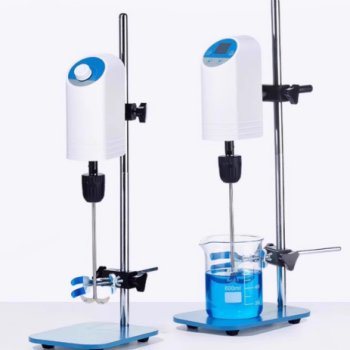
High Performance Laboratory Stirrers for Diverse Applications
Precise laboratory overhead stirrers for high-viscosity mixing. Durable, customizable, and ideal for research. Explore models now!
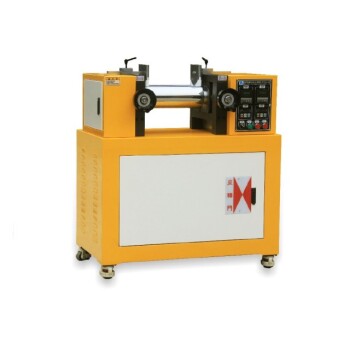
Open Type Two Roll Mixing Mill Machine for Rubber Crusher
Rubber crusher open mixing mill/Open two roller rubber mixing mill machine is suitable for mixing and dispersing rubber, plastic raw materials, pigments, masterbatches and other high molecular polymers.
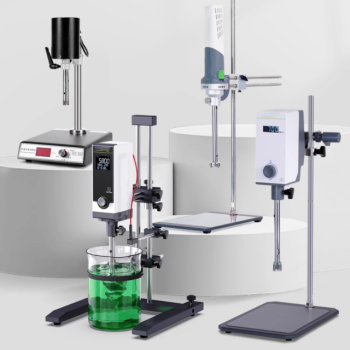
High Shear Homogenizer for Pharmaceutical and Cosmetic Applications
Enhance lab efficiency with our high-speed Laboratory Emulsifier Homogenizer for precise, stable sample processing. Ideal for pharmaceuticals & cosmetics.
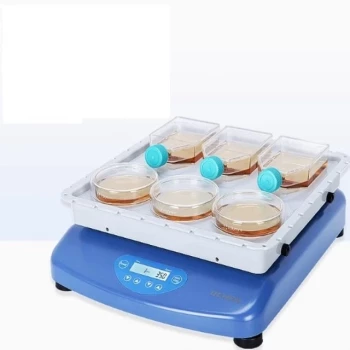
Laboratory Oscillating Orbital Shaker
Mixer-OT orbital shaker uses brushless motor, which can run for a long time. It is suitable for vibration tasks of culture dishes, flasks and beakers.

Cylindrical Press Mold with Scale for Lab
Discover precision with our Cylindrical Press Mold. Ideal for high-pressure applications, it molds various shapes and sizes, ensuring stability and uniformity. Perfect for lab use.

Lab Sterile Slapping Type Homogenizer for Tissue Mashing and Dispersing
The slapping sterile homogenizer can effectively separate the particles contained in and on the surface of solid samples, ensuring that the mixed samples in the sterile bag are fully representative.
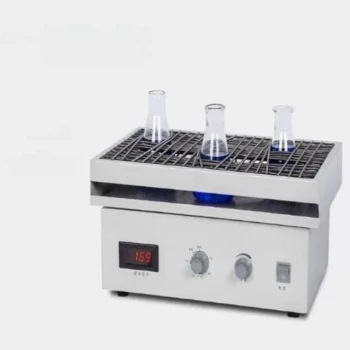
Laboratory Multifunctional Small Speed-Adjustable Horizontal Mechanical Shaker for Lab
The laboratory multifunctional speed-regulating oscillator is a constant-speed experimental equipment specially developed for modern bioengineering production units.
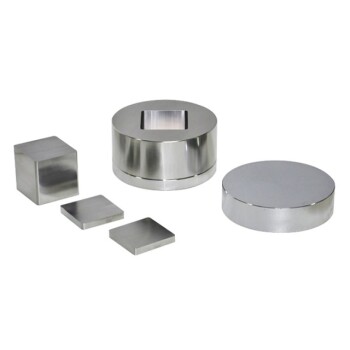
Square Lab Press Mold for Laboratory Applications
Create uniform samples easily with Square Lab Press Mold - available in various sizes. Ideal for battery, cement, ceramics, and more. Custom sizes available.
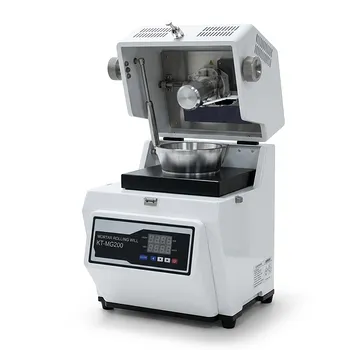
Laboratory Grinding Mill Mortar Grinder for Sample Preparation
KT-MG200 mortar grinder can be used for mixing and homogenizing powder, suspension, paste and even viscous samples. It can help users realize the ideal operation of sample preparation with more regularization and higher repeatability.
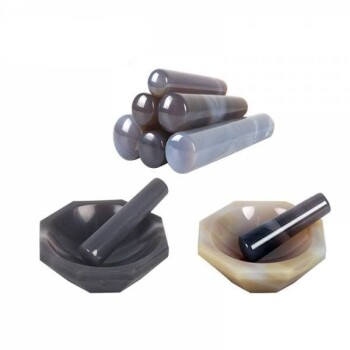
Nature Agate Mortar and Pestle for Grinding and Mixing
Get high-quality grinding results with Nature Agate Mortar and Pestle. Available in various sizes with shining polished grinding surfaces.
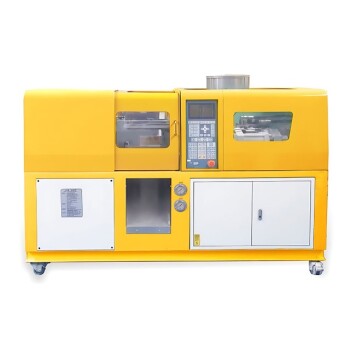
Small Injection Molding Machine for Lab Use
The small injection molding machinehas fast and stable movements; good controllability and repeatability, super energy saving; the product can be automatically dropped and formed; the machine body is low, convenient for feeding, easy to maintain, and no height restrictions on the installation site.

Laboratory Single Horizontal Jar Mill
KT-JM3000 is a mixing and grinding instrument for placing a ball milling tank with a volume of 3000ml or less. It adopts frequency conversion control to realize timing, constant speed, direction change, overload protection and other functions.

Laboratory Four-Body Horizontal Jar Mill
The four-body horizontal tank mill ball mill can be used with four horizontal ball mill tanks with a volume of 3000ml. It is mostly used for mixing and grinding laboratory samples.
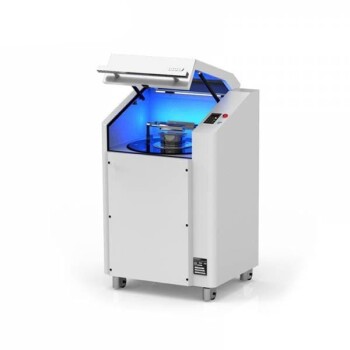
Lab Vibration Mill
Vibration Mill for Efficient Sample Preparation, Suitable for Crushing and Grinding a Variety of Materials with Analytical Precision. Supports Dry / Wet / Cryogenic Grinding and Vacuum/Inert Gas Protection.

Mini Planetary Ball Mill Machine for Laboratory Milling
Discover the KT-P400 desktop planetary ball mill, ideal for grinding and mixing small samples in the lab. Enjoy stable performance, long service life, and practicality. Functions include timing and overload protection.
Related Articles

Basic Mixing Equipment in the Laboratory
Overview of essential laboratory mixing devices and their functionalities.
Revolutionizing Lab Efficiency: The Ultimate Guide to Laboratory Sieving Machines
Discover the common sieving methods used in laboratory analysis. Learn about single sieve and sieve set sieving, dry and wet sieving, and other techniques for effective particle separation. Find out how sieving has evolved over time and its importance in quality assurance.
What is a Laboratory Crusher Used For?
Discover the uses and working mechanism of laboratory crushers. Explore various types of crushing equipment and their applications. Learn how laboratory crushers play a crucial role in scientific analysis and environmental studies.
The Three Stages of Lab Crushing: A Comprehensive Guide
Learn about the three stages of crushing: primary, secondary, and tertiary, and how they are used in sample preparation for scientific analysis. Discover the different types of crushers and their applications in reducing bulky materials into smaller particles.
Major Equipment in a Dental Laboratory
Overview of essential dental lab equipment including casting, porcelain, polishing, and more.
Basic Laboratory Culture Equipment
Overview of essential laboratory equipment for biological and microbiological research.
Unlocking the Power of Sieving Machines: Functions, Applications and Maintenance
Discover the significance of sieving machines in various industries and the essential functions they serve. Learn about the the maintenance requirements for optimal performance. Explore the benefits of using sieve shakers for automating the particle separation process.
Why Your Laminator Keeps Ruining Documents—And How to Stop It for Good
Tired of your laminator turning thermal prints or photos into black smudges? Discover the simple reason it happens and how to choose the right method.