Toggle Categories
Get Instant Support
Choose your preferred way to connect with our team
Response Time
Within 8 hours on working days, 24 hours on holidays
Bio-Chem Equipment
KinTek bio-chem equipment comprises rotary evaporators, glass and stainless steel reactors, distillation systems, circulating heaters and chillers, as well as vacuum equipment.


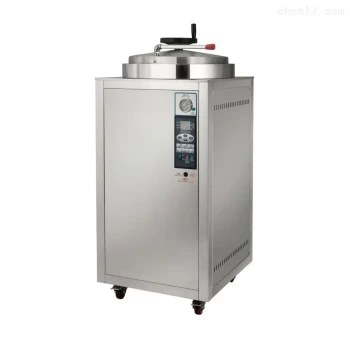
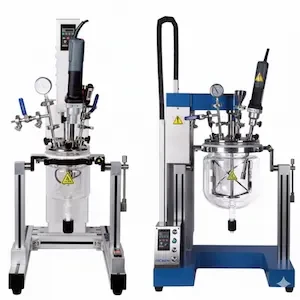
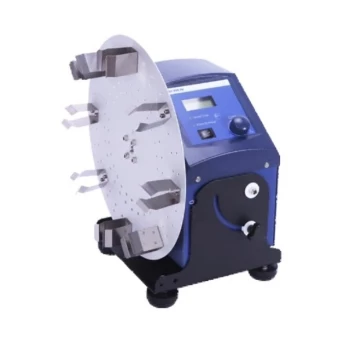
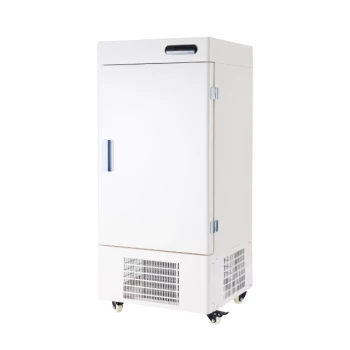
Bio-Chem Equipment

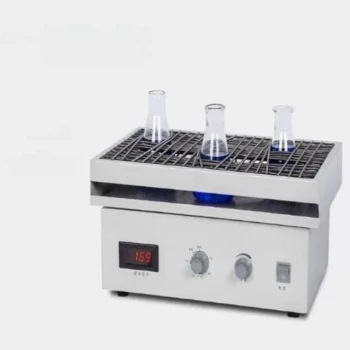
Laboratory Oscillating Orbital Shaker
Item Number: KTL-5
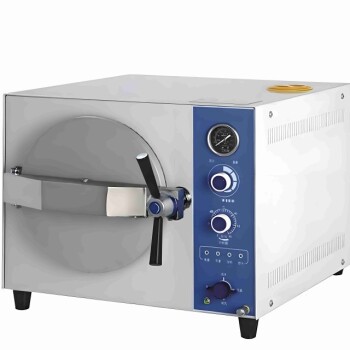
Laboratory Sterilizer Lab Autoclave Pulsating Vacuum Desktop Steam Sterilizer
Item Number: KT-B01

Desktop Fast High Pressure Laboratory Autoclave Sterilizer 16L 24L for Lab Use
Item Number: KT-B02
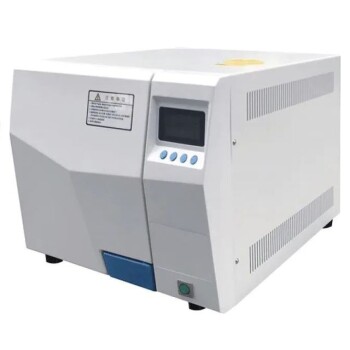
Desktop Fast Laboratory Autoclave Sterilizer 20L 24L for Lab Use
Item Number: KT-B03

Laboratory Scientific Electric Heating Blast Drying Oven
Item Number: KT-B05

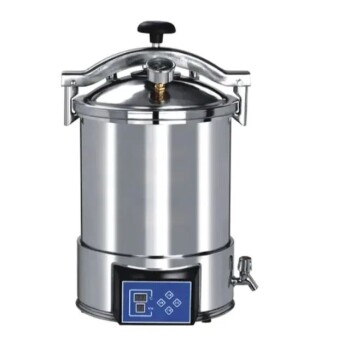
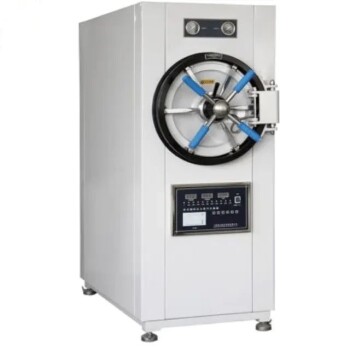
Laboratory Horizontal Autoclave Steam Sterilizer Lab Microcomputer Sterilizer
Item Number: KT-C06

Portable High Pressure Laboratory Autoclave Steam Sterilizer for Lab Use
Item Number: KT-P02

High Pressure Laboratory Autoclave Reactor for Hydrothermal Synthesis
Item Number: KR-3H
REQUEST A QUOTE
Our professional team will reply to you within one business day. Please feel free to contact us!
Related Articles

Why Your High-Strength Brazed Joints Are Failing—And How to Fix It Permanently
Tired of inconsistent, weak, or failed brazed joints? Discover the invisible root cause of failure and learn how vacuum brazing provides a permanent solution.
The Physics of Perfection: How Vacuum Heat Treatment Creates Flawless Parts
Vacuum heat treatment offers absolute environmental control, preventing oxidation and distortion to achieve superior, repeatable material properties.
Risk-Proof Your Lab: How to Choose a Vacuum Pump That Avoids Costly Failures
Learn how to choose reliable lab vacuum pumps to avoid costly failures. Assess chemical risks, throughput needs & safety for optimal performance.
How to Choose Laboratory Vacuum Pumps for Maximum Efficiency and Cost Savings
Learn how to choose the right lab vacuum pump for efficiency & cost savings. Compare oil-sealed vs. oil-free pumps & future-proof your investment.
How to Choose and Optimize Water Circulating Vacuum Pumps for Your Lab
Learn how to choose and optimize water circulating vacuum pumps for lab applications, balancing efficiency and reliability.
Water Circulating Vacuum Pumps: A Practical Guide for Laboratory Applications
Discover the benefits of water circulating vacuum pumps for labs: chemical safety, low maintenance, and explosion-proof operation. Ideal for sensitive applications.
How Vacuum Induction Melting Prevents Catastrophic Material Failures in Critical Components
Discover how Vacuum Induction Melting (VIM) prevents material failures in aerospace, nuclear, and EV components by eliminating atomic-level contamination.
How Vacuum Induction Melting Elevates High-Performance Alloy Production
Discover how Vacuum Induction Melting (VIM) enhances alloy purity, reduces defects, and optimizes costs for aerospace and energy sectors.
How Vacuum Induction Melting Ensures Unmatched Reliability in Critical Industries
Vacuum induction melting (VIM) ensures metallurgical purity, durability, and efficiency in aerospace, nuclear, and critical industries. Learn why VIM outperforms traditional methods.
How Laboratory Freeze Dryers Outperform Alternatives in Pharma, Food, Biotech & Research
Discover how lab freeze dryers outperform traditional methods in pharma, food, biotech & research—preserving potency, nutrients & integrity.
Application of Ultra-Micro Pulverization Technology in the Food Industry
Explores the benefits and applications of ultra-micro pulverization technology in enhancing food processing and nutrient absorption.
Application of Low-Temperature Pulverization Technology in the Spice Industry
Explores the benefits of low-temperature pulverization for maintaining spice quality and efficiency.
Essential Techniques in Introductory Biology: Cell Counting
A detailed guide on the process of cell counting using a Hemocytometer, including preparation, counting methods, and cleaning.
Introduction to Rotating Disc Electrodes and Common Electrochemical Applications
An overview of rotating disc electrodes and their applications in various electrochemical studies, including catalyst evaluation, battery research, and corrosion protection.
Exploring Rotating Electrode Technology in Electrochemistry
An in-depth analysis of rotating electrode technology, its applications, and its impact on electrochemical reactions under different flow conditions.
Basic Principles and Applications of Rotating Disc Electrodes
Explores the development, principles, and applications of Rotating Disc Electrodes in electrochemistry.
Choosing the Right Laboratory Vacuum Pump
Guide on selecting appropriate vacuum pumps for various laboratory applications, considering types, uses, and vacuum degree calculations.
Advantages of Laboratory Circulating Water Vacuum Pumps
Explores the benefits of using laboratory circulating water vacuum pumps over traditional methods.
The Most Frequently Used Equipment in the Synthesis Lab: The Circulating Water Vacuum Pump
Discover the often overlooked but crucial role of the circulating water vacuum pump in synthesis labs.
Laboratory Water Bath Instructions for Use
Guidelines for operating and maintaining laboratory water baths for safe and effective use.