All Questions
Is A Graphite Melting Point High Or Low? Discover Its Extreme Thermal Resilience
Graphite sublimates at 3,652°C and has an exceptionally high melting point due to its strong covalent bonds. Learn why it's ideal for high-heat applications.
Can Heat Pass Through Graphite? Harness Superior Thermal Conductivity For High-Temperature Processes
Discover why graphite is an excellent thermal conductor, not an insulator, and how it enables uniform heating in industrial furnaces.
What Is The Temperature Of The Electrode Arc? Mastering Extreme Heat From 6,000°C To 15,000°C
Learn the science behind electrode arc temperatures (6,000-15,000°C), how plasma, current, and gases affect heat, and practical applications in welding and cutting.
What Is The Difference Between Consumable And Non-Consumable Electrode In Arc Welding? Choose The Right Process For Your Project
Learn the key differences between consumable and non-consumable electrodes in welding, including speed, precision, and material applications.
What Are The Benefits Of Graphite Rods? Achieve Superior High-Temperature Performance
Discover the key benefits of graphite rods: extreme temperature resilience up to 3000°C, rapid thermal cycling, high efficiency, and uniform heating for demanding applications.
What Are The Properties Of Graphite Rods? Leverage High Conductivity For Extreme Applications
Explore the key properties of graphite rods, including exceptional thermal & electrical conductivity, chemical inertness, and low friction for industrial use.
What Uses A Graphite Rod As A Cathode? Key Applications In Electrolysis & Batteries
Learn why graphite rods are ideal cathodes in electrolysis and batteries. Discover their role in salt electrolysis and zinc-carbon cells.
What Is A Graphite Rod Used For In Smelting? The Engine Of Modern Electric Arc Furnaces
Learn how graphite rods function as electrodes in smelting, conducting extreme current to generate intense heat for efficient metal melting.
What Are The Advantages Of Graphite Electrode? Achieve Superior Thermal & Energy Efficiency
Discover the key advantages of graphite electrodes: superior thermal stability, energy efficiency, and faster production cycles for industrial applications.
Related Products
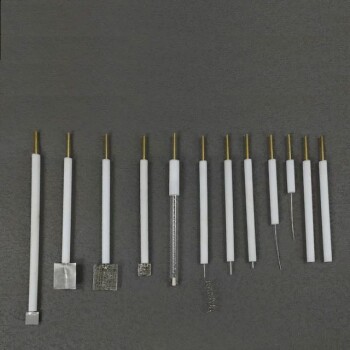
Platinum Auxiliary Electrode for Laboratory Use
$25.90
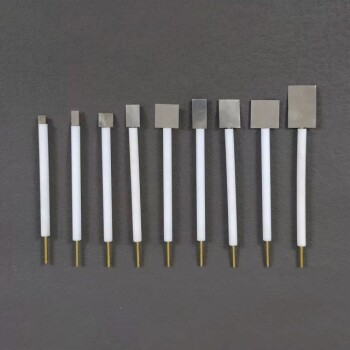
Platinum Sheet Electrode for Laboratory and Industrial Applications
$21.90
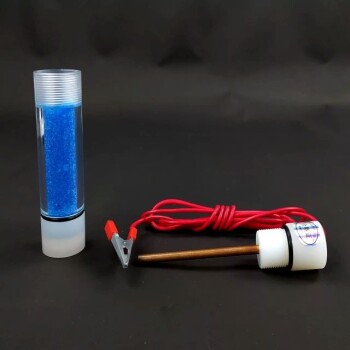
Copper Sulfate Reference Electrode for Laboratory Use
$65.00

Reference Electrode Calomel Silver Chloride Mercury Sulfate for Laboratory Use
$19.90

Laboratory Hydraulic Pellet Press for XRF KBR FTIR Lab Applications
