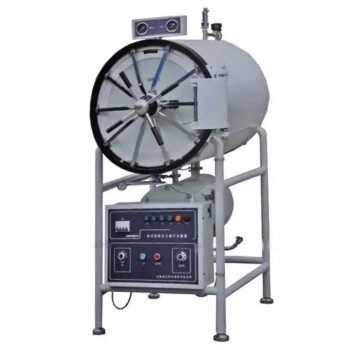
Laboratory high-pressure reactors and simulation systems evaluate coating lifespans by exposing samples to precisely controlled, extreme environments that mimic real-world industrial operations. By replicating aggressive mechanisms—such as oxidation, sulfation, or high-pressure water exposure—these systems allow researchers to measure surface degradation and mass changes over time to predict long-term durability.
Core Takeaway: These systems function as accelerated aging chambers that isolate specific corrosion variables. By strictly controlling temperature, pressure, and chemical composition, they provide the empirical data necessary to match specific protective coatings to unique fuel types or reactor environments.
Replicating Aggressive Chemical Environments
To evaluate how a coating will survive in the field, a laboratory system must recreate the specific chemical attacks present in that environment.
Simulating Biomass Combustion
In biomass boiler applications, the primary threat to coatings comes from corrosive gases and deposits. High-precision simulation systems introduce acid gases like hydrogen chloride (HCl) and sulfur dioxide (SO2) into the reaction chamber.
They also introduce alkali metal salt deposits to replicate the harsh conditions created by burning fuels such as wheat straw or eucalyptus wood.
Replicating Active Oxidation Mechanisms
These systems are designed to trigger specific degradation pathways, known as active oxidation and sulfation.
By sustaining these chemical conditions over long periods, the reactor forces the coating to demonstrate its resistance to the exact corrosive mechanisms it will face in full-scale operation.
High-Pressure Water Conditions
For applications like nuclear power, the simulation shifts from gases to hydrothermal conditions. High-pressure autoclaves can simulate a Pressurized Water Reactor (PWR) primary circuit by maintaining water at extreme parameters, such as 360 °C and 15.4 MPa.
This tests the coating's ability to withstand hydrothermal corrosion and pressure-induced stress without delaminating or dissolving.
Quantifying Coating Performance
Simulating the environment is only half the process; the system must also facilitate precise measurement of how the material reacts.
Monitoring Mass Change
One of the most direct indicators of coating failure or success is a change in mass. Systems typically run for set durations, such as a 200-hour cycle, after which the sample is weighed.
Significant mass gain often indicates oxide scale formation, while mass loss suggests material dissolution or erosion.
Analyzing Microstructure Evolution
High-precision systems allow for the examination of the surface microstructure before and after exposure.
Researchers look for cracks, porosity changes, or phase transformations in the coating layer. This visual evidence helps determine if the internal structure of the coating is breaking down, even if the mass remains relatively stable.
Electrochemical Kinetics
In specific setups like three-electrode electrolytic cells, the system evaluates the electrochemical kinetics of the corrosion process.
By measuring the corrosion potential (Ecorr) and corrosion current density (icorr), researchers can quantitatively assess how effectively a coating—such as a hydrotalcite-like (HTC) layer—inhibits the corrosion reaction on the substrate.
Understanding the Constraints
While these systems are powerful, relying on them requires an understanding of their limitations.
The Trade-off of Accelerated Testing
Laboratory simulations often compress years of wear into hundreds of hours. While this provides rapid data, it may occasionally miss slow-acting degradation mechanisms that only appear after extremely long durations.
Complexity of Variable Isolation
In a real industrial setting, temperature fluctuations, mechanical vibrations, and chemical spikes happen randomly.
Laboratory reactors generally maintain constant parameters. This isolation is excellent for scientific control but may not fully capture the chaotic synergy of multiple failure modes occurring simultaneously.
Making the Right Choice for Your Goal
To get the most value from these evaluation systems, align the testing method with your specific operational risks.
- If your primary focus is Biomass or Combustion: Prioritize systems that can introduce specific acid gases (HCl, SO2) and alkali salts to test against oxidation and sulfation.
- If your primary focus is Nuclear or High-Pressure Fluids: Ensure your equipment can maintain stable high-temperature (360 °C+) and high-pressure (15 MPa+) water conditions for extended cycles.
- If your primary focus is Electrochemical Stability: Use potentiometric polarization measurements to obtain quantitative data on corrosion current density and potential shifts.
Select the simulation system that most accurately reproduces the primary failure mechanism of your intended application.
Summary Table:
| Feature | Simulation Parameter | Key Measurement |
|---|---|---|
| Biomass Combustion | Acid gases (HCl, SO2) & alkali salts | Mass change & oxide scale formation |
| Hydrothermal (PWR) | High Pressure (15.4 MPa) & Temp (360°C) | Hydrothermal corrosion & delamination |
| Electrochemical | Three-electrode electrolytic cell setup | Corrosion potential (Ecorr) & kinetics |
| Structural Analysis | Accelerated aging cycles (e.g., 200h) | Microstructure evolution & porosity |
Secure Your Material Longevity with KINTEK Solutions
Don't leave coating performance to chance. KINTEK provides state-of-the-art laboratory equipment designed to replicate the world's harshest industrial conditions. From high-temperature high-pressure reactors and autoclaves to specialized electrolytic cells and electrodes, our precision systems empower researchers to quantify corrosion resistance with absolute accuracy.
Whether you are developing coatings for biomass boilers, nuclear reactors, or chemical processing, KINTEK offers a comprehensive range of:
- High-Temperature Furnaces (Muffle, Tube, Vacuum, and CVD)
- High-Pressure Reactors & Autoclaves for hydrothermal simulation
- Electrochemical & Battery Research Tools
- Precision Consumables (Ceramics, Crucibles, and PTFE products)
Ready to elevate your material testing? Contact our technical experts today to find the perfect simulation system for your laboratory.
References
- María Luisa Martell Contreras, A. Bahillo. Prediction of biomass corrosiveness over different coatings in fluidized bed combustion. DOI: 10.1007/s40095-022-00544-y
This article is also based on technical information from Kintek Solution Knowledge Base .
Related Products
- Customizable Laboratory High Temperature High Pressure Reactors for Diverse Scientific Applications
- Stainless High Pressure Autoclave Reactor Laboratory Pressure Reactor
- High Pressure Laboratory Autoclave Reactor for Hydrothermal Synthesis
- Mini SS High Pressure Autoclave Reactor for Laboratory Use
- Customizable High Pressure Reactors for Advanced Scientific and Industrial Applications
People Also Ask
- How do high-pressure and high-temperature reactors ensure the effective treatment of lignocellulosic wastewater in WAO?
- What equipment is required for high-pressure high-temperature reactions? Master Extreme Chemistry Safely
- How do you control high pressure in a reactor? A Guide to Safe & Stable Operation
- How does initial oxygen pressure affect the wet oxidation of pharmaceutical sludge? Master Your Oxidation Depth
- Why is argon better than nitrogen for inert atmosphere? Ensure Absolute Reactivity & Stability