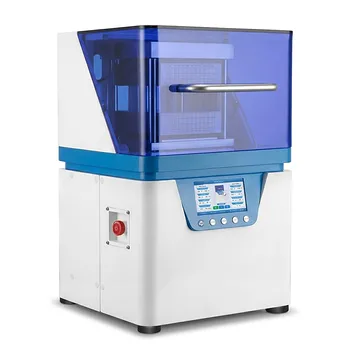
The high-pressure hydrothermal reactor serves as the essential containment system required to transition water into a subcritical state for biomass modification. By maintaining high internal pressures, the reactor prevents water from vaporizing at elevated temperatures, typically between 150°C and 240°C, allowing it to act as both a powerful solvent and a chemical reactant. This environment breaks the weak chemical bonds within cellulose and hemicellulose, introducing critical structural defects and functional groups that facilitate downstream processing.
A high-pressure hydrothermal reactor creates a controlled, sealed environment where subcritical water drives the hydrolysis, dehydration, and structural disruption of biomass powders. This process transforms raw organic material into a reactive precursor or high-energy hydrochar by altering its chemical composition and physical porosity.
Creating the Subcritical Water Environment
Preventing Phase Change Through Pressure
The primary role of the reactor is to provide a sealed, high-pressure environment that keeps water in a liquid state well above its standard boiling point. By reaching pressures often between 1.38 and 4.83 MPa, the equipment prevents vaporization, ensuring the biomass remains submerged in a high-energy fluid.
Enhancing Solvation and Penetration
In this pressurized state, the density and dielectric constant of water change significantly, allowing it to behave more like a non-polar solvent. This enables the water molecules to effectively penetrate the dense wood cell walls and the lignocellulosic matrix of biomass powders.
Increasing Reactivity via Ion Products
The reactor environment naturally increases the ion product of water, causing it to function as an acid-base catalytic medium. This allows for the effective hydrolysis of polysaccharides into monosaccharides without the need for adding external chemical catalysts.
Chemical and Structural Transformation
Breaking Cellulose Bonds
The hydrothermal energy generated within the reactor is used to break the weak chemical bonds in cellulose. This fragmentation converts complex polymers into smaller molecular fragments, making the biomass more manageable for subsequent chemical or biological steps.
Introducing Structural Defects
A critical contribution of the reactor is the introduction of oxygen-containing functional groups and structural defects onto the biomass surface. These defect sites are essential for achieving uniform adsorption of activators, which ensures a more homogeneous activation in later stages of material synthesis.
Driving Decarboxylation and Dehydration
Through the constant application of heat and pressure, the reactor facilitates dehydration and decarboxylation reactions. These processes remove oxygen and hydrogen from the biomass, significantly increasing the carbon density and the overall heating value of the resulting hydrochar.
Physical Morphology and Accessibility
Disrupting the Lignocellulosic Matrix
The high-pressure environment facilitates the dissolution of minerals and the degradation of hemicellulose. By removing these components, the reactor alters the chemical structure of the biomass, making the internal cellulose more accessible to enzymes or chemical reagents.
Increasing Surface Area via Pressure Relief
Some high-pressure reactors utilize an integrated pressure relief system to achieve a "steam explosion" effect. The instantaneous release of pressure causes water inside the biomass to expand rapidly, mechanically disrupting the dense structure and dramatically increasing the material's permeability and surface area.
Understanding the Trade-offs
Energy Intensity vs. Chemical Savings
While hydrothermal pretreatment eliminates the need for expensive and corrosive chemical catalysts, it requires significant energy to maintain high temperatures and pressures. The cost-benefit analysis often depends on whether the energy saved in downstream processing offsets the reactor's operational costs.
Risk of Over-Degradation
Precise control within the reactor is vital, as excessive residence time or temperature can lead to over-degradation of the biomass. This may result in the formation of inhibitory compounds, such as furfurals, which can negatively impact subsequent fermentation or enzymatic processes.
Material Corrosion and Maintenance
The combination of high pressure, high temperature, and the acidic environment created by subcritical water can lead to accelerated corrosion of the reactor liner. Choosing high-grade materials like stainless steel or specialized alloys is necessary, which increases the initial capital expenditure.
How to Apply This to Your Project
Making the Right Choice for Your Goal
Success in biomass pretreatment depends on aligning your reactor parameters with your final product requirements.
- If your primary focus is Activated Carbon Production: Utilize the reactor to introduce maximum structural defects and oxygen groups to ensure uniform activator distribution.
- If your primary focus is Biofuel/Hydrochar Yield: Prioritize high-pressure decarboxylation at temperatures near 240°C to maximize carbon density and heating value.
- If your primary focus is Enzymatic Hydrolysis: Focus on a reactor setup with rapid pressure relief capabilities to disrupt the cellulose structure and increase surface area for enzyme access.
- If your primary focus is Mineral Removal: Use a lower-temperature hydrothermal wash (approx. 150°C) to dissolve inorganic elements while preserving the organic framework.
The high-pressure hydrothermal reactor is the definitive tool for unlocking the chemical potential of biomass by leveraging the unique catalytic and physical properties of subcritical water.
Summary Table:
| Mechanism | Key Process Change | Primary Benefit to Biomass |
|---|---|---|
| Pressure Control | Maintains water in subcritical liquid state | Enables deep penetration of the lignocellulosic matrix |
| Hydrolysis | Breaks cellulose and hemicellulose bonds | Converts complex polymers into manageable fragments |
| Surface Modification | Introduces oxygen groups and structural defects | Ensures uniform adsorption for later activation steps |
| Pressure Relief | Rapid expansion (Steam Explosion) | Dramatically increases surface area and permeability |
| Decarboxylation | Removal of oxygen and hydrogen | Increases carbon density and heating value of hydrochar |
Elevate Your Biomass Research with KINTEK
Ready to unlock the full potential of your organic materials? KINTEK specializes in high-performance laboratory equipment designed for the most demanding research environments. We provide a comprehensive range of high-temperature high-pressure reactors and autoclaves specifically engineered to handle subcritical water applications and corrosive biomass pretreatment processes.
By choosing KINTEK, you gain more than just equipment; you gain a partner dedicated to your success. Our reactors offer:
- Precision Control: Achieve exact temperature and pressure parameters for consistent hydrochar and biofuel yields.
- Material Durability: High-grade alloys and specialized liners to resist accelerated corrosion from acidic hydrothermal environments.
- Versatile Solutions: From lab-scale reactors to essential consumables like PTFE products and ceramics, we support every stage of your material synthesis.
Contact our experts today to find the perfect reactor configuration for your project and optimize your downstream processing efficiency!
References
- Huijie Li, Chunyang Lu. Constructing Interconnected Microporous Structures in Carbon by Homogeneous Activation as a Sustainable Electrode Material for High-Performance Supercapacitors. DOI: 10.3390/molecules28196851
This article is also based on technical information from Kintek Solution Knowledge Base .
Related Products
- Customizable Laboratory High Temperature High Pressure Reactors for Diverse Scientific Applications
- High Pressure Laboratory Autoclave Reactor for Hydrothermal Synthesis
- Customizable High Pressure Reactors for Advanced Scientific and Industrial Applications
- Stainless High Pressure Autoclave Reactor Laboratory Pressure Reactor
- Mini SS High Pressure Autoclave Reactor for Laboratory Use
People Also Ask
- How do high-pressure and high-temperature reactors ensure the effective treatment of lignocellulosic wastewater in WAO?
- What equipment is required for high-pressure high-temperature reactions? Master Extreme Chemistry Safely
- How do you control high pressure in a reactor? A Guide to Safe & Stable Operation
- Why is argon better than nitrogen for inert atmosphere? Ensure Absolute Reactivity & Stability
- How does initial oxygen pressure affect the wet oxidation of pharmaceutical sludge? Master Your Oxidation Depth