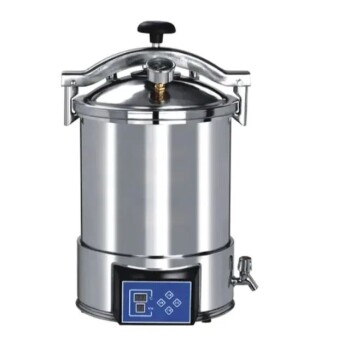
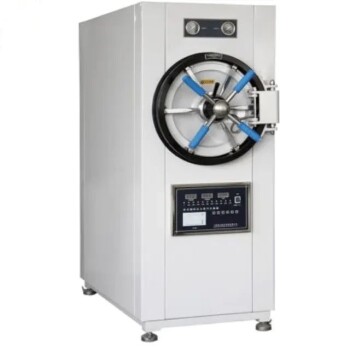
A high-pressure reactor, or autoclave, serves as the critical environment for synthesizing stable, encapsulated core-shell catalysts. By maintaining constant pressure and temperature during hydrothermal or solvothermal synthesis, the autoclave forces zeolite materials to crystallize directly onto nickel particles, creating a uniform protective shell that physically prevents degradation.
The stability of an encapsulated catalyst is defined by the quality of its outer shell. The autoclave ensures this quality by promoting directional growth, creating a rigid barrier that restricts metal sintering and blocks carbon deposition during high-stress reactions.
Creating the Protective Architecture
To understand stability, you must first understand how the autoclave dictates the catalyst's structure.
Precise Environmental Control
The synthesis of structures like Ni@HZSM-5 requires conditions that cannot be achieved in open vessels. The autoclave provides a sealed environment where pressure and temperature remain constant throughout the reaction.
Directional Growth and Crystallization
This stable environment is essential for the directional growth of zeolite molecular sieves. Instead of forming randomly in the solution, the zeolite shell crystallizes specifically around the nickel particles.
Structural Integrity
The result of this controlled crystallization is a shell with high structural integrity. This ensures the nickel core is fully encapsulated rather than partially exposed, which is the foundational requirement for long-term stability.
Mechanisms of Stabilization
Once synthesized, the specific features imparted by the autoclave directly counter the two main causes of catalyst failure: sintering and coking.
Limiting Particle Growth (Sintering)
Under high reaction temperatures, nickel particles naturally tend to aggregate and grow, leading to a loss of active surface area.
The zeolite shell formed in the autoclave acts as a physical cage. It effectively limits the growth of the nickel particles, mechanically confining them to their original size and preventing agglomeration.
Blocking Carbon Precursors (Coking)
In processes like the Dry Reforming of Methane (DRM), carbon buildup on the active metal is a common failure mode.
The autoclave process ensures the zeolite shell has a uniform pore size. These pores act as a selective sieve, allowing smaller reactant molecules to reach the nickel while physically blocking larger carbon-coking precursors from forming on the metal surface.
Understanding the Trade-offs
While the autoclave enables superior stability, it introduces specific dependencies that must be managed.
The Sensitivity of Crystallization
The "stability" discussed here is entirely dependent on the uniformity of the shell.
If the autoclave fails to maintain constant pressure or temperature, the directional growth becomes erratic. This leads to defects in the pore structure or incomplete encapsulation, rendering the "protective" shell useless against coking or sintering.
Making the Right Choice for Your Goal
The use of an autoclave is determined by the specific degradation mechanisms you are trying to avoid in your application.
- If your primary focus is preventing sintering: The autoclave is essential for creating a mechanically rigid shell that physically confines the nickel particles during high-temperature operations.
- If your primary focus is preventing coking (carbon deposition): The autoclave is critical for achieving the precise, uniform pore sizes required to sieve out large coke precursors during reactions like DRM.
The autoclave transforms the catalyst from a simple mixture into an engineered structure, using pressure and temperature to build a physical defense against chemical deactivation.
Summary Table:
| Mechanism | Role of High-Pressure Reactor | Benefit to Catalyst Stability |
|---|---|---|
| Crystallization | Maintains constant T and P for directional growth | Ensures uniform and defect-free shell architecture |
| Sintering Control | Creates a rigid mechanical cage (e.g., zeolite) | Confines nickel particles to prevent agglomeration |
| Coking Prevention | Dictates precise and uniform pore sizing | Blocks carbon precursors while allowing reactant access |
| Structural Integrity | Sealed environment prevents erratic growth | Guarantees full encapsulation of the active metal core |
Elevate Your Catalyst Research with KINTEK Precision Engineering
Unlock the full potential of your material synthesis with KINTEK’s high-temperature high-pressure reactors and autoclaves. Specifically designed for the rigorous demands of core-shell catalyst development, our reactors provide the precise environmental control necessary to prevent sintering and coking in your most sensitive reactions.
Whether you are focusing on Dry Reforming of Methane (DRM) or advanced battery research, KINTEK offers a comprehensive range of laboratory solutions—from muffle and vacuum furnaces to crushing systems and PTFE consumables.
Ready to achieve superior structural integrity in your catalysts? Contact KINTEK today to discuss your laboratory equipment needs!
References
- Minghui Wei, Xiangjun Shi. Research Progress on Stability Control on Ni-Based Catalysts for Methane Dry Reforming. DOI: 10.3390/methane3010006
This article is also based on technical information from Kintek Solution Knowledge Base .
Related Products
- Stainless High Pressure Autoclave Reactor Laboratory Pressure Reactor
- Mini SS High Pressure Autoclave Reactor for Laboratory Use
- High Pressure Laboratory Autoclave Reactor for Hydrothermal Synthesis
- Customizable High Pressure Reactors for Advanced Scientific and Industrial Applications
- Portable High Pressure Laboratory Autoclave Steam Sterilizer for Lab Use
People Also Ask
- Why is a laboratory high-pressure reactor necessary for synthesizing fly ash-based zeolite? Achieve Pure Crystallization
- Why is a laboratory high-pressure reactor used in the hydrothermal synthesis of hydroxyapatite catalysts?
- What role does a laboratory high-pressure reactor play in the leaching process of spent cathode materials? Optimize Recovery
- What conditions do laboratory high-pressure reactors provide for HTC? Optimize Your Biochar Production Processes
- How are high-pressure reactors used to prepare metaphosphate electrocatalysts? Master In-Situ Precursor Growth