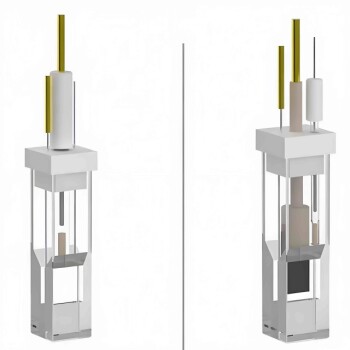
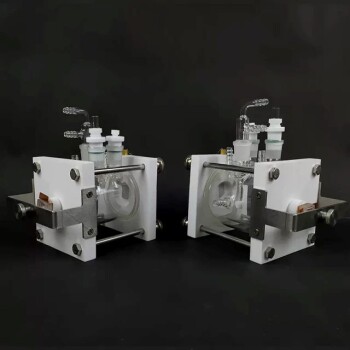
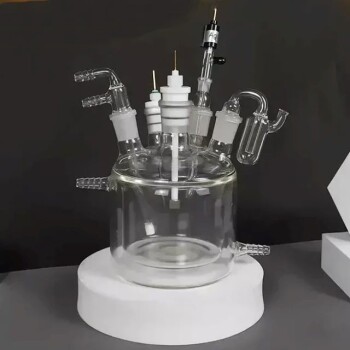
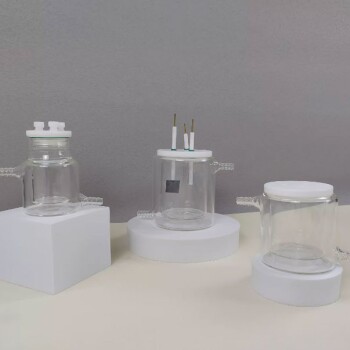
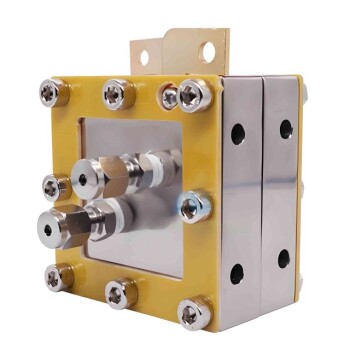
To evaluate the corrosion resistance of Boron Carbide (B4C) composites, an electrochemical workstation utilizes a three-electrode configuration immersed in a 3.5% NaCl simulated seawater environment. By positioning the B4C sample as the "working electrode" alongside a saturated calomel reference electrode and a platinum counter electrode, the system measures specific electrical responses to quantify the material's passivation behavior, charge transfer resistance, and overall corrosion rates.
The workstation functions by converting chemical stability into measurable electrical data. By subjecting the B4C composite to Open Circuit Potential, polarization curves, and Impedance Spectroscopy, engineers can scientifically predict material reliability in extreme environments without waiting for long-term physical degradation.
The Anatomy of the Three-Electrode System
To isolate the corrosion behavior of B4C, the workstation creates a controlled electrical circuit.
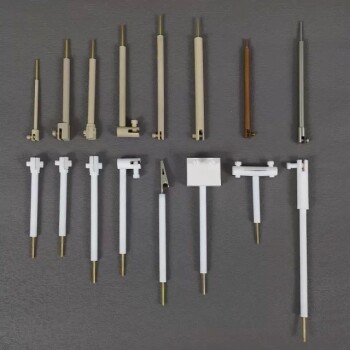
The Working Electrode (The B4C Sample)
The B4C composite itself serves as the working electrode. This is the specific material being stressed and analyzed to see how it reacts to a corrosive medium.
The Reference Electrode (Saturated Calomel)
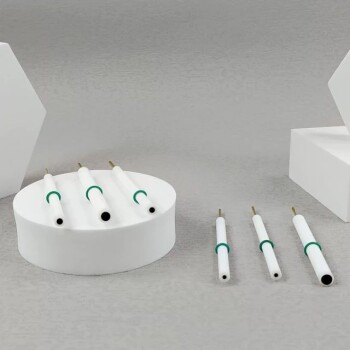
A saturated calomel electrode acts as the reference point. It provides a stable, known potential against which the B4C's potential is measured, ensuring the accuracy of the voltage readings.
The Counter Electrode (Platinum)
A platinum electrode serves as the counter electrode. Its role is to complete the electrical circuit, allowing current to flow through the solution without chemically interfering with the measurement of the B4C sample.
The Corrosive Environment
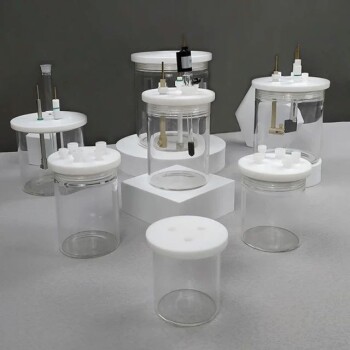
The entire system is immersed in a 3.5% NaCl solution. This simulates seawater, creating a standardized, harsh environment to test the material's chemical stability and limits.
Critical Testing Protocols
The workstation employs three specific tests to quantify how well the B4C resists corrosion.
Open Circuit Potential (OCP)
This test measures the natural voltage difference between the B4C and the reference electrode when no external current is applied. It establishes the thermodynamic tendency of the material to corrode in the resting state.
Potentiodynamic Polarization Curves
The workstation ramps the voltage up and down to force oxidation or reduction reactions. This generates data on passivation behavior (how well the material forms a protective layer) and calculates the corrosion rate.
Electrochemical Impedance Spectroscopy (EIS)
By applying a small AC signal, this test measures the impedance (complex resistance) of the system. High charge transfer resistance indicates that the B4C composite is effectively resisting the flow of electrons required for the corrosion process to occur.
Understanding the Trade-offs
While electrochemical workstations provide precise quantitative data, there are limitations to the simulation.
Simulated vs. Real-World Complexity
The use of 3.5% NaCl is a standard industrial proxy for seawater, but it lacks the biological organisms and temperature fluctuations of the real ocean. Therefore, while the data is scientifically accurate for the solution used, it represents an idealized scenario rather than a dynamic field environment.
Interpretation of Indirect Data
The workstation measures electrical signals (current and voltage), not physical mass loss directly. Deriving corrosion rates requires complex mathematical modeling (like Tafel extrapolation), which assumes uniform corrosion and may be less accurate if the material suffers from localized pitting.
Interpreting the Data for Engineering Decisions
Once the workstation generates the data, you must prioritize specific metrics based on your engineering requirements.
- If your primary focus is Long-Term Durability: Prioritize high Charge Transfer Resistance values in EIS tests, as this indicates a strong barrier against the electron flow that drives corrosion.
- If your primary focus is Material Stability: Look for a stable Passivation Region in the polarization curves, which confirms the material can self-repair or form a protective oxide layer.
By rigorously analyzing these electrical signatures, you transform raw data into a definitive assessment of whether a B4C composite can survive its intended operational environment.
Summary Table:
| Component/Test | Description | Key Metric/Function |
|---|---|---|
| Working Electrode | Boron Carbide (B4C) Sample | Material under analysis |
| Reference Electrode | Saturated Calomel Electrode | Provides stable voltage reference |
| Counter Electrode | Platinum Electrode | Completes the electrical circuit |
| EIS Test | Electrochemical Impedance Spectroscopy | Measures Charge Transfer Resistance |
| Polarization Test | Potentiodynamic Polarization Curves | Identifies Passivation & Corrosion Rate |
| Environment | 3.5% NaCl Solution | Simulates seawater for harsh testing |
Elevate Your Material Research with KINTEK
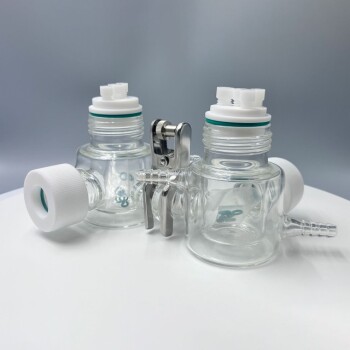
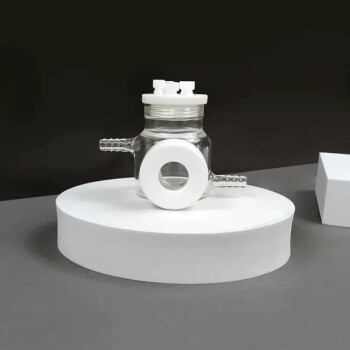
Precision in electrochemical analysis requires high-performance equipment. KINTEK specializes in providing researchers with the robust tools needed to evaluate material limits, from electrolytic cells and electrodes to high-temperature furnaces and battery research tools.
Why Partner with KINTEK?
- Advanced Testing Solutions: High-quality electrolytic cells and specialized electrodes designed for accurate corrosion and resistance measurement.
- Comprehensive Laboratory Range: We offer everything from high-pressure reactors and autoclaves to crushing and milling systems, ensuring your B4C or composite samples are prepared and tested to the highest standards.
- Built for Extremes: Our portfolio includes vacuum, CVD, and atmosphere furnaces capable of simulating the most demanding environments.
Ready to enhance your lab's capabilities and achieve scientifically definitive results?
Contact KINTEK today to discover our full range of laboratory solutions!
References
- Alberto Daniel Rico-Cano, Gültekin Göller. Corrosion Behavior and Microhardness of a New B4C Ceramic Doped with 3% Volume High-Entropy Alloy in an Aggressive Environment. DOI: 10.3390/met15010079
This article is also based on technical information from Kintek Solution Knowledge Base .
Related Products
- Lab Electrochemical Workstation Potentiostat for Laboratory Use
- Electrode Fixture for Electrochemical Experiments
- Glassy Carbon Electrochemical Electrode
- Electrolytic Electrochemical Cell with Five-Port
- Sample Support Body for Electrochemical Tests
People Also Ask
- How does an electrochemical workstation assist in assessing corrosion resistance? Quantify Laser-Remelted Steel Performance
- How does an electrochemical testing system evaluate mesoporous oxide electrodes? Precision Analysis for Battery Research
- What are the primary functions of an electrochemical workstation (Potentiostat)? Expert Titanium Alloy Corrosion Analysis
- What is the primary function of a high-precision electrochemical workstation? Optimize Your Reactor Performance
- What role do electrochemical workstations play in researching the corrosion resistance of carbon coatings? Expert Guide