Assessment of corrosion resistance in TA10 titanium alloy plates involves immersing the material in a simulated environment, such as a 3.5% NaCl solution, using a three-electrode electrochemical workstation. By strictly controlling the electrical inputs and monitoring the material's response, the workstation generates quantitative data—specifically Open Circuit Potential (OCP), polarization curves, and impedance spectroscopy—to reveal how microstructural changes and annealing processes influence the alloy's stability.
By physically isolating the current-carrying circuit from the voltage-measuring circuit, the three-electrode system eliminates errors caused by solution resistance. This precision allows for a direct correlation between the TA10 alloy's equiaxed alpha phases and its ability to inhibit intergranular corrosion.
The Three-Electrode Configuration
To accurately measure corrosion without electrical interference, the workstation uses a specific cell design. This setup ensures that the data reflects the true properties of the TA10 alloy, not artifacts of the testing equipment.
The Working Electrode (The Sample)
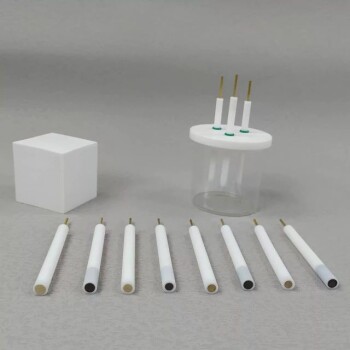
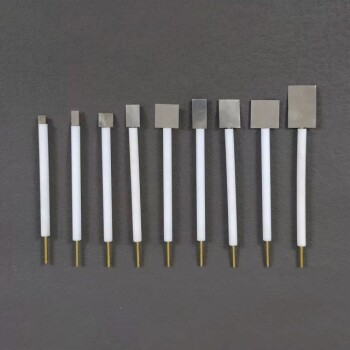
The TA10 titanium alloy plate serves as the working electrode. This is the specific specimen under investigation, which can range from the base material to specific weld zones or heat-affected zones.
The Reference Electrode
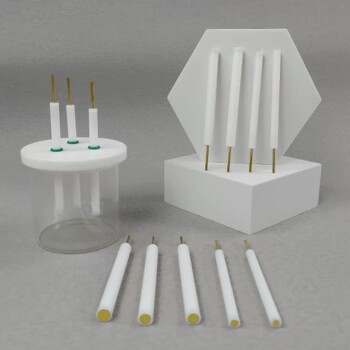
To measure voltage accurately, the system uses a reference electrode, such as a Saturated Calomel Electrode (SCE) or Silver/Silver Chloride (Ag/AgCl). This electrode maintains a stable, known potential, providing a fixed baseline against which the TA10 sample's potential is measured.
The Auxiliary (Counter) Electrode
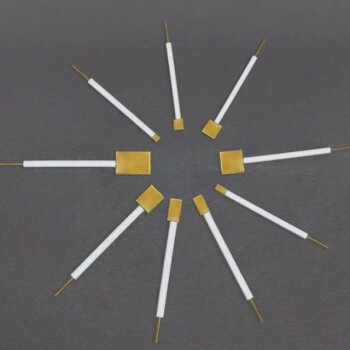
A chemically inert material, such as platinum or a graphite rod, acts as the auxiliary electrode. Its sole purpose is to complete the electrical circuit, allowing current to flow through the solution to the TA10 sample without participating in the reaction itself.
Critical Measurement Techniques
The workstation employs three primary testing methods to build a complete profile of the alloy's corrosion resistance.
Open Circuit Potential (OCP)
This measurement monitors the voltage difference between the TA10 sample and the reference electrode when no external current is applied. It establishes the thermodynamic tendency of the alloy to corrode in the specific medium (e.g., 3.5% NaCl).
Potentiodynamic Polarization
The workstation applies a range of voltages to force the material into anodic or cathodic states. By analyzing the resulting polarization curves, engineers can determine the corrosion current density and self-corrosion potential. This reveals how quickly the material degrades and evaluates its passivation behavior—the ability to form a protective oxide layer.
Electrochemical Impedance Spectroscopy (EIS)
EIS applies a small AC signal to the sample to measure its electrical resistance (impedance) over various frequencies. This technique is critical for understanding the surface properties and the integrity of the passive film formed on the titanium surface.
Connecting Data to Material Science
The raw electrical data is only valuable when linked to the physical microstructure of the TA10 alloy.
Evaluating Annealing Processes
The workstation quantifies how different heat treatments affect chemical stability. By comparing polarization data across samples, engineers can identify which annealing process yields the most robust protective layer.
The Role of Alpha Phases
The primary reference highlights that this method is specifically used to reveal mechanisms regarding equiaxed alpha phases. The electrochemical data helps verify that the presence and distribution of these phases directly contribute to inhibiting intergranular corrosion.
Understanding the Trade-offs
While highly precise, electrochemical testing requires careful interpretation regarding its limitations.
Solution Resistance Compensation
While the three-electrode setup is designed to eliminate errors caused by solution resistance (IR drop), the physical placement of the reference electrode is critical. If the reference electrode is too far from the working electrode, uncompensated resistance can still skew polarization data.
Simulation vs. Real-World Complexity
The use of a standard 3.5% NaCl solution provides a controlled baseline for comparison, but it is a simulation. It isolates specific chemical interactions but may not perfectly replicate the complex, multi-variable environments found in real-world industrial applications.
Making the Right Choice for Your Goal
Using a three-electrode workstation is about matching the specific test metric to your engineering objective.
- If your primary focus is process optimization: Use polarization curves to quantitatively compare how different annealing temperatures lower the corrosion current density.
- If your primary focus is failure analysis: Use Impedance Spectroscopy (EIS) to inspect the stability of the passive film and identify weaknesses in the equiaxed alpha phases.
- If your primary focus is material benchmarking: Use Open Circuit Potential (OCP) to determine the inherent thermodynamic stability of the TA10 alloy compared to other titanium grades.
The value of the three-electrode system lies in its ability to translate the abstract concept of "corrosion resistance" into precise, actionable data regarding the microstructure of your alloy.
Summary Table:
| Measurement Method | Parameter Measured | Engineering Insight Provided |
|---|---|---|
| Open Circuit Potential (OCP) | Potential Difference (V) | Evaluates thermodynamic stability and corrosion tendency. |
| Potentiodynamic Polarization | Corrosion Current Density | Determines degradation rate and passivation film behavior. |
| Impedance Spectroscopy (EIS) | Surface Impedance (Ω) | Inspects the integrity of passive films and alpha phase stability. |
| Three-Electrode Setup | Voltage/Current Isolation | Eliminates solution resistance errors for high-precision data. |
Optimize Your Material Performance with KINTEK Precision
Ensure the longevity and chemical stability of your alloys with KINTEK’s advanced analytical solutions. KINTEK specializes in high-performance laboratory equipment, providing researchers with the precision tools needed for critical material science—from electrolytic cells and high-quality electrodes for electrochemical workstations to high-temperature furnaces and autoclaves for advanced annealing processes.
Whether you are refining equiaxed alpha phases in titanium or evaluating intergranular corrosion, our team offers the expertise and equipment to drive your success. Contact KINTEK today to discover how our comprehensive range of research tools and consumables can elevate your lab's efficiency and accuracy.
References
- Kaiyuan Liu, Han Xiao. Microstructure Evolution, Mechanical Properties, and Corrosion Resistance of Hot Rolled and Annealed Ti-Mo-Ni Alloy. DOI: 10.3390/met13030566
This article is also based on technical information from Kintek Solution Knowledge Base .
Related Products
- Lab Electrochemical Workstation Potentiostat for Laboratory Use
- H Type Electrolytic Cell Triple Electrochemical Cell
- Electrode Fixture for Electrochemical Experiments
- Rotating Platinum Disk Electrode for Electrochemical Applications
- Graphite Disc Rod and Sheet Electrode Electrochemical Graphite Electrode
People Also Ask
- How does an electrochemical workstation assist in assessing corrosion resistance? Quantify Laser-Remelted Steel Performance
- How does an electrochemical testing system evaluate mesoporous oxide electrodes? Precision Analysis for Battery Research
- What are the primary functions of an electrochemical workstation (Potentiostat)? Expert Titanium Alloy Corrosion Analysis
- What is the primary function of a high-precision electrochemical workstation? Optimize Your Reactor Performance
- What role do electrochemical workstations play in researching the corrosion resistance of carbon coatings? Expert Guide