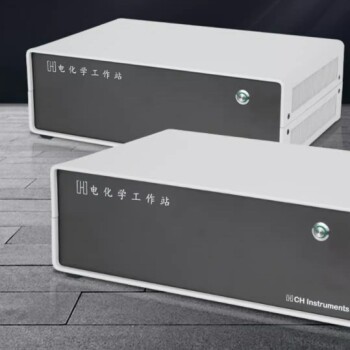
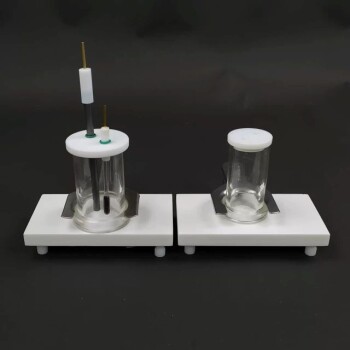
The core function of a high-precision electrochemical workstation is to serve as the control center for analyzing the stability and structure of the passive film on 304L stainless steel. Operating within a three-electrode system, it precisely manipulates the applied potential while detecting low-level current signals. This capability is essential for executing advanced diagnostic techniques like Electrochemical Impedance Spectroscopy (EIS) and Mott-Schottky analysis.
By measuring the relationship between space charge layer capacitance and applied potential, the workstation allows you to calculate carrier and defect densities. This provides a direct quantitative link between the film's semiconductor properties and the steel's corrosion resistance.
Characterizing the Passive Film Structure
Precise Potential Control
The workstation functions as a potentiostat, maintaining an accurate bias voltage across the electrochemical cell.
This precision is critical when studying 304L stainless steel, as even minor fluctuations in potential can alter the state of the passive film.
Mott-Schottky Analysis
A primary function of the workstation is to facilitate Mott-Schottky analysis by measuring the capacitance of the space charge layer.
It maps how this capacitance changes in response to the applied potential.
Quantifying Defect Density
Using the data from Mott-Schottky plots, the workstation enables the calculation of carrier densities (donors or acceptors).
High-precision measurements allow you to evaluate the density of point defects within the film, which acts as a primary indicator of the material's semiconductor properties and susceptibility to breakdown.
Analyzing Kinetics and Resistance
Electrochemical Impedance Spectroscopy (EIS)
The workstation applies a small AC signal over a range of frequencies to measure the impedance of the system.
This data reveals the charge transfer resistance and the capacitance of the passive film, offering insight into the kinetics of corrosion reactions.
Real-Time Current Monitoring
Beyond static measurements, the workstation monitors current density in real-time during dynamic tests like Linear Sweep Voltammetry (LSV) or Cyclic Voltammetry (CV).
This allows for the quantitative analysis of electrode kinetic characteristics and helps identify the specific potentials at which the passive film remains stable or begins to degrade.
Understanding the Trade-offs
Sensitivity vs. Environmental Noise
While high-precision workstations are designed to detect low-level current signals, this sensitivity makes them vulnerable to external electrical noise.
Proper shielding and grounding of the three-electrode cell are mandatory to ensure the calculated defect densities are accurate and not artifacts of interference.
Data Interpretation Dependencies
The workstation provides precise raw data (capacitance and current), but the accuracy of the final analysis depends on the validity of the chosen physical model.
For example, calculating carrier density requires accurate assumptions about the dielectric constant of the 304L passive film; incorrect constants will yield precise but inaccurate defect density values.
Making the Right Choice for Your Goal
To maximize the utility of your electrochemical workstation, align your testing strategy with your specific research objectives:
- If your primary focus is corrosion mechanism analysis: Prioritize Mott-Schottky analysis to quantify defect densities and understand the semiconductor nature of the passive film.
- If your primary focus is kinetic optimization: Utilize EIS and Linear Sweep Voltammetry to determine charge transfer resistance and identify the exact potential limits of film stability.
Ultimatelty, the workstation transforms abstract electrical signals into a concrete map of the structural integrity of your 304L stainless steel.
Summary Table:
| Feature | Core Function | Research Benefit |
|---|---|---|
| Mott-Schottky Analysis | Measures space charge layer capacitance | Quantifies carrier/defect densities & semiconductor properties |
| EIS | Applies AC signals over frequency ranges | Determines charge transfer resistance & corrosion kinetics |
| Potentiostat Control | Maintains precise bias voltage | Ensures film stability during sensitive electrochemical tests |
| Real-time Monitoring | Tracks LSV and CV current density | Identifies precise potentials of film degradation or stability |
Elevate Your Material Research with KINTEK Precision
Unlock the full potential of your electrochemical studies with KINTEK’s advanced laboratory solutions. Whether you are analyzing the semiconductor properties of 304L stainless steel or optimizing the kinetics of new alloy coatings, our high-precision electrolytic cells, electrodes, and comprehensive battery research tools provide the accuracy your data demands.
From high-temperature furnaces for material synthesis to specialized reactors and cooling solutions, KINTEK empowers researchers with the reliability needed for complex diagnostic techniques like EIS and Mott-Schottky analysis.
Ready to upgrade your lab’s capabilities? Contact our experts today to discover how our high-performance equipment and consumables can streamline your workflow and deliver superior research outcomes.
References
- Kathleen Jaffré, Yutaka Watanabe. Effect of Mechanical Surface Treatments on the Surface State and Passive Behavior of 304L Stainless Steel. DOI: 10.3390/met11010135
This article is also based on technical information from Kintek Solution Knowledge Base .
Related Products
- Lab Electrochemical Workstation Potentiostat for Laboratory Use
- H-Type Double-Layer Optical Electrolytic Electrochemical Cell with Water Bath
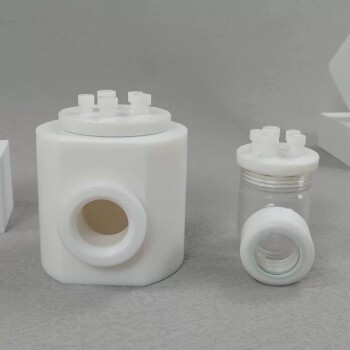
- Side Window Optical Electrolytic Electrochemical Cell
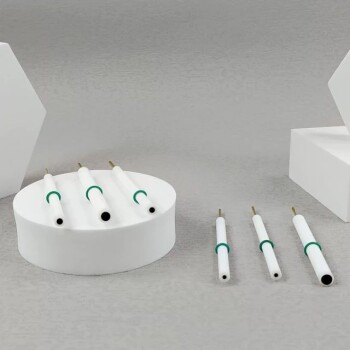
- Glassy Carbon Electrochemical Electrode
- Thin-Layer Spectral Electrolysis Electrochemical Cell
People Also Ask
- How does an electrochemical workstation assist in assessing corrosion resistance? Quantify Laser-Remelted Steel Performance
- How does an electrochemical testing system evaluate mesoporous oxide electrodes? Precision Analysis for Battery Research
- What are the primary functions of an electrochemical workstation (Potentiostat)? Expert Titanium Alloy Corrosion Analysis
- What is the primary function of a high-precision electrochemical workstation? Optimize Your Reactor Performance
- What role do electrochemical workstations play in researching the corrosion resistance of carbon coatings? Expert Guide