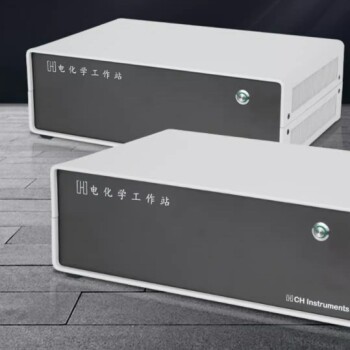
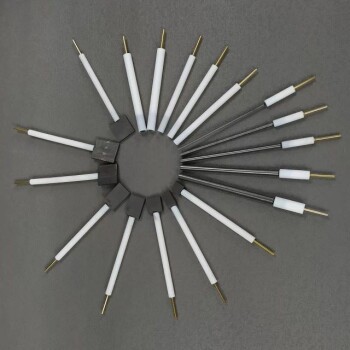
An electrochemical workstation assesses corrosion resistance by utilizing a precision three-electrode system to execute potentiodynamic polarization tests on the sample. The device accurately applies electrical potential and measures the resulting current density, allowing for a quantitative comparison of passivation capabilities between the base stainless steel and the laser-remelted layers.
Core Takeaway By simulating corrosive environments—typically sodium chloride or sulfuric acid solutions—the workstation extracts critical parameters like corrosion potential and corrosion current density. These metrics provide definitive, quantitative data to verify if the laser remelting process has successfully enhanced the chemical stability and barrier protection of the steel surface.
The Three-Electrode Architecture
To isolate the behavior of the laser-remelted layer, the workstation relies on a standardized physical configuration.
The Measurement Setup
The system employs a three-electrode cell to ensure accuracy. This consists of the laser-remelted sample (working electrode), a stable reference electrode (such as Saturated Calomel), and an inert counter electrode (typically Platinum).
Decoupling Potential and Current
This configuration is critical because it decouples the control of potential from the measurement of current. The reference electrode maintains a stable baseline, while the counter electrode handles the current flow.
Eliminating Interference
By separating these functions, the workstation ensures that the measured voltage drop occurs strictly at the working electrode interface. This guarantees that the data reflects the true corrosion properties of the steel, rather than artifacts of the measurement equipment.
Quantifying Corrosion Behavior
The workstation moves beyond visual inspection, providing physicochemical data to evaluate the material's performance.
Potentiodynamic Polarization
The primary diagnostic method is the potentiodynamic polarization test. The workstation sweeps the potential over a set range and records the current response in real-time.
Extracting Key Parameters
From the polarization curve, the system calculates the corrosion potential ($E_{corr}$) and corrosion current density ($I_{corr}$). A lower current density generally indicates a slower rate of corrosion and a more protective surface.
Assessing Passivation Stability
These measurements reveal the stability of the passive film formed on the stainless steel. The data quantifies how well the laser-remelted layer resists pitting and dissolution compared to the untreated base material.
Barrier Protection Analysis
Through advanced techniques like Electrochemical Impedance Spectroscopy (EIS), the workstation can also measure charge transfer resistance. This assesses the coating's ability to act as a physical barrier against the penetration of corrosive ions.
Understanding the Limitations
While electrochemical workstations provide high-precision data, the results must be interpreted within specific contexts.
Simulation vs. Reality
These tests are performed in simulated, accelerated environments. While they are excellent for comparative analysis, the rapid electrochemical attack may not perfectly mirror the complex, long-term degradation mechanisms seen in fluctuating real-world service conditions.
Sensitivity to Preparation
The accuracy of the data is heavily dependent on sample preparation. Surface roughness, edge effects, or slight contamination on the working electrode can significantly alter current density readings, potentially leading to false conclusions about the layer's efficacy.
Making the Right Choice for Your Goal
To maximize the value of your electrochemical data, tailor your analysis to your specific engineering objectives.
- If your primary focus is comparing treatment effectiveness: Prioritize the corrosion current density ($I_{corr}$) values to quantitatively rank the passivation capability of different laser-remelted microstructures against the base metal.
- If your primary focus is understanding coating integrity: Use Electrochemical Impedance Spectroscopy (EIS) to evaluate the physical barrier properties and pore resistance of the layer.
The electrochemical workstation transforms the invisible process of corrosion into precise, actionable metrics, enabling you to objectively validate the quality of laser surface treatments.
Summary Table:
| Metric/Component | Function in Corrosion Assessment | Significance for Laser-Remelted Layers |
|---|---|---|
| Working Electrode | The laser-remelted stainless steel sample | Isolates the specific surface area being tested |
| Corrosion Potential ($E_{corr}$) | Measures the thermodynamic stability of the material | Higher values indicate better noble behavior |
| Current Density ($I_{corr}$) | Calculates the kinetic rate of metal dissolution | Lower values signify a slower corrosion rate |
| EIS Analysis | Evaluates charge transfer and pore resistance | Assesses the physical barrier integrity of the coating |
Precision is paramount when validating advanced surface treatments. KINTEK provides industry-leading electrochemical workstations and electrolytic cells designed to deliver the quantitative data you need for material science breakthroughs. From battery research tools to high-temperature reactors, our comprehensive lab solutions empower researchers to achieve superior results. Contact our technical experts today to find the perfect testing system for your laboratory.
References
- Ion Mitelea, Ion-Dragoș Uțu. Assessment of Corrosion and Cavitation Resistance of Laser Remelted GX40CrNiSi25-20 Cast Stainless Steel. DOI: 10.3390/ma17246278
This article is also based on technical information from Kintek Solution Knowledge Base .
Related Products
- Lab Electrochemical Workstation Potentiostat for Laboratory Use
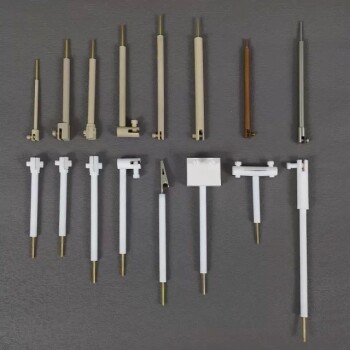
- Electrode Fixture for Electrochemical Experiments
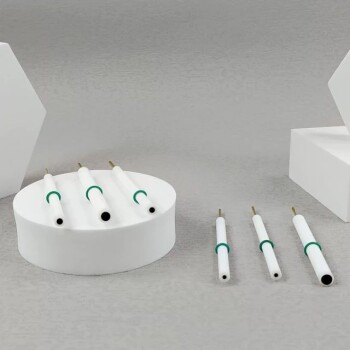
- Glassy Carbon Electrochemical Electrode
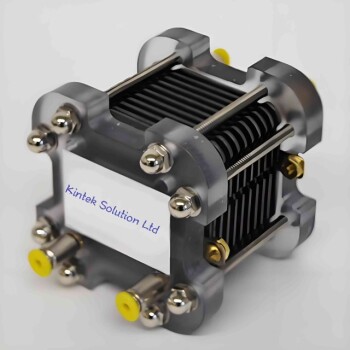
- Side Window Optical Electrolytic Electrochemical Cell
- Electrolytic Electrochemical Cell with Five-Port
People Also Ask
- How does an electrochemical testing system evaluate mesoporous oxide electrodes? Precision Analysis for Battery Research
- What are the primary functions of an electrochemical workstation (Potentiostat)? Expert Titanium Alloy Corrosion Analysis
- What is the primary function of a high-precision electrochemical workstation? Optimize Your Reactor Performance
- What role do electrochemical workstations play in researching the corrosion resistance of carbon coatings? Expert Guide
- What characteristics are analyzed using an electrochemical workstation during EIS testing of solid-state batteries?