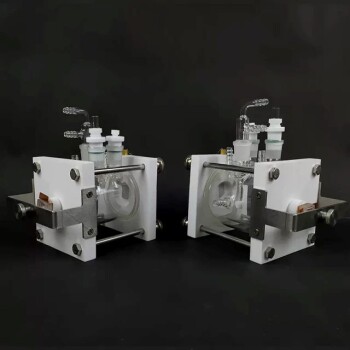
Electrochemical Impedance Spectroscopy (EIS) serves as the primary diagnostic tool for dissecting the internal resistance components within a catalytic system. By applying an AC perturbation signal via an electrochemical workstation, researchers can quantitatively measure charge transfer resistance and solution resistance under actual operating conditions. This reveals the specific kinetic barriers limiting a catalyst's performance.
The true value of EIS lies in its ability to distinguish between different resistance sources at the interface. It provides the physical basis required to optimize electrode structures and electrolyte compositions, ensuring both high efficiency and long-term stability.
Decoding Electrode Kinetics
Quantifying Resistance Components
An electrochemical workstation uses EIS to isolate charge transfer resistance from solution resistance. This distinction is critical because it tells you whether performance limitations are due to the catalyst surface itself or the surrounding electrolyte environment.
Visualizing Electron Transport
In a typical Nyquist plot generated by EIS, the radius of the semicircle directly reflects the electron transport rate at the interface. A smaller radius signifies lower charge transfer resistance.
Verifying Separation Efficiency
For advanced structures like Z-scheme heterojunctions, a smaller semicircle confirms the effective separation of photogenerated charge carriers. This metric proves that the catalyst design is successfully facilitating rapid electron movement.
Analyzing Interfacial Stability
Monitoring Surface Layers
EIS allows researchers to analyze the influence of specific surface layers, such as SnO2, on electrode kinetics. It determines if these layers are aiding conductivity or acting as passivation barriers that hinder reaction rates.
Tracking Evolution Over Time
By performing EIS measurements continuously or at intervals, you can monitor interfacial stability during long-term electrolysis. This reveals how the interface evolves and helps detect early signs of degradation before total system failure occurs.
Evaluating Structural Frameworks
Data derived from impedance monitoring allows for the quantitative evaluation of 3D framework designs. It helps researchers determine if a specific structural change effectively inhibits side reactions and improves the stability of the solid-liquid interface.
Understanding the Constraints
Complexity of Data Interpretation
While EIS provides rich data, analyzing it requires fitting the data to an equivalent electrical circuit model. Choosing the wrong model can lead to misinterpretation of physical processes, such as mistaking diffusion limitations for charge transfer resistance.
Dynamic Operating Conditions
EIS assumes the system is in a steady state during measurement. If the catalyst is rapidly degrading or evolving during the low-frequency portion of the scan, the data may become distorted and unreliable.
Making the Right Choice for Your Goal
To maximize the utility of EIS in your catalyst testing, align your analysis with your specific objectives:
- If your primary focus is Kinetics: Look for a reduction in the Nyquist plot semicircle radius to confirm that your structural modifications are improving electron transport rates.
- If your primary focus is Durability: Monitor the change in charge transfer resistance over long cycling periods to identify when and how the electrode interface begins to degrade.
EIS transforms abstract performance issues into quantifiable resistance metrics, giving you the roadmap to engineer superior catalysts.
Summary Table:
| Metric Category | Key Parameter Measured | Significance in Catalyst Testing |
|---|---|---|
| Kinetics | Charge Transfer Resistance ($R_{ct}$) | Directly reflects electron transport rate and catalytic activity. |
| Interface | Solution Resistance ($R_s$) | Identifies conductivity limitations within the electrolyte environment. |
| Efficiency | Nyquist Plot Semicircle Radius | Smaller radius confirms superior charge carrier separation (e.g., Z-scheme). |
| Durability | Interfacial Stability | Tracks resistance evolution to detect early surface degradation. |
| Structure | Equivalent Circuit Modeling | Quantifies the effectiveness of 3D frameworks and surface layers. |
Elevate Your Electrochemical Research with KINTEK Precision
Unlock deeper insights into your catalytic systems with KINTEK’s advanced laboratory solutions. Whether you are performing complex Electrochemical Impedance Spectroscopy (EIS) or developing next-generation energy storage, our comprehensive portfolio is designed to meet the rigorous demands of modern research.
Why partner with KINTEK?
- Comprehensive Electrochemical Tools: From high-performance electrolytic cells and electrodes to specialized battery research tools, we provide the hardware necessary for accurate data acquisition.
- Total Laboratory Support: We offer everything from high-temperature furnaces (muffle, vacuum, CVD) for catalyst synthesis to crushing systems and isostatic presses for electrode preparation.
- Reliable Consumables: Ensure experiment purity with our high-quality PTFE products, ceramics, and crucibles.
Ready to optimize your electrode kinetics and stability? Contact us today to find the perfect equipment for your lab!
References
- Marcel Schreier, Michaël Grätzel. Solar conversion of CO2 to CO using Earth-abundant electrocatalysts prepared by atomic layer modification of CuO. DOI: 10.1038/nenergy.2017.87
This article is also based on technical information from Kintek Solution Knowledge Base .
Related Products
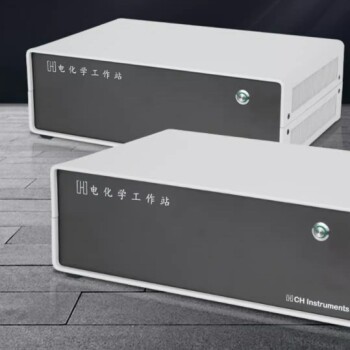
- Lab Electrochemical Workstation Potentiostat for Laboratory Use
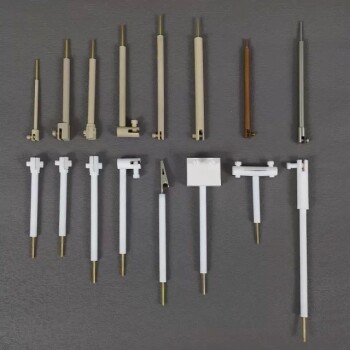
- Electrode Fixture for Electrochemical Experiments
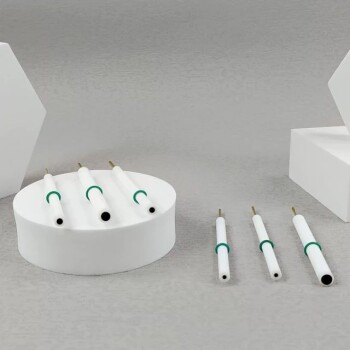
- Glassy Carbon Electrochemical Electrode
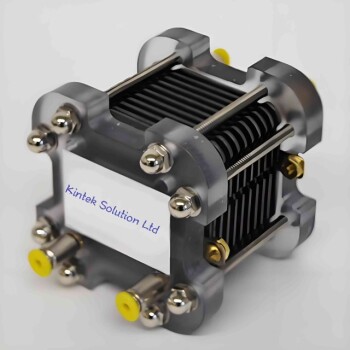
- Electrolytic Electrochemical Cell with Five-Port
- Sample Support Body for Electrochemical Tests
People Also Ask
- How does an electrochemical workstation assist in assessing corrosion resistance? Quantify Laser-Remelted Steel Performance
- How does an electrochemical testing system evaluate mesoporous oxide electrodes? Precision Analysis for Battery Research
- What are the primary functions of an electrochemical workstation (Potentiostat)? Expert Titanium Alloy Corrosion Analysis
- What is the primary function of a high-precision electrochemical workstation? Optimize Your Reactor Performance
- What role do electrochemical workstations play in researching the corrosion resistance of carbon coatings? Expert Guide