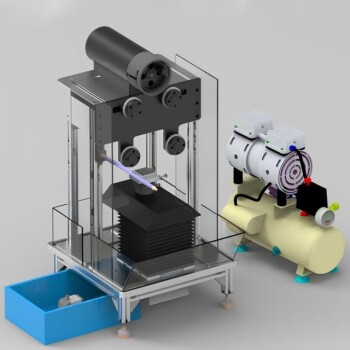
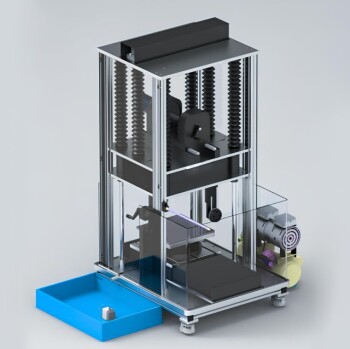
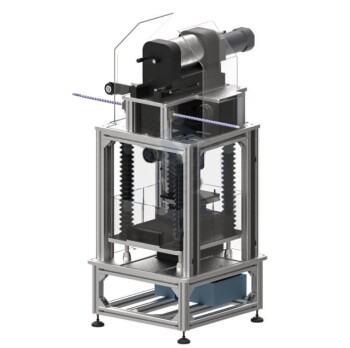
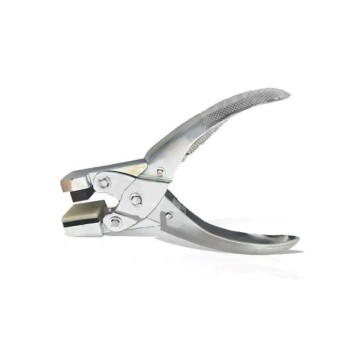
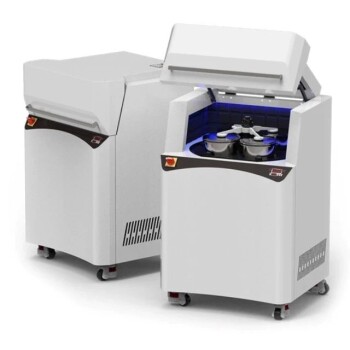
The precision disc cutter is the primary instrument used to transform bulk-coated electrode sheets and metal foils into standardized, circular active components for coin cell assembly.
In the assembly of CR2032 cells, this tool punches out uniform discs (typically 12mm to 16mm in diameter) from cathode and anode materials. By producing neat, burr-free edges and consistent surface areas, the disc cutter ensures the mechanical integrity of the cell and the reliability of subsequent electrochemical data.
Precision cutting is the foundation of battery research consistency. It eliminates structural variables like edge burrs and mass fluctuations, which are the leading causes of internal short circuits and non-reproducible test results.
Converting Raw Materials into Active Components
Achieving Dimensional Precision
The disc cutter converts large areas of coated electrode tape or lithium foil into circular discs that match the exact specifications of the CR2032 format. This precision ensures that the electrode fits perfectly within the cell casing without overlapping or shifting during the crimping process.
Standardizing Active Material Mass
Consistency in the diameter of the cut disc directly translates to consistency in the mass of the active material. This uniformity is critical for researchers to calculate accurate specific capacity and ensure that comparative data between different cells remains valid.
Handling Diverse Materials
High-quality cutters are designed to handle various substrates, from lithium iron phosphate (LFP) cathode sheets to delicate lithium metal foils. The ability to cut through both brittle coatings and ductile foils without tearing is essential for maintaining material integrity.
The Critical Importance of Edge Quality
Preventing Internal Short Circuits
The primary function of a high-precision die is to produce burr-free edges. Microscopic metal protrusions (burrs) can pierce the thin separator during assembly or cycling, leading to internal micro-short circuits that ruin the cell.
Ensuring Accurate EIS Measurements
Clean edges are vital for obtaining reliable Electrochemical Impedance Spectroscopy (EIS) measurements. Irregularities at the electrode boundary can create non-uniform current distributions, which distort impedance data and complicate the analysis of internal resistance.
Optimizing Internal Interface Contact
A flat, cleanly cut disc ensures superior contact between the electrode, the electrolyte, and the current collector. This physical foundation is necessary for obtaining stable electrochemical cycling curves and ensuring the lithium metal anode remains chemically safe.
Understanding the Trade-offs and Common Pitfalls
Blade Wear and Material Deformation
Over time, the cutting die will lose its sharpness, leading to "pinched" edges rather than clean shears. Using a dull die can deform the edges of the current collector, increasing the risk of the electrode delaminating from the foil.
Cross-Contamination Risks
Using the same disc cutter for different chemistry types without thorough cleaning can lead to cross-contamination. Small particles of cathode material from a previous run can settle on an anode sheet, leading to parasitic reactions and early cell failure.
Die Tolerance and Clearance
If the clearance between the punch and the die is too large, the material will "draw" into the gap rather than being cut. This results in a "cup" shape rather than a flat disc, which prevents even pressure distribution during the final crimping stage.
How to Apply This to Your Project
Before beginning your assembly, ensure your disc cutter is calibrated for the specific thickness of your electrode sheets.
- If your primary focus is Data Reproducibility: Use a dedicated die for each electrode size to ensure the active material surface area remains constant across all experimental batches.
- If your primary focus is Safety and Longevity: Regularly inspect the edges of your cut discs under a microscope to confirm the absence of burrs that could compromise the separator.
- If your primary focus is Material Efficiency: Layout your electrode coating patterns to maximize the number of discs per sheet while maintaining enough border space to prevent edge-effect thinning.
A high-precision cut is the first and most vital step in transforming raw chemical components into a functional, measurable energy storage device.
Summary Table:
| Feature | Function in CR2032 Assembly | Impact on Research |
|---|---|---|
| Dimensional Precision | Standardizes disc diameter (12-16mm) | Ensures accurate mass loading and capacity calculations. |
| Edge Quality | Produces clean, burr-free shears | Prevents internal short circuits and separator damage. |
| Material Versatility | Cuts cathode sheets and lithium foils | Maintains integrity of both brittle and ductile materials. |
| Interface Contact | Creates flat, uniform disc surfaces | Optimizes contact for stable cycling and reliable EIS data. |
Precision is the foundation of reproducible battery data. KINTEK specializes in high-performance laboratory equipment, providing the essential battery research tools and consumables needed to eliminate variables in your assembly process. From high-precision disc cutters and hydraulic pellet presses to advanced high-temperature furnaces (vacuum, tube, and atmosphere) and electrolytic cells, we offer the full spectrum of tools required for cutting-edge energy storage research.
Don't let edge defects or mass fluctuations compromise your results. Contact KINTEK today to discover how our precision engineering can enhance your lab's efficiency and data reliability!
References
- Gaobang Chen, Xian Jian. Helical fluorinated carbon nanotubes/iron(iii) fluoride hybrid with multilevel transportation channels and rich active sites for lithium/fluorinated carbon primary battery. DOI: 10.1515/ntrev-2023-0108
This article is also based on technical information from Kintek Solution Knowledge Base .
Related Products
- High Precision Diamond Wire Cutting Machine Laboratory Saw Precision Wire EDM Cutting Machine
- 12 Inch 24 Inch High Precision Automatic Diamond Wire Cutting Machine Laboratory Saw Precision Wire EDM Cutting Machine
- Precision Wire Saw Laboratory Cutting Machine with 800mm x 800mm Workbench for Diamond Single Wire Circular Small Cutting
- CVD Diamond Cutting Tool Blanks for Precision Machining
- Vibrating Disc Mill Small Laboratory Grinding Machine
People Also Ask
- Are diamonds used in machines? Unlock Superior Performance with Diamond Tools
- What machines make lab diamonds? Discover the HPHT and CVD Technologies Behind Lab-Grown Gems
- What machine is used for cutting diamond? Discover the Laser Technology That Shapes Gems
- Can you chemically make diamonds? Yes, CVD & HPHT Create Real Diamonds
- Can I buy lab diamonds? Your Guide to Modern, Ethical, and Affordable Diamonds