To ensure experimental accuracy and safety, prepare your electrolyte using strictly high-purity reagents and deionized or distilled water to eliminate contaminants. If a specific atmosphere is required, purge the empty cell with the necessary gas to remove air before introducing the liquid. Finally, pour the electrolyte into the cell carefully, stopping before the liquid level exceeds the designated maximum volume.
Purity and sequence are the defining factors for success: using contaminant-free water prevents data skew, while purging the cell before filling is essential for establishing a controlled atmosphere.
Achieving Chemical Purity
Selecting the Right Reagents
You must use high-purity chemical reagents for all preparations. Lower-grade chemicals introduce trace impurities that can interfere with electrochemical reactions and distort your results.
Water Quality Matters
Always use deionized or distilled water as the solvent. Standard tap water contains ions and minerals that will act as unauthorized variables in your experiment.
Managing the Cell Atmosphere
The Sequence of Operations
If your experiment requires a specific environment, such as Nitrogen or Hydrogen, you must purge the cell with that gas before adding the liquid.
Removing Internal Air
The goal of this pre-purge is to displace the internal air from the cell chambers. Establishing this atmosphere prior to filling ensures the electrolyte enters a controlled environment immediately.
The Filling Procedure
Respecting Volume Limits
When pouring the prepared solution, strictly observe the maximum volume indicators on the cell. Overfilling can lead to spills, leaks, or cross-contamination between the anode and cathode chambers.
Handling Fragile Components
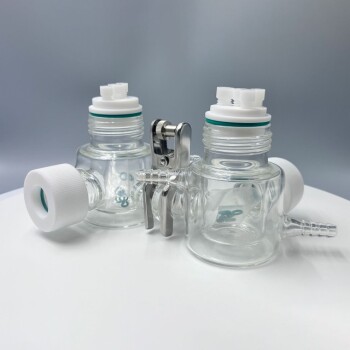
The H-type cell is constructed of fragile glass. Pour the electrolyte slowly and handle the cell gently to avoid mechanical stress or accidental breakage.
Common Pitfalls to Avoid
Neglecting Safety Gear
Never handle electrolytes without protection. You must wear gloves and safety goggles to prevent chemical burns and eye injuries from splashes.
Ignoring System Integrity
Before adding fluid, verify that the sealing rings are intact and the cell is leak-proof. Adding electrolyte to a cell with aged seals or loose wiring increases the risk of safety accidents and experimental failure.
Making the Right Choice for Your Goal
To optimize your electrolytic cell setup, prioritize the following based on your specific needs:
- If your primary focus is experimental accuracy: Prioritize the use of high-purity reagents and deionized water to eliminate variables caused by impurities.
- If your primary focus is atmosphere control: Ensure you purge the cell with the required gas before adding electrolyte to fully evacuate internal air.
- If your primary focus is equipment longevity: Handle the glass components with extreme care and never exceed the maximum volume limit to prevent corrosion or physical damage.
Adhering to strict purity standards and the correct filling sequence is the only way to guarantee reliable electrochemical data.
Summary Table:
| Step | Critical Action | Objective |
|---|---|---|
| Preparation | Use high-purity reagents & deionized water | Eliminate contaminants and unauthorized variables |
| Atmosphere | Purge empty cell with inert gas | Remove internal air for controlled environments |
| Filling | Observe maximum volume limits | Prevent leaks, spills, and chamber cross-contamination |
| Safety | Wear PPE and check sealing rings | Prevent chemical burns and ensure system integrity |
Enhance Your Electrochemical Research with KINTEK Precision
Don't let impurities or equipment failure compromise your experimental data. At KINTEK, we specialize in providing high-performance laboratory equipment tailored for advanced research. Whether you need high-purity electrolytic cells and electrodes, precision battery research tools, or robust high-temperature high-pressure reactors, our solutions are designed to ensure accuracy and durability.
Why choose KINTEK?
- Comprehensive Range: From H-type cells and PTFE products to advanced vacuum furnaces and crushing systems.
- Quality Assurance: Durable glass and ceramic components built to withstand rigorous lab environments.
- Expert Support: Our team helps you select the right consumables and equipment to optimize your workflow.
Ready to elevate your laboratory standards? Contact us today to find the perfect solution for your research needs!
Related Products
- H-Type Double-Layer Optical Electrolytic Electrochemical Cell with Water Bath
- H Type Electrolytic Cell Triple Electrochemical Cell
- Customizable PEM Electrolysis Cells for Diverse Research Applications
- Electrolytic Electrochemical Cell with Five-Port
- Super Sealed Electrolytic Electrochemical Cell
People Also Ask
- What is the overall structure of the H-type double-layer optical water bath electrolytic cell? Precision Design for Controlled Experiments
- How is the electrolyte managed in H-type electrolytic cells for specific reactions? Achieve Precise Control and High Purity
- What checks should be performed on the H-type electrolytic cell before use? Ensure Accurate Electrochemical Data
- What is important regarding temperature control for the H-type electrolytic cell? Ensure Precision and Data Integrity
- What is the overall structure of the H-type electrolytic cell? Understanding Dual-Chamber Electrochemical Designs