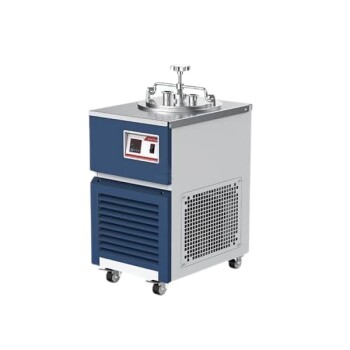
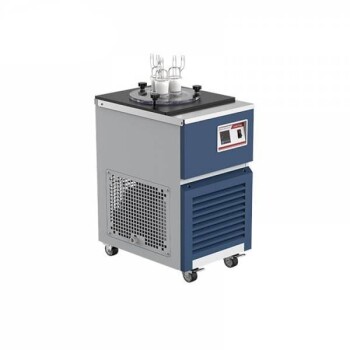
Recirculating cooling systems provide a critical performance advantage over air cooling by generating a significantly higher cooling rate during the quenching of EK-181 steel. This rapid heat extraction is not merely about temperature reduction; it is the primary driver for achieving superior short-term yield strength by fundamentally altering the steel's microscopic architecture.
The intense cooling rate of a water-based recirculating system is required to suppress coarse carbide formation and ensure a complete martensitic transformation. This process creates the necessary internal conditions to generate a high density of strengthening nanoparticles, resulting in mechanical properties that air cooling cannot achieve.
The Mechanism of Strengthening
Achieving Complete Transformation
Air cooling is often insufficient for demanding high-performance applications because the cooling rate is too gradual.
A recirculating water system provides the immediate, intense cooling necessary to transform austenite into a high-hardness lath martensite structure.
This rapid drop in temperature facilitates a faster and more complete transformation, ensuring the base structure of the steel is optimized for strength.
Optimizing Particle Density
The primary metallurgical advantage of this cooling method lies in how it manages alloying elements.
By cooling the steel rapidly, the system retains supersaturated carbon and other elements within the matrix, rather than allowing them to precipitate out early.
This "locking in" of elements creates the specific conditions needed to form a high density of nanoscale vanadium carbonitride particles during subsequent tempering.
Refining the Microstructure
The speed of the quench directly impacts the physical size of the steel's internal features.
Recirculating cooling produces finer martensitic laths compared to the coarser structures resulting from slower air cooling.
This refinement, combined with the dispersed vanadium carbonitride particles, leads to the substantial improvement in short-term yield strength observed in EK-181 steel.
Understanding the Risks of Slower Cooling
While air cooling is a simpler process, it introduces significant metallurgical pitfalls for EK-181 steel that compromise performance.
The Risk of Coarse Precipitates If the cooling rate is insufficient—as is often the case with air cooling—coarse carbides can precipitate prematurely.
Loss of Potential Strength When coarse carbides form early, the alloying elements are consumed inefficiently.
This depletes the matrix of the supersaturated elements required to form the fine, dispersed strengthening phases later in the process, permanently limiting the material's yield strength.
Making the Right Choice for Your Goal
To maximize the potential of EK-181 steel, the cooling strategy must align with the desired mechanical properties.
- If your primary focus is maximum yield strength: Implement a recirculating water quenching system to maximize the density of nanoscale vanadium carbonitride particles.
- If your primary focus is microstructural integrity: Avoid air cooling to suppress the formation of coarse carbides and ensure a fine martensitic lath structure.
The superior mechanical performance of EK-181 relies on the ability to freeze the microstructure instantly, making rapid recirculating cooling an essential processing step.
Summary Table:
| Feature | Recirculating Water Quenching | Traditional Air Cooling |
|---|---|---|
| Cooling Rate | High/Intense | Low/Gradual |
| Microstructure | Fine lath martensite | Coarser structures |
| Carbide Formation | Suppresses coarse carbides | Risk of premature coarse precipitates |
| Particle Density | High density of V(C,N) nanoparticles | Depleted strengthening phases |
| Yield Strength | Maximum short-term yield strength | Compromised mechanical properties |
Elevate Your Material Performance with KINTEK Precision Solutions
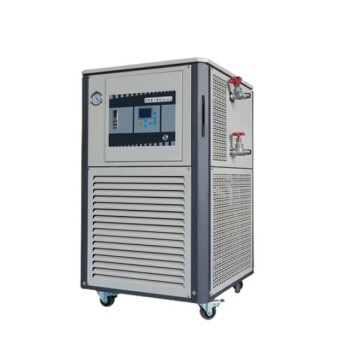
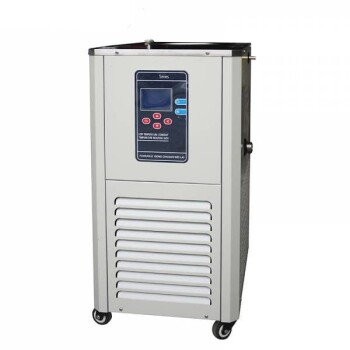
To achieve the superior mechanical properties of EK-181 steel, precise thermal management is non-negotiable. KINTEK specializes in high-performance laboratory equipment, offering advanced cooling solutions, recirculating chillers, and high-temperature furnaces designed to meet the most demanding metallurgical requirements.
Whether you are refining microstructures or optimizing particle density, our comprehensive range of high-temperature high-pressure reactors, muffle furnaces, and precision cooling systems ensures your research and production meet the highest standards of excellence.
Ready to optimize your quenching process? Contact our technical experts today to find the perfect equipment solution for your laboratory needs.
References
- Evgeniy Panin. Martensitic Transformations in Stainless Steels. DOI: 10.15407/ufm.23.04.684
This article is also based on technical information from Kintek Solution Knowledge Base .
Related Products
- 50L Chiller Water Bath Cooling Circulator Low Temperature Constant Temperature Reaction Bath
- 80L Chilling Circulator Cooling Water Circulator for Water Bath Cooling and Low Temperature Constant Temperature Reaction Bath
- 100L Chilling Circulator Cooling Water Circulator for Low Temperature Constant Temperature Reaction Bath Water Bath Cooling
- 40L Chiller Water Bath Cooling Circulator Low Temperature Constant Temperature Reaction Bath
- 10L Heating Chilling Circulator Cooling Water Bath Circulator for High and Low Temperature Constant Temperature Reaction
People Also Ask
- For which types of substances are water baths and chillers considered ideal? Essential Care for Sensitive Samples
- What is the necessity of a circulating water bath in chlorate production? Optimize Yield & Purity with Precision
- Why is a circulating water chiller required for Prussian Blue nanoparticles? Ensure Stability & Batch Reproducibility
- What function does a circulating cooling chiller perform during the gas adsorption isotherm testing of nanoporous carbon?
- What is the primary function of water baths and chillers? Mastering Precise Thermal Stability for Liquid Samples