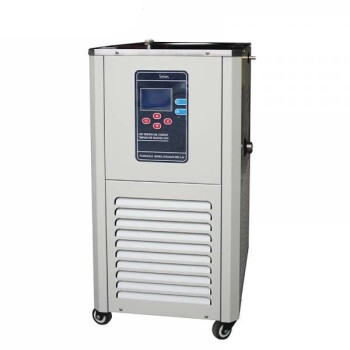
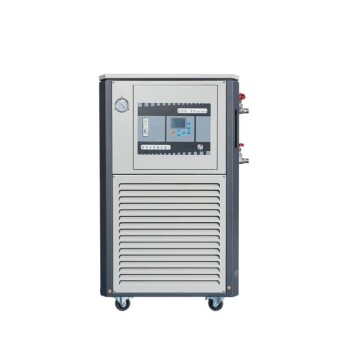
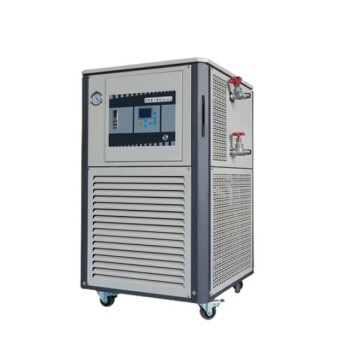
Circulating cooling systems and constant temperature units are essential for maintaining the integrity of dynamic adsorption data. These devices actively regulate the thermal environment within the adsorption column, counteracting the natural heat changes that occur during heavy metal adsorption. By stabilizing the temperature throughout long-term dynamic fluid experiments, they ensure that the resulting data is a product of the material's chemistry, not random environmental fluctuations.
Adsorption is a thermally sensitive process; without strict temperature control, the heat generated or absorbed during the reaction distorts the data. Constant temperature units isolate the experiment from external and internal thermal shifts, ensuring the results accurately reflect the material's true thermodynamic behavior.
The Thermodynamic Challenge
Adsorption is Not Thermally Neutral
Heavy metal adsorption is a physical and chemical process accompanied by thermal effects.
Managing Heat Exchange
The reaction is typically either exothermic (releasing heat) or endothermic (absorbing heat). Without intervention, this internal heat exchange would alter the temperature of the fluid and the adsorbent material, introducing an uncontrolled variable into the experiment.
Why Temperature Stability Defines Accuracy
Eliminating Environmental Interference
Long-term dynamic experiments can run for hours or days, making them vulnerable to ambient temperature shifts in the laboratory.
Creating a Controlled Micro-Environment
Circulating cooling systems act as a shield, maintaining a fixed temperature regardless of day-to-night fluctuations in the room. This isolation is critical for establishing a consistent baseline for data collection.
Validating Adsorption Isotherms
Adsorption isotherms—graphs showing the amount of adsorbate on the adsorbent—are valid only at a specific, constant temperature.
Preserving Thermodynamic Parameters
To accurately calculate thermodynamic parameters (like enthalpy and entropy), the temperature must remain stable. If the temperature drifts, the analysis of these parameters becomes mathematically invalid.
Bridging the Gap to Industry
Simulating Industrial Conditions
Scientific accuracy in the lab is only valuable if it predicts behavior in the real world.
Reflecting True Performance
Industrial applications often operate at specific, controlled temperatures. Using constant temperature units allows researchers to replicate these exact conditions, ensuring the lab results accurately reflect how the material will behave in a full-scale industrial setting.
Understanding the Trade-offs
Equipment Complexity
Integrating circulating cooling systems adds a layer of complexity to the experimental setup compared to static ambient tests.
The Cost of Precision
While these units require additional setup time and energy, the trade-off is unavoidable for high-stakes research. Omitting thermal control simplifies the physical setup but complicates data analysis by introducing noise that cannot be easily filtered out.
Making the Right Choice for Your Goal
To derive meaningful conclusions from your dynamic adsorption tests, consider how temperature control aligns with your specific objectives:
- If your primary focus is thermodynamic analysis: You must use strict constant temperature control to ensure that calculated parameters like enthalpy and entropy are mathematically valid.
- If your primary focus is industrial application: Set your cooling or heating unit to match the specific operating temperature of the target facility to validate material performance under real-world constraints.
By eliminating temperature as a variable, you transform your data from a rough observation into a scientifically robust, reproducible fact.
Summary Table:
| Feature | Role in Adsorption Testing | Impact on Scientific Accuracy |
|---|---|---|
| Thermal Regulation | Counters exothermic/endothermic heat shifts | Ensures data reflects material chemistry, not temperature noise |
| Environmental Isolation | Shields column from ambient laboratory fluctuations | Maintains a consistent baseline over long-term dynamic experiments |
| Isotherm Validation | Keeps temperature fixed during data collection | Validates thermodynamic calculations (enthalpy, entropy) |
| Industrial Simulation | Replicates specific real-world operating conditions | Enhances the predictive value of lab results for industrial scale-up |
Elevate Your Research Precision with KINTEK
Maintaining strict thermal control is the difference between erratic data and scientific breakthrough. KINTEK specializes in high-performance laboratory solutions designed for the most demanding dynamic fluid experiments. From advanced circulating cooling systems and chillers to high-temperature furnaces, reactors, and autoclaves, our equipment ensures your experimental environment remains perfectly stable.
Whether you are conducting heavy metal adsorption studies, battery research, or material synthesis, our comprehensive portfolio—including PTFE consumables, ceramics, and hydraulic presses—provides the reliability you need for reproducible results.
Ready to eliminate variables and secure your data integrity? Contact KINTEK today to find the perfect thermal solution for your lab!
References
- Waleed Jadaa. Wastewater Treatment Utilizing Industrial Waste Fly Ash as a Low-Cost Adsorbent for Heavy Metal Removal: Literature Review. DOI: 10.3390/cleantechnol6010013
This article is also based on technical information from Kintek Solution Knowledge Base .
Related Products
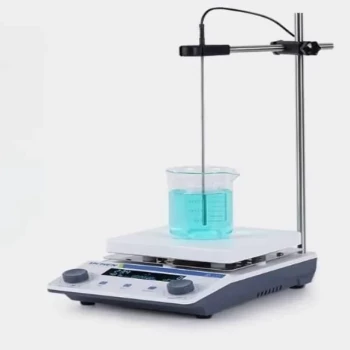
- Laboratory Small Constant Temperature Heated Magnetic Stirrer Heater and Stirrer
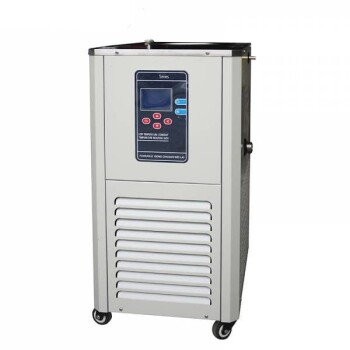
- 5L Chilling Circulator Cooling Water Bath Circulator for Low Temperature Constant Temperature Reaction Bath
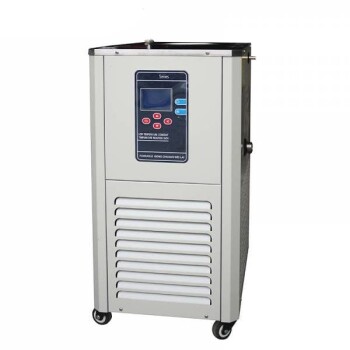
- 30L Chiller Water Bath Cooling Circulator Low Temperature Constant Temperature Reaction Bath
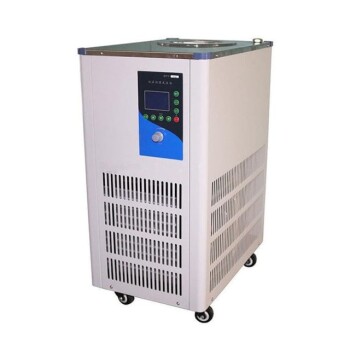
- 40L Chiller Water Bath Cooling Circulator Low Temperature Constant Temperature Reaction Bath
- High Temperature Constant Temperature Heating Circulator Water Bath Chiller Circulator for Reaction Bath
People Also Ask
- What role does a magnetic stirrer with heating play in ZnO nanoparticle synthesis? Precision Control for Quality Results
- What role does a constant temperature heating magnetic stirrer play in MFC-HAp synthesis? Achieve Material Homogeneity
- What is the function of a laboratory magnetic stirrer in Ni–Cr–P electrodeposition? Optimize Ion Transport & Coating
- Why is a laboratory magnetic stirrer required for benzoic acid esters? Boost Reaction Speed & Yield with High RPM
- What role does a laboratory magnetic stirrer play in TiO2 and TiO2-Ag sol preparation? Master Chemical Kinetics