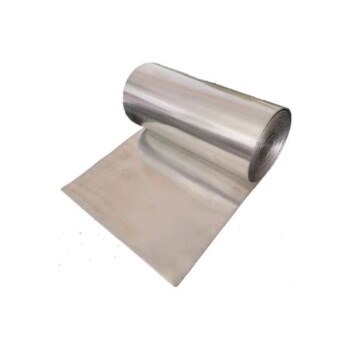
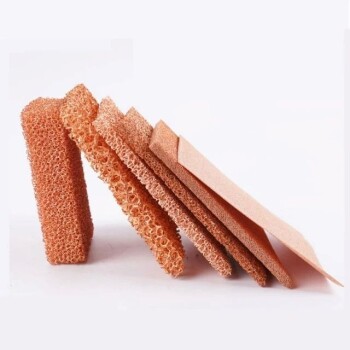
Perforated copper foil electrodes in a flow-by-through (FBT) configuration offer a fundamental shift in electrolyte dynamics, moving from passive surface contact to active fluid percolation. By forcing a portion of the electrolyte to pass directly through the electrode pores toward the current collector, this setup drastically enhances mass transfer and maintains high interfacial ion concentrations. This mechanism is critical for achieving high-performance, stable zinc deposition at elevated current densities.
The FBT configuration overcomes the limitations of traditional flow-by designs by actively mitigating zinc ion concentration polarization. This ensures a dense, flat, and dendrite-free deposition layer, which is essential for the long-term reliability and safety of zinc-based battery systems.
The Mechanics of Enhanced Mass Transfer
Forced Electrolyte Percolation
Unlike traditional flow-by designs where the electrolyte moves parallel to the electrode surface, the FBT mode forces fluid through the electrode pores.
This "flow-through" component ensures that fresh electrolyte is constantly delivered directly to the electrode-electrolyte interface.
Mitigating Concentration Polarization
At high current densities, ions are consumed faster than they can naturally diffuse to the surface, leading to concentration polarization.
The FBT setup effectively disrupts the stagnant boundary layer, maintaining a high interfacial ion concentration even under heavy electrical loads.
Improving Zinc Deposition Morphology
Preventing Dendrite Formation
In traditional flow-by systems, ion depletion at the surface often leads to the growth of "dendrites"—sharp, needle-like structures that can cause internal short circuits.
By maintaining uniform ion availability, perforated electrodes in FBT mode induce the formation of denser, flatter zinc layers.
Ensuring Interface Stability
The continuous supply of ions prevents the localized "hot spots" of current density that typically trigger irregular growth.
The result is a highly stable zinc deposition layer that maintains its structural integrity over repeated charge and discharge cycles.
Understanding the Trade-offs
Increased Hydraulic Resistance
Forcing electrolyte through perforated pores naturally increases the pressure drop across the battery stack compared to a simple flow-by channel.
This requires more pumping power, which can slightly reduce the overall round-trip energy efficiency of the system.
Manufacturing and Structural Complexity
Perforated copper foil is more expensive to produce than standard flat foil and may have different mechanical stress profiles.
The design must ensure that the perforations are uniform and that the foil remains structurally sound under the physical pressure of the flowing electrolyte.
Making the Right Choice for Your Goal
How to Apply This to Your Project
Implementing FBT configurations with perforated foil requires balancing electrochemical gains against system-level complexity.
- If your primary focus is high current density operation: Transitioning to FBT mode is essential to prevent ion starvation and ensure stable performance during rapid charging or discharging.
- If your primary focus is maximizing cycle life: Utilize perforated foil to eliminate dendrite-induced short circuits, which is the most common failure mode in zinc-based flow batteries.
- If your primary focus is system simplicity and low cost: A traditional flow-by design may remain preferable if your application operates at low current densities where mass transfer is not the limiting factor.
By strategically leveraging the flow-by-through configuration, engineers can unlock the high-power potential of zinc-based chemistry while maintaining a safe, dendrite-free environment.
Summary Table:
| Feature | Traditional Flow-By Design | FBT Mode (Perforated Foil) |
|---|---|---|
| Electrolyte Flow | Parallel to electrode surface | Forced through electrode pores |
| Mass Transfer | Passive (diffusion-limited) | Active (forced percolation) |
| Ion Concentration | High risk of polarization | High interfacial concentration |
| Deposition Quality | Prone to needle-like dendrites | Dense, flat, and uniform layers |
| System Complexity | Low (simple channels) | Higher (requires pumping power) |
Elevate your energy storage research with KINTEK’s precision engineering. From high-performance electrolytic cells and electrodes to specialized battery research tools and consumables, we provide the critical components needed to master flow-by-through dynamics. Whether you require perforated foils, PTFE products, or high-pressure reactors, our experts are ready to help you achieve dendrite-free, high-density performance — contact us today to optimize your lab setup!
References
- Fatemeh ShakeriHosseinabad, Edward P.L. Roberts. Electrode Materials for Enhancing the Performance and Cycling Stability of Zinc Iodide Flow Batteries at High Current Densities. DOI: 10.1021/acsami.3c03785
This article is also based on technical information from Kintek Solution Knowledge Base .
Related Products
- Copper Nickel Foam Metal Sheet
- Copper Sulfate Reference Electrode for Laboratory Use
- High Purity Gold Platinum Copper Iron Metal Sheets
- Conductive Carbon Cloth Carbon Paper Carbon Felt for Electrodes and Batteries
- Professional Cutting Tools for Carbon Paper Cloth Diaphragm Copper Aluminum Foil and More
People Also Ask
- What electrostatic protection measures should be taken when using nickel and copper foam? Essential ESD Safety Protocols
- How should nickel or copper foam be handled during an experiment? Protect Your Sample's Critical Porous Structure
- In which fields is nickel foam widely used? A Key Material for Advanced Engineering
- What procedures should be followed after using nickel or copper foam? A Guide to Reliable Reuse and Performance
- What is nickel foam used for? A Guide to Its Electrochemical Applications