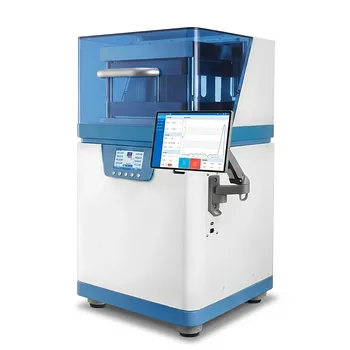
High-temperature high-pressure reactors, or autoclaves, provide the critical energy and confinement necessary for hydrothermal-assisted coating. These devices create a sealed environment that maintains constant elevated temperatures (typically 120 °C or higher) and generates autogenous pressure. This specific combination accelerates the interaction between graphene oxide (GO) dispersions and templates, facilitating a uniform, dense deposition that standard immersion processes cannot achieve.
Core Takeaway: The primary function of an autoclave in GO coating is to create a subcritical hydrothermal environment that overcomes kinetic limitations, forcing GO nanosheets to interact intimately with complex 3D surfaces for superior adhesion and structural integrity.
The Role of Autogenous Pressure in Surface Engineering
Accelerating Interfacial Interactions
In a standard environment, the interaction between graphene oxide and a substrate can be slow and superficial. The autogenous pressure generated within a sealed reactor acts as a driving force, physically pushing the GO particles against the template surface. This ensures that the dispersion makes contact with every available reactive site, significantly accelerating the coating timeline.
Penetration of Complex 3D Geometries
For materials with intricate internal structures or open pores, surface tension often prevents standard liquids from entering deep cavities. The high-pressure environment of an autoclave drives the GO dispersion into internal pores, much like how pressure forces pitch into graphite blocks during industrial impregnation. This results in a continuous and dense pre-coating layer that follows the exact contour of the template.
Enhancing Molecular Solubility and Activity
High temperatures within the reactor increase the solubility and reaction activity of precursor molecules. This environment promotes the uniform nucleation of the GO sheets, preventing the clumping or "stacking" that often occurs in atmospheric processes. The result is a more homogenous layer that serves as a better foundation for subsequent reduction to rGO.
Hydrothermal Synergy and Material Integrity
Promoting In-Situ Reduction and Assembly
The hydrothermal environment does more than just deposit material; it facilitates the self-assembly and partial reduction of graphene oxide. By operating in a confined, high-energy space, the reactor encourages GO sheets to align into highly structured formations. These aligned structures are vital for achieving high electrical conductivity and high specific surface areas in the final product.
Overcoming Kinetic Limitations
Many chemical reactions required for stable coating are kinetically "sluggish" at room temperature and pressure. The subcritical state achieved inside a high-pressure reactor provides the thermal energy necessary to overcome these barriers. This allows for complex thermochemical reactions, such as the carbonization and oxidation of precursors, to occur without the need for harsh chemical catalysts.
Enabling "Green" Chemical Synthesis
Because the autoclave uses physical pressure and heat to drive reactions, it often eliminates the need for strong acids or expensive organic solvents. This makes the hydrothermal-assisted immersion process a cornerstone of sustainable laboratory and industrial practices. It achieves high-performance coatings while maintaining a cleaner, safer chemical footprint.
Understanding the Trade-offs
Equipment and Safety Requirements
The primary trade-off for using high-pressure reactors is the increased requirement for safety and precision. Because these systems operate under extreme autogenous pressure, the sealing mechanisms must be impeccably maintained to prevent leaks or catastrophic failure. Unlike open-atmosphere furnaces, autoclaves require specialized training to manage the stable reactant proportions needed for consistent results.
Precision vs. Throughput
While autoclaves provide superior coating quality, they are often batch-process limited. The need to seal the vessel, ramp up to temperature, and allow for a controlled cooling period means that throughput may be lower than continuous-feed atmospheric systems. Furthermore, precise temperature control is mandatory; even minor fluctuations can alter the autogenous pressure, leading to variations in coating thickness or density.
How to Apply This to Your Project
Making the Right Choice for Your Goal
To determine if a high-temperature high-pressure reactor is the correct tool for your GO coating application, consider your primary objective:
- If your primary focus is coating complex 3D templates: Use an autoclave to ensure the autogenous pressure drives the GO into internal pores and intricate geometries.
- If your primary focus is green synthesis and safety: Leverage the hydrothermal environment to avoid using harsh oxidants or strong acids that would otherwise be required at atmospheric pressure.
- If your primary focus is maximum electrical conductivity: Use the high-pressure environment to promote the self-assembly of highly aligned graphene structures before final thermal reduction.
- If your primary focus is high-volume, low-cost surface treatment: Consider whether a standard immersion process or an atmosphere furnace might be more cost-effective if deep penetration is not required.
The strategic use of high-pressure reactors transforms graphene oxide from a simple surface additive into a deeply integrated, high-performance structural coating.
Summary Table:
| Condition | Primary Function | Key Benefit |
|---|---|---|
| Elevated Temp (120°C+) | Increases molecular solubility | Overcomes kinetic limitations for faster reaction times. |
| Autogenous Pressure | Drives dispersion into internal pores | Ensures dense, uniform deposition on complex 3D geometries. |
| Subcritical State | Promotes in-situ self-assembly | Creates highly aligned structures for superior conductivity. |
| Sealed Confinement | Maintains hydrothermal synergy | Enables green chemical synthesis without harsh catalysts. |
Elevate Your Graphene Research with KINTEK Precision
Achieving uniform, high-performance graphene oxide coatings requires the perfect balance of heat and pressure. KINTEK specializes in high-performance laboratory solutions, providing advanced high-temperature high-pressure reactors and autoclaves designed to meet the rigorous demands of hydrothermal synthesis.
Our equipment ensures the stable autogenous pressure and precise thermal control necessary to overcome kinetic barriers, allowing you to coat complex 3D geometries with unparalleled structural integrity. Beyond reactors, KINTEK offers a comprehensive range of laboratory equipment, from high-temperature muffle and vacuum furnaces to battery research tools and cooling solutions.
Ready to optimize your material deposition and embrace green chemical synthesis? Contact our laboratory equipment experts today to find the ideal high-pressure solution for your project's specific needs.
References
- Somayya E. Taher, Rashid K. Abu Al‐Rub. Mechanical properties of graphene-based gyroidal sheet/shell architected lattices. DOI: 10.1007/s41127-023-00066-2
This article is also based on technical information from Kintek Solution Knowledge Base .
Related Products
- Customizable Laboratory High Temperature High Pressure Reactors for Diverse Scientific Applications
- High Pressure Laboratory Autoclave Reactor for Hydrothermal Synthesis
- Mini SS High Pressure Autoclave Reactor for Laboratory Use
- Stainless High Pressure Autoclave Reactor Laboratory Pressure Reactor
- Customizable High Pressure Reactors for Advanced Scientific and Industrial Applications
People Also Ask
- How do high-pressure and high-temperature reactors ensure the effective treatment of lignocellulosic wastewater in WAO?
- What equipment is required for high-pressure high-temperature reactions? Master Extreme Chemistry Safely
- How do you control high pressure in a reactor? A Guide to Safe & Stable Operation
- Why is argon better than nitrogen for inert atmosphere? Ensure Absolute Reactivity & Stability
- How does initial oxygen pressure affect the wet oxidation of pharmaceutical sludge? Master Your Oxidation Depth