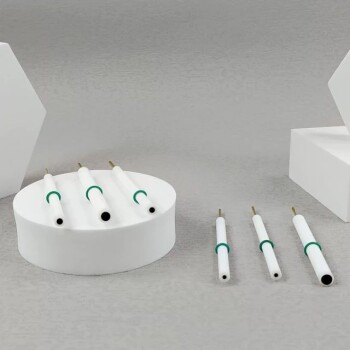
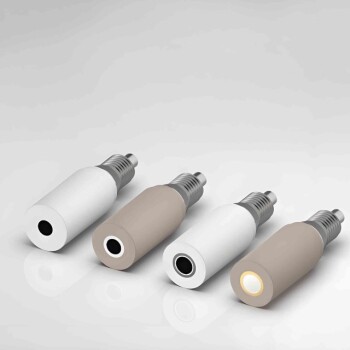
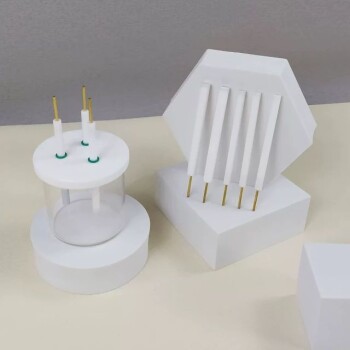
The carbon rod acts as the indispensable current source or sink within a three-electrode system. It completes the electrical circuit required for electrochemical water splitting by facilitating charge exchange with the working electrode (where the Co4N@NC catalyst is located). Because it is chemically inert and highly conductive, it allows for the precise measurement of catalytic activity without introducing secondary chemical variables.
Core Takeaway: A carbon rod serves as a stable, non-reactive auxiliary electrode that completes the current path, ensuring that the performance data collected from catalysts like Co4N@NC is accurate and free from metallic contamination.
The Role of the Counter Electrode in Three-Electrode Systems
Completing the Electrical Circuit
For any electrochemical reaction involving current flow, a complete path for electrons is required. In a three-electrode setup, the carbon rod acts as the auxiliary electrode, serving as the partner to the working electrode to allow current to pass through the electrolyte.
Acting as a Current Source or Sink
The carbon rod facilitates the "other half" of the water-splitting reaction, providing or accepting the electrons necessary for the Co4N@NC catalyst to function. This allows the system to maintain charge neutrality within the electrochemical cell during high-current experiments.
Isclating Potential Measurements
By using a separate counter electrode, the system can measure the potential of the working electrode against a reference electrode without the interference of current-induced voltage drops. This setup ensures that the recorded overpotential for the Co4N@NC catalyst is a true reflection of its intrinsic efficiency.
Why Carbon is Selected for Catalysts like Co4N@NC
Superior Chemical Stability and Corrosion Resistance
Water splitting experiments often occur in harsh environments, such as strong acid electrolytes like perchloric acid. Carbon rods possess excellent corrosion resistance, meaning they do not degrade or lose structural integrity even when subjected to high voltages and corrosive chemicals.
Prevention of Working Electrode Contamination
Unlike some metal electrodes that may leach ions into the solution, a carbon rod is chemically stable and non-dissolving. This prevents foreign metal ions from migrating to the working electrode and inadvertently "poisoning" or falsely enhancing the performance of the Co4N@NC catalyst.
High Conductivity and Surface Area
The carbon rod provides a sufficient charge exchange area and high electrical conductivity to handle large current densities. This ensures that the counter electrode never becomes the "bottleneck" of the experiment, allowing the researcher to push the Co4N@NC catalyst to its performance limits.
Understanding the Trade-offs
Carbon vs. Platinum Electrodes
While platinum is a common counter electrode, it can sometimes dissolve and redeposit onto the working electrode, leading to false-positive results in hydrogen evolution reactions (HER). Carbon rods are often preferred in specific catalyst studies because they eliminate this risk of metallic cross-contamination.
Surface Area Limitations
To ensure the counter electrode does not limit the reaction, its electroactive surface area should ideally be significantly larger than that of the working electrode. If a carbon rod is too small, it may become polarized, potentially affecting the stability of the overall measurement during long-term testing.
How to Apply This to Your Research Project
Best Practices for Electrode Selection
- If your primary focus is high-precision catalyst characterization: Use a high-purity carbon rod to ensure no metallic impurities interfere with the Co4N@NC surface chemistry.
- If your primary focus is long-term stability testing (Durability): Regularly inspect the carbon rod for surface erosion, as even stable materials can eventually degrade under extreme, continuous current loads.
- If your primary focus is high-current density applications: Ensure the carbon rod has a significantly larger surface area than your working electrode to prevent it from becoming the rate-limiting factor in the cell.
By utilizing a carbon rod as a counter electrode, you safeguard the integrity of your electrochemical data and ensure that the observed performance is a direct result of the Co4N@NC catalyst's properties.
Summary Table:
| Key Function | Role in Three-Electrode System | Benefit for Catalyst Research |
|---|---|---|
| Circuit Completion | Acts as the auxiliary electrode | Facilitates charge exchange and current flow for the working electrode. |
| Current Source/Sink | Maintains charge neutrality | Allows for high-current experiments without destabilizing the electrolyte. |
| Chemical Inertness | Resists corrosion/dissolution | Prevents metallic ions from leaching and poisoning the catalyst surface. |
| Potential Isolation | Eliminates voltage drops | Ensures the measured overpotential reflects the catalyst's true efficiency. |
Elevate Your Electrochemical Research with KINTEK
Precision is paramount when characterizing high-performance catalysts like Co4N@NC. KINTEK provides the specialized tools you need to ensure data integrity, offering a comprehensive range of electrolytic cells and high-purity electrodes (carbon, platinum, and more) specifically designed to eliminate experimental variables and prevent cross-contamination.
Our expertise extends across the entire laboratory workflow. Whether you require high-temperature high-pressure reactors and autoclaves for material synthesis, ball mills for sample preparation, or vacuum furnaces for heat treatment, KINTEK delivers reliable, high-quality solutions tailored to researchers and industrial laboratories alike.
Ready to optimize your experimental setup? Contact our technical experts today to find the perfect equipment and consumables for your next breakthrough.
References
- Deliang Zhang, Debao Wang. Space-confined ultrafine Co4N nanodots within an N-doped carbon framework on carbon cloth for highly efficient universal pH overall water splitting. DOI: 10.1007/s40843-022-2293-0
This article is also based on technical information from Kintek Solution Knowledge Base .
Related Products
- Glassy Carbon Electrochemical Electrode
- RRDE rotating disk (ring disk) electrode / compatible with PINE, Japanese ALS, Swiss Metrohm glassy carbon platinum
- Glassy Carbon Sheet RVC for Electrochemical Experiments
- Conductive Carbon Cloth Carbon Paper Carbon Felt for Electrodes and Batteries
- Platinum Auxiliary Electrode for Laboratory Use
People Also Ask
- How do the glassy carbon electrode, SCE, and graphite rod work together in an enzymatic fuel cell? Optimize EFC Testing
- Why is glassy carbon selected for mediator-assisted indirect oxidation of glycerol? The Key to Unbiased Research
- What are the functions of a glassy carbon electrode in CV testing of antioxidants? Enhance Your Redox Analysis Accuracy
- What characteristics make glassy carbon electrodes suitable as anodes? Ideal for Pure Molten Salt Electrolysis
- What are the primary physicochemical reasons for selecting a carbon electrode as the anode in aluminum recovery? 5 Keys