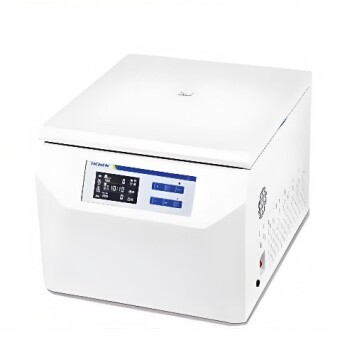
A high-pressure reactor functions as a precision control vessel that establishes a sealed, hydrothermal environment essential for synthesizing complex materials like hydroxyapatite. It allows the reaction mixture to reach temperatures significantly exceeding the atmospheric boiling point, creating a closed system where temperature, pressure, and time can be manipulated to drive specific chemical outcomes.
The reactor's closed environment is not merely about heating; it generates autogenous pressure that ensures high reproducibility of the reaction. This precise control is the mechanism that allows for the uniform incorporation of molybdate anions and the creation of a mesoporous structure, which are critical for the material's performance as a heterogeneous catalyst.
The Role of the Reactor Environment
Overcoming Atmospheric Limits
The primary function of the high-pressure reactor is to maintain a closed system. In open vessels, synthesis is limited by the boiling point of the solvent (usually water).
By sealing the vessel, the reactor allows the temperature to rise well above 100°C. This forces the internal pressure to increase autogenously (self-generated pressure), creating a supercritical or near-supercritical environment that fundamentally changes how precursors interact.
Enhancing Reactivity and Solubility
The elevated temperature and pressure significantly increase the solubility and reactivity of the precursor materials.
This environment ensures that the hydroxyapatite precursors dissolve and react more completely than they would under standard ambient conditions. It promotes the uniform dispersion of reactants, preventing the segregation of components during the synthesis.
Controlling Material Architecture
Precision Phase Control
The reactor serves as a tool for phase selection. By locking in specific temperature and pressure parameters, you can dictate the exact phase composition of the final powder.
This prevents the formation of unwanted byproducts or secondary phases. The result is a pure, highly reproducible hydroxyapatite phase that serves as a stable host for other ions.
Regulating Molybdate Incorporation
For synthesis involving molybdate anions, the reactor’s ability to maintain constant, elevated pressure is vital.
The high-pressure environment facilitates the uniform doping of molybdate anions into the hydroxyapatite lattice. This "in-situ" precipitation ensures that the functional anions are evenly distributed throughout the material rather than just coating the surface.
Engineering Mesoporous Structures
Perhaps the most critical function for catalysis applications is the formation of mesoporous structures.
The hydrothermal treatment controls the nucleation and growth rates of crystals (often promoting anisotropic growth). This regulation creates a material with a high specific surface area and a defined pore structure, which maximizes the contact area for catalytic reactions.
Understanding the Trade-offs
Sensitivity to Parameters
While the reactor offers control, it also demands extreme precision. Because the system is closed, slight deviations in the preset temperature or reaction time can drastically alter the final product.
If the temperature is too low, the crystallinity may be poor; if it is too high, the mesoporous structure might collapse, reducing surface area.
Reproducibility vs. Complexity
The high-pressure reactor ensures high reproducibility, meaning you can create the exact same powder batch after batch.
However, this comes at the cost of operational complexity. Unlike simple precipitation methods, the hydrothermal approach requires careful management of safety protocols and equipment maintenance due to the high pressures involved.
Making the Right Choice for Your Goal
To maximize the utility of your hydrothermal synthesis, consider which material property is most critical for your application:
- If your primary focus is Catalytic Activity: Prioritize parameters that maximize the specific surface area and mesoporous structure to ensure reactants can easily access active sites.
- If your primary focus is Material Stability: Focus on the precise regulation of phase composition and crystallinity to ensure the hydroxyapatite lattice is robust enough to hold the molybdate anions without degrading.
By leveraging the high-pressure reactor to strictly control the synthesis environment, you transform basic chemical precursors into a highly engineered, functional catalyst.
Summary Table:
| Feature | Function in Hydrothermal Synthesis | Benefit to Material |
|---|---|---|
| Sealed Vessel | Overcomes solvent boiling points | Increases precursor solubility & reactivity |
| Autogenous Pressure | Maintains a closed, high-pressure system | Ensures uniform molybdate anion incorporation |
| Thermal Precision | Regulates nucleation and crystal growth | Creates high-surface-area mesoporous structures |
| Phase Selection | Eliminates secondary phase formation | Produces high-purity, reproducible catalyst phases |
Elevate Your Material Research with KINTEK Precision
Unlock the full potential of hydrothermal synthesis with KINTEK’s advanced laboratory solutions. Whether you are engineering complex catalysts or developing next-generation biomaterials, our high-temperature high-pressure reactors and autoclaves provide the precision control required for uniform doping and mesoporous structure formation.
From high-temperature furnaces and crushing systems to specialized battery research tools and electrolytic cells, KINTEK specializes in providing the comprehensive equipment and consumables that modern laboratories demand.
Ready to optimize your synthesis results? Contact us today to find the perfect reactor for your application!
References
- Edyta Słupek, Jacek Gębicki. New generation of green sorbents for desulfurization of biogas streams. DOI: 10.21175/rad.abstr.book.2023.17.3
This article is also based on technical information from Kintek Solution Knowledge Base .
Related Products
- Customizable Laboratory High Temperature High Pressure Reactors for Diverse Scientific Applications
- Customizable High Pressure Reactors for Advanced Scientific and Industrial Applications
- Stainless High Pressure Autoclave Reactor Laboratory Pressure Reactor
- Mini SS High Pressure Autoclave Reactor for Laboratory Use
- High Pressure Laboratory Autoclave Reactor for Hydrothermal Synthesis
People Also Ask
- How do high-pressure and high-temperature reactors ensure the effective treatment of lignocellulosic wastewater in WAO?
- What equipment is required for high-pressure high-temperature reactions? Master Extreme Chemistry Safely
- How do you control high pressure in a reactor? A Guide to Safe & Stable Operation
- How does initial oxygen pressure affect the wet oxidation of pharmaceutical sludge? Master Your Oxidation Depth
- Why is argon better than nitrogen for inert atmosphere? Ensure Absolute Reactivity & Stability