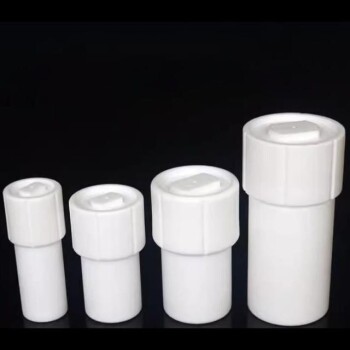
The Teflon-lined high-pressure autoclave serves as the foundational reaction vessel for the hydrothermal synthesis of SAPO-34 zeolite seeds. Its primary function is to create a sealed, high-pressure environment that sustains temperatures around 180°C for extended periods (typically 7 hours), while the Teflon liner provides critical chemical resistance against strong alkaline agents like TEAOH. This combination of containment and corrosion resistance is mandatory to transform the synthesis gel (mother liquor) into high-purity crystalline structures.
The autoclave acts as a thermodynamic forcing chamber; it prevents the solvent from boiling away while maintaining the pressure and chemical purity required to rearrange amorphous gels into ordered SAPO-34 crystals.
The Physics of Crystallization
To understand the necessity of this equipment, one must look at the thermodynamic requirements of zeolite synthesis.
Sustaining Hydrothermal Conditions
The synthesis of SAPO-34 requires temperatures (approx. 180°C) that far exceed the boiling point of water at standard atmospheric pressure.
The autoclave provides a hermetically sealed environment. As the temperature rises, the vapor pressure increases, creating an autogenous pressure system. This prevents the liquid components from evaporating and allows the reaction to proceed in a liquid-phase hydrothermal state.
Forcing Structural Rearrangement
Under these constant high-pressure conditions, the solubility of the reactants changes.
The environment facilitates the dissolution of the aluminosilicate gel and the subsequent rearrangement of molecules. This leads to the nucleation and growth of the zeolite framework, transforming the raw "mother liquor" into a highly ordered crystalline structure.
The Role of the Teflon Liner
While the steel shell handles the pressure, the internal Teflon (PTFE) liner handles the chemistry.
Resisting Alkaline Attack
SAPO-34 synthesis utilizes strong alkaline template agents, specifically TEAOH (Tetraethylammonium hydroxide).
Direct contact between these alkaline agents and the stainless steel body of an autoclave would cause severe corrosion. The Teflon liner is chemically inert, acting as a barrier that allows the aggressive chemical reaction to occur without degrading the vessel.
Ensuring Crystal Purity
The integrity of the liner is directly linked to the quality of the final product.
By preventing the corrosion of the steel vessel, the liner ensures that no metallic impurities leach into the synthesis gel. This is essential for achieving high-purity SAPO-34 crystals that are free from foreign contaminants.
Understanding the Trade-offs
While the Teflon-lined autoclave is the standard for this synthesis, it introduces specific operational constraints that must be managed.
Temperature Limitations
Teflon has a lower thermal ceiling than stainless steel. While perfect for the 180°C requirement of SAPO-34, the liner can deform or degrade if the synthesis temperature is pushed significantly higher for experimental purposes.
Thermal Uniformity Risks
The autoclave relies on external heating (usually an oven).
If the autoclave is not positioned correctly, or if the oven has cold spots, the thermal field within the reactor may become non-uniform. As noted in general zeolite synthesis principles, a uniform thermal field is critical. Uneven heating can lead to irregular pore structures or incomplete crystallization.
Making the Right Choice for Your Goal
Success in synthesizing SAPO-34 seeds depends on how strictly you control the variables enabled by the autoclave.
- If your primary focus is Crystal Purity: Prioritize the condition of the Teflon liner; any scratches or residue can harbor contaminants or allow the alkaline TEAOH to interact with the steel shell.
- If your primary focus is Structural Regularity: Ensure your heating source provides a stable, uniform temperature of 180°C for the full 7 hours to guarantee consistent pressure generation.
The autoclave is not just a container; it is an active participant that defines the thermodynamic boundaries in which the SAPO-34 chemistry creates order from chaos.
Summary Table:
| Feature | Function in SAPO-34 Synthesis | Critical Benefit |
|---|---|---|
| Sealed Steel Vessel | Maintains 180°C autogenous pressure | Prevents solvent loss, forcing liquid-phase reaction |
| PTFE (Teflon) Liner | Provides inert chemical barrier | Resists TEAOH alkaline attack and prevents metal leaching |
| Thermal Stability | Sustains 7-hour heating cycle | Ensures uniform nucleation and consistent crystal framework |
| Pressure Control | Facilitates structural rearrangement | Transforms amorphous gels into high-purity crystalline seeds |
Elevate Your Zeolite Synthesis with KINTEK Precision
Achieving high-purity SAPO-34 crystals requires equipment that can withstand aggressive chemical environments and precise thermodynamic demands. KINTEK specializes in high-performance laboratory equipment, offering a premium range of high-temperature high-pressure reactors and autoclaves designed specifically for hydrothermal synthesis.
Our Teflon-lined solutions ensure zero contamination from alkaline agents and superior thermal uniformity, protecting your research integrity. Beyond autoclaves, we provide a comprehensive portfolio of muffle and tube furnaces, crushing and milling systems, and PTFE/ceramic consumables to support every stage of your material science workflow.
Ready to optimize your crystallization process? Contact KINTEK experts today to find the perfect reactor for your lab!
References
- Fnu Gorky, Maria L. Carreon. Performance and Enhanced Efficiency Induced by Cold Plasma on SAPO-34 Membranes for CO2 and CH4 Mixtures. DOI: 10.3390/membranes14080178
This article is also based on technical information from Kintek Solution Knowledge Base .
Related Products
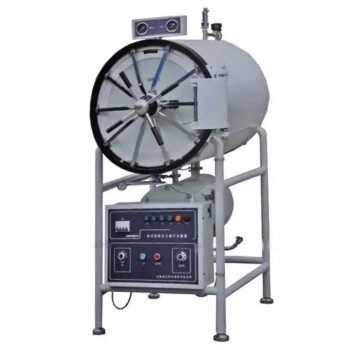
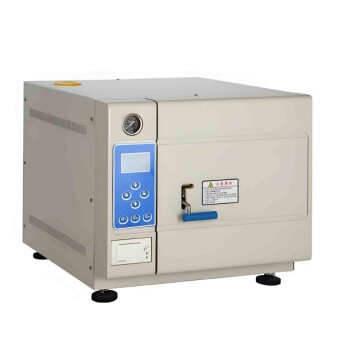
- Laboratory High Pressure Horizontal Autoclave Steam Sterilizer for Lab Use
- Stainless High Pressure Autoclave Reactor Laboratory Pressure Reactor
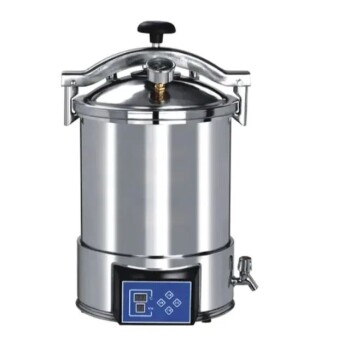
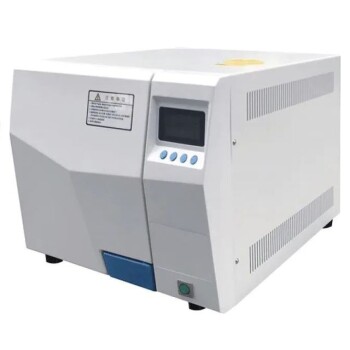
- Desktop Fast High Pressure Laboratory Autoclave Sterilizer 16L 24L for Lab Use
- High Pressure Laboratory Autoclave Reactor for Hydrothermal Synthesis
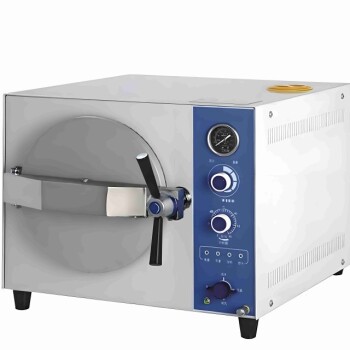
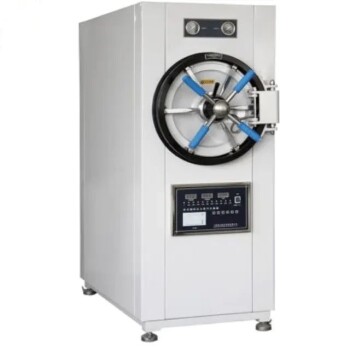
- Laboratory High Pressure Steam Sterilizer Vertical Autoclave for Lab Department
People Also Ask
- Why is a laboratory high-pressure autoclave sterilizer necessary? Ensure Accuracy in Antibacterial Research
- What is the role of a laboratory high-pressure autoclave in the conversion of furfural to piperidine? Optimize Yields
- What is the primary function of a laboratory autoclave in the pre-treatment of medical plastic waste for liquid fuel?
- What is an autoclave laboratory equipment? The Ultimate Guide to Steam Sterilization
- What is a laboratory autoclave? A Guide to Sterilization with Pressurized Steam