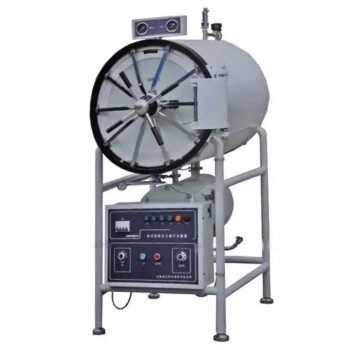
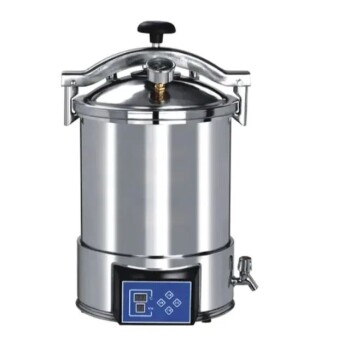
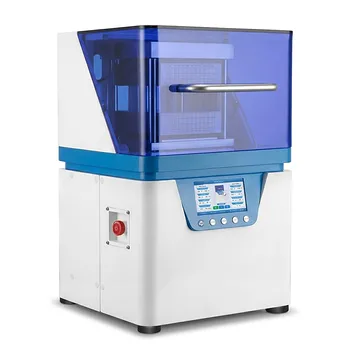
The high-pressure reactor acts as the essential thermodynamic catalyst for achieving controlled in-situ growth of cerium oxide ($CeO_2$) on carbon nanotubes (CNTs). By providing a sealed, high-temperature environment, it facilitates the precise nucleation and crystallization of cerium sources directly onto the CNT surface, ensuring a composite with high structural integrity and optimized electronic properties.
The core function of a high-pressure reactor is to provide a controlled hydrothermal environment that drives the in-situ nucleation and morphological regulation of $CeO_2$ nanoparticles. This process is vital for ensuring strong chemical bonding and uniform distribution, which are critical for the catalyst support's stability and performance.
Facilitating In-Situ Nucleation and Growth
Creating High-Energy Hydrothermal Conditions
The reactor provides a sealed environment where aqueous solutions reach temperatures significantly higher than their boiling points. This high-temperature and high-pressure state increases the reactivity of the cerium precursors, enabling rapid hydrolysis and polycondensation.
Driving In-Situ Deposition
In this confined space, cerium sources undergo in-situ nucleation directly on the surface of the carbon nanotubes. This direct growth is superior to simple physical mixing, as it creates a more intimate and stable interface between the oxide and the carbon framework.
Enhancing Chemical Interaction
The high-pressure environment strengthens the chemical interactions between functional groups, such as the carboxyl groups on the carbon nanotubes and the hydroxyl groups on the cerium oxide. This results in stable chemical bonding that prevents the active species from shedding during subsequent use.
Precision Control of Material Properties
Regulating Nanostructure Morphology
By precisely controlling temperature, pressure, and reaction time, the reactor allows for the regulation of $CeO_2$ into specific shapes like nanorods, nanocubes, or octahedra. This morphological control is essential for exposing specific crystal planes that enhance catalytic activity.
Optimizing Dielectric and Electronic Characteristics
The hydrothermal environment improves the dielectric loss characteristics of the composite material. This is particularly important for applications involving microwave fields, as it helps the support maintain structural stability and prevents species shedding.
Promoting Oxygen Vacancies and Active Sites
The reactor's extreme conditions facilitate the uniform integration of doping elements and the formation of oxygen vacancies on the $CeO_2$ surface. These vacancies are critical for improving the adsorption and reaction performance of the final catalyst.
Ensuring Material Purity and Stability
Utilizing PTFE Liners for Integrity
Most high-pressure reactors use a PTFE (Polytetrafluoroethylene) liner due to its chemical inertness and corrosion resistance. This liner prevents the reaction liquid from eroding the reactor walls, ensuring that the resulting $CeO_2-CNT$ composite remains free of metallic contaminants.
Enabling Strong Metal-Support Interaction (SMSI)
The controlled environment establishes the structural foundation for Strong Metal-Support Interaction (SMSI). This interaction is vital for the stability of metal active components that may be loaded onto the $CeO_2-CNT$ support in later stages.
Controlling Autogenous Pressure
The reactor operates under autogenous pressure, which is generated naturally as the temperature rises within the sealed vessel. This pressure guides crystal growth along specific directions, resulting in porous structures with high aspect ratios.
Understanding the Technical Trade-offs
Balancing Temperature and Reaction Time
While higher temperatures increase reactivity, excessive heat or prolonged reaction times can lead to overgrowth or agglomeration of $CeO_2$ particles. This can reduce the surface area and diminish the benefits of the nano-composite structure.
Safety and Pressure Limitations
Operating high-pressure autoclaves requires strict adherence to safety protocols to manage autogenous pressure spikes. Exceeding the pressure rating of the vessel or the thermal limits of the PTFE liner can lead to equipment failure or sample contamination.
Optimizing Your Hydrothermal Synthesis Strategy
How to Apply This to Your Project
When utilizing a high-pressure reactor for $CeO_2-CNT$ synthesis, your parameters should align with your specific performance requirements:
- If your primary focus is Maximizing Surface Area: Prioritize lower temperatures and shorter reaction times to prevent nanoparticle overgrowth and maintain a high aspect ratio.
- If your primary focus is Structural Durability: Utilize higher temperatures within the reactor to strengthen the chemical bonding between the $CeO_2$ and the CNT functional groups.
- If your primary focus is Catalytic Activity: Adjust the hydrothermal duration to specifically target the exposure of high-energy crystal planes and the creation of oxygen vacancies.
By mastering the hydrothermal environment within the high-pressure reactor, you can engineer $CeO_2-CNT$ supports with the precise morphology and stability required for advanced catalytic applications.
Summary Table:
| Key Function | Benefit for CeO2-CNT Composite | Research Outcome |
|---|---|---|
| In-Situ Nucleation | Direct growth on CNT surfaces | Superior structural integrity and interface stability |
| Morphological Control | Precise regulation of shapes (nanorods, cubes) | Exposure of specific crystal planes for better activity |
| Oxygen Vacancy Creation | High-energy hydrothermal environment | Improved adsorption and catalytic reaction performance |
| PTFE-Lined Protection | Chemical inertness and corrosion resistance | High material purity with zero metallic contamination |
| Autogenous Pressure | Guided crystal growth | Porous structures with high aspect ratios |
Elevate Your Nanomaterial Synthesis with KINTEK Precision
Achieving the perfect CeO2-CNT composite requires absolute control over temperature and pressure. KINTEK specializes in high-performance laboratory equipment designed to meet the rigorous demands of hydrothermal synthesis. Our portfolio features industry-leading high-pressure high-pressure reactors and autoclaves, alongside a comprehensive range of high-temperature furnaces (muffle, tube, vacuum, CVD), hydraulic presses, and essential consumables like PTFE liners and crucibles.
Whether you are focusing on battery research, catalysis, or advanced material science, KINTEK provides the reliability and technical support you need to ensure consistent, high-purity results.
Ready to optimize your lab’s efficiency? Contact our experts today to find the ideal reactor solution for your research!
References
- Alazar Araia, Jianli Hu. Insight into Enhanced Microwave Heating for Ammonia Synthesis: Effects of CNT on the Cs–Ru/CeO<sub>2</sub> Catalyst. DOI: 10.1021/acsami.3c00132
This article is also based on technical information from Kintek Solution Knowledge Base .
Related Products
- High Pressure Laboratory Autoclave Reactor for Hydrothermal Synthesis
- Stainless High Pressure Autoclave Reactor Laboratory Pressure Reactor
- Customizable Laboratory High Temperature High Pressure Reactors for Diverse Scientific Applications
- Customizable High Pressure Reactors for Advanced Scientific and Industrial Applications
- Mini SS High Pressure Autoclave Reactor for Laboratory Use
People Also Ask
- What role does a high-pressure reactor (autoclave) play in the synthesis of NiCuFe-LDH? Master Hydrothermal Growth
- What Role Does a High-Pressure Reactor or Autoclave Play in HA Catalyst Synthesis? Achieve High Surface Area Materials
- What equipment is required for hydrothermal synthesis of Ga0.25Zn4.67S5.08? Optimize Your Semiconductor Production
- What is the function of a high-pressure reactor in the hydrothermal synthesis of boehmite? Expert Process Insights
- What role does an autoclave play in the synthesis of MnO2 nanofibers? Mastering Hydrothermal Growth