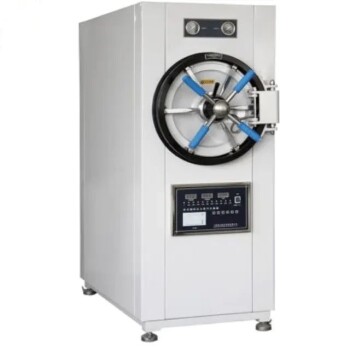
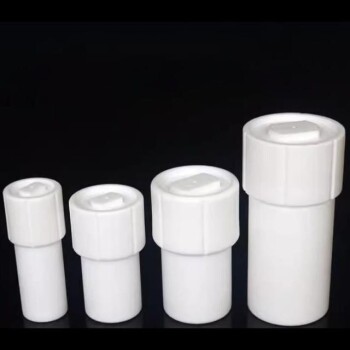
The PTFE-lined autoclave is the critical vessel that enables the hydrothermal synthesis of Al-MCM-41 by providing a sealed, corrosion-resistant environment. It maintains the reaction at 110 °C for 24 hours under autogenous pressure, which is essential for the directed self-assembly of the ordered mesoporous structure while protecting the stainless steel reactor from chemical attack.
A PTFE-lined autoclave serves two simultaneous roles: it acts as a pressure vessel to facilitate the crystallization of mesoporous structures and as a chemical barrier to prevent reactor corrosion and product contamination. This ensures the Al-MCM-41 achieves the high purity and structural regularity required for catalyst supports.
Facilitating the Hydrothermal Environment
Creation of Autogenous Pressure
The autoclave creates a sealed system where the internal pressure rises naturally as the temperature increases to 110 °C. This autogenous pressure allows the reaction mixture to reach a subcritical state, which significantly enhances the solubility and chemical activity of the reactants.
Directed Self-Assembly of Mesostructures
Under these high-pressure conditions, the precursor components undergo directed self-assembly. This process is what transforms the initial mixture into the ordered, hexagonal mesoporous framework that defines Al-MCM-41.
Precise Temperature Control
By maintaining a stable temperature for an extended period (typically 24 hours), the autoclave provides the energy necessary for the crystallization of the framework. Consistent heat is vital for achieving a uniform pore size distribution across the catalyst support.
Protecting Reactor Integrity and Product Purity
Resistance to Strongly Alkaline Environments
The synthesis of Al-MCM-41 often involves highly alkaline reaction liquids or gels. The PTFE (polytetrafluoroethylene) liner is chosen for its exceptional chemical inertness, which shields the stainless steel outer shell from the corrosive effects of these bases.
Prevention of Metal Impurity Leaching
Without a liner, the alkaline synthesis gel would react with the stainless steel vessel, leaching metal ions into the mixture. The PTFE barrier ensures that no impurity metal ions contaminate the Al-MCM-41, preserving its catalytic properties and high specific surface area.
Mechanical vs. Chemical Roles
In this setup, the equipment utilizes a "division of labor" strategy. The stainless steel exterior handles the mechanical load of the high internal pressure, while the PTFE liner manages the chemical compatibility with the precursors.
Understanding the Trade-offs
Temperature Limitations of PTFE
While PTFE is highly resistant to chemicals, it has a functional temperature ceiling, typically around 220–250 °C. For syntheses requiring extreme heat beyond these limits, alternative liners like PPL (Polyphenylene polymers) or gold-plated vessels may be necessary.
Pressure Safety and Sealing
The effectiveness of the autoclave depends entirely on the integrity of the seal between the liner and the cap. If the seal is compromised, the loss of autogenous pressure will prevent the formation of the ordered mesoporous structure, resulting in an amorphous product.
Heat Transfer Resistance
PTFE is an insulator, meaning it does not conduct heat as efficiently as metal. This creates a slight lag in the time it takes for the internal reaction mixture to reach the set temperature of the oven, which must be accounted for in precise kinetic studies.
How to Apply This to Your Synthesis Project
When selecting or operating an autoclave for Al-MCM-41 synthesis, consider the specific requirements of your precursor chemistry and desired surface characteristics.
- If your primary focus is High Structural Order: Ensure the autoclave remains undisturbed at a constant 110 °C to allow for uninterrupted directed self-assembly.
- If your primary focus is Catalyst Purity: Always inspect the PTFE liner for scratches or pitting, as these can harbor contaminants from previous runs or expose the steel shell to corrosion.
- If your primary focus is Scale-up Consistency: Standardize the "fill degree" (the volume of liquid relative to the liner size) to ensure reproducible autogenous pressure across different batches.
By mastering the high-pressure environment of the PTFE-lined autoclave, you ensure the production of high-quality, ordered Al-MCM-41 supports suitable for advanced catalytic applications.
Summary Table:
| Feature | Role in Synthesis | Key Benefit |
|---|---|---|
| Autogenous Pressure | Increases reactant solubility and activity | Enables directed self-assembly of mesostructures |
| PTFE Liner | Provides a chemical barrier against alkaline gels | Prevents metal ion leaching and ensures high purity |
| Stainless Steel Shell | Manages high mechanical internal pressure | Ensures reactor safety and durability during heating |
| Thermal Stability | Constant 110 °C for 24-hour cycles | Achieves uniform pore size and ordered frameworks |
Elevate Your Material Synthesis with KINTEK
Precise hydrothermal synthesis requires equipment that balances mechanical strength with absolute chemical inertness. KINTEK specializes in high-performance laboratory equipment, including high-temperature high-pressure reactors and autoclaves specifically engineered for the rigorous demands of catalyst support development and material science.
Our PTFE-lined solutions ensure the extreme corrosion resistance and structural integrity necessary for creating high-purity Al-MCM-41 and other advanced materials. Beyond reactors, KINTEK offers a comprehensive portfolio featuring muffle and vacuum furnaces, hydraulic presses, crushing and milling systems, and specialized battery research tools.
Ready to achieve superior structural regularity in your synthesis? Contact KINTEK today to find the perfect high-pressure solution for your laboratory needs.
References
- Pichawee Aieamsam-Aung, Sakhon Ratchahat. Upgradation of methane in the biogas by hydrogenation of CO2 in a prototype reactor with double pass operation over optimized Ni-Ce/Al-MCM-41 catalyst. DOI: 10.1038/s41598-023-36425-5
This article is also based on technical information from Kintek Solution Knowledge Base .
Related Products
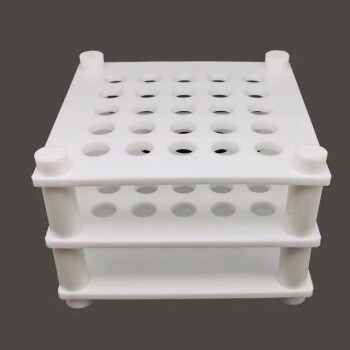
- Custom PTFE Teflon Parts Manufacturer for Centrifuge Tube Racks
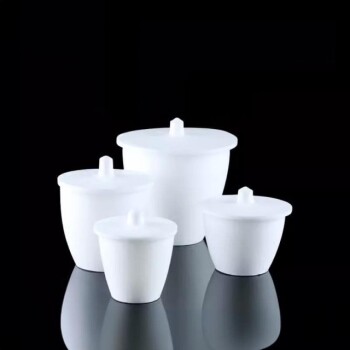
- Custom Machined and Molded PTFE Teflon Parts Manufacturer with PTFE Crucible and Lid
- Custom PTFE Teflon Parts Manufacturer for Hollow Cleaning Basket and Rack Carrier
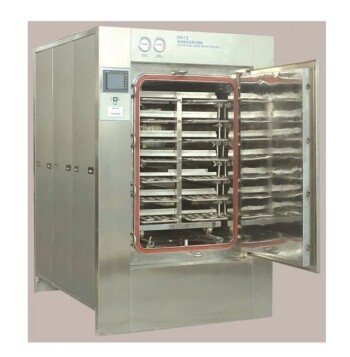
- Laboratory High Pressure Steam Sterilizer Vertical Autoclave for Lab Department
- Laboratory Sterilizer Lab Autoclave Herbal Powder Sterilization Machine for Plant
People Also Ask
- Why is slender PTFE tubing necessary for flow control in multi-channel catalyst aging? Ensure Equal Gas Distribution
- Why are PTFE containers required for PCT leaching tests? Ensure Chemical Inertness and Analytical Precision
- Why are PTFE containers necessary for selective HF etching of MAX phases? Ensure Safe & Pure MXene Synthesis
- What role do PTFE containers play in trace metal detection? Ensure Analytical Precision in Photocatalysis Studies
- Why is a PTFE container required for acid leaching of silicon nanosheets? Ensure High Purity and Safety