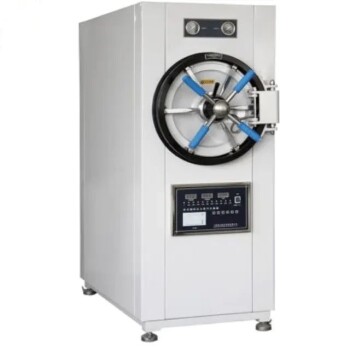
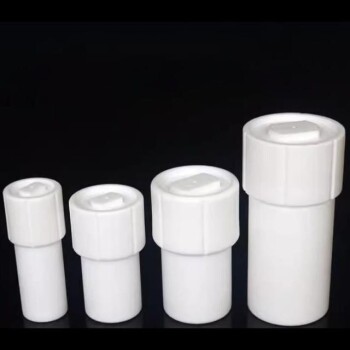
The function of a stainless steel high-pressure autoclave with a PTFE liner is to facilitate the hydrothermal synthesis of Cobalt Oxide (CoO) nanoparticles by creating a sealed, high-pressure environment.
This setup allows solvents like n-octanol and ethanol to react at temperatures (e.g., 200°C) well above their atmospheric boiling points. The resulting increase in vapor pressure significantly improves precursor solubility and reaction speed, while the Polytetrafluoroethylene (PTFE) liner ensures the reaction remains chemically inert and free from metallic contaminants.
Core Takeaway The autoclave system serves a dual purpose: the stainless steel shell generates the high pressure required to force precursor solubility and rapid nucleation, while the PTFE liner acts as a contamination barrier to ensure the chemical purity of the final Cobalt Oxide nanoparticles.
The Mechanics of Hydrothermal Synthesis
Elevating Solvent Performance
The stainless steel outer shell is designed to withstand substantial internal force, creating a completely sealed environment.
When heated to temperatures such as 200°C, solvents like ethanol and n-octanol cannot boil away. Instead, their vapor pressure increases dramatically, altering their physical properties to facilitate reactions that are impossible at standard atmospheric pressure.
Accelerating Precursor Dissolution
Under these high-pressure conditions, the solubility of the Cobalt Oxide precursors is significantly enhanced.
This creates a supersaturated solution where raw materials dissolve and recrystallize efficiently. This environment accelerates the overall reaction rate, moving the process from simple mixing to active chemical transformation.
Controlling Nucleation and Growth
The autoclave maintains a stable thermal regime, which is critical for uniformity.
By keeping the temperature and pressure constant, the system facilitates controlled nucleation. This ensures that the CoO nanostructures grow uniformly, resulting in a consistent particle size distribution rather than a random mixture of shapes and sizes.
The Critical Role of the PTFE Liner
Ensuring Chemical Inertness
While the stainless steel provides structural integrity, it is reactive and prone to corrosion when exposed to harsh chemical environments.
The PTFE (Teflon) liner acts as the primary reaction vessel, isolating the chemical mixture from the steel shell. Its high chemical inertness protects the equipment from degradation, even when utilizing acidic or alkaline precursor solutions.
Preventing Metallic Contamination
For high-performance applications, the purity of Cobalt Oxide nanoparticles is paramount.
If the reaction mixture touched the steel wall, iron, chromium, or nickel ions could leach into the solution. The PTFE liner prevents this contact entirely, ensuring that the final CoO product is free of metallic impurities that would otherwise degrade its catalytic or magnetic properties.
Understanding the Trade-offs
Temperature Limitations of PTFE
While PTFE is excellent for purity, it has thermal limits.
Most PTFE liners effectively handle temperatures up to roughly 200°C–250°C. If your specific CoO synthesis requires temperatures exceeding this threshold, the liner may deform or degrade, necessitating a different liner material (such as PPL) or an unlined alloy reactor.
Batch Processing Constraints
Autoclaves are inherently batch-process tools.
They provide excellent control for small-to-medium scale synthesis but do not easily scale to continuous flow production. This makes them ideal for research and specialized manufacturing, but potentially less efficient for high-volume industrial output.
Making the Right Choice for Your Goal
When configuring your synthesis equipment, prioritize your constraints:
- If your primary focus is high purity: Prioritize the integrity of the PTFE liner to prevent any interaction between the solvent and the stainless steel vessel.
- If your primary focus is reaction speed: Focus on the pressure rating of the stainless steel shell to safely maximize the vapor pressure of your chosen solvents.
Ultimately, the autoclave system transforms a standard chemical mixture into a high-energy environment capable of producing uniform, high-purity Cobalt Oxide nanostructures.
Summary Table:
| Component | Primary Function | Key Benefit for CoO Synthesis |
|---|---|---|
| Stainless Steel Shell | Structural containment & pressure resistance | Enables high-pressure environments for rapid nucleation |
| PTFE (Teflon) Liner | Chemical isolation & inert barrier | Prevents metallic contamination and protects against corrosion |
| Sealed Environment | Prevents solvent evaporation | Increases precursor solubility at temperatures above boiling point |
| Thermal Stability | Consistent heat distribution | Ensures uniform growth and consistent nanoparticle size |
Elevate Your Nanomaterial Research with KINTEK
Precise control over pressure and purity is critical for the successful synthesis of Cobalt Oxide and other high-performance nanoparticles. KINTEK specializes in advanced laboratory solutions, providing robust high-temperature high-pressure reactors and autoclaves equipped with high-quality PTFE liners to safeguard your chemical integrity.
Whether you are focusing on battery research, catalytic development, or advanced material science, our comprehensive range of hydrothermal reactors, crushing systems, and cooling solutions are designed to meet the rigorous demands of modern laboratories.
Ready to optimize your synthesis workflow? Contact KINTEK today to discuss our custom laboratory equipment and consumables tailored to your specific research goals.
References
- Shaohui Guo, Bingqing Wei. Boosting photocatalytic hydrogen production from water by photothermally induced biphase systems. DOI: 10.1038/s41467-021-21526-4
This article is also based on technical information from Kintek Solution Knowledge Base .
Related Products
- Mini SS High Pressure Autoclave Reactor for Laboratory Use
- Portable High Pressure Laboratory Autoclave Steam Sterilizer for Lab Use
- Desktop Fast High Pressure Laboratory Autoclave Sterilizer 16L 24L for Lab Use
- Laboratory High Pressure Horizontal Autoclave Steam Sterilizer for Lab Use
- High Pressure Laboratory Autoclave Reactor for Hydrothermal Synthesis
People Also Ask
- Why use high-pressure reactors for molecular sieve synthesis? Unlock Superior Crystallinity and Framework Control
- What is the function of a high-pressure reactor autoclave? Enhancing Cu/N Co-Doped Carbon Catalyst Synthesis
- Why are high-pressure reactors or autoclaves necessary for the synthesis of new functional materials? Unlock Precision.
- What are the advantages of using a high-pressure reactor like an autoclave? Maximize Liquefaction Speed & Yield
- How are high-pressure reactors used to prepare metaphosphate electrocatalysts? Master In-Situ Precursor Growth