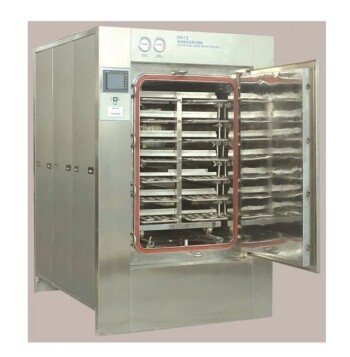
The primary function of an industrial-grade 316 stainless steel autoclave is to serve as a high-fidelity simulator for the extreme thermochemical conditions found within a nuclear power plant. Specifically, it replicates the environment of a Pressurized Water Reactor (PWR) secondary circuit by maintaining temperatures of 270°C and pressures between 5.2 and 5.7 MPa. This sealed system allows researchers to isolate and analyze material behaviors without the risks or inaccessibility of an operating reactor.
Core Insight: The value of this equipment lies in its ability to decouple environmental variables. By creating a controlled, sealed volume, it enables the precise observation of passivation film formation on Alloy 690TT, particularly in the presence of complex variables like lead-contaminated water chemistry.
Creating the Simulation Environment
To understand material longevity in nuclear systems, you cannot simply rely on theoretical models; you must expose materials to the physical reality of the reactor. The 316 stainless steel autoclave bridges the gap between theory and operation.
Precise Physical Replication
The secondary circuit of a PWR operates under specific thermal and hydraulic stresses. The autoclave uses external heating and pressure control systems to reach 270°C and 5.2–5.7 MPa.
These parameters are critical because they represent the "service condition." Testing below these thresholds renders the data irrelevant, as corrosion mechanisms often change drastically with phase transitions or pressure drops.
Chemical Contamination Control
Beyond heat and pressure, the chemical environment is the primary driver of corrosion. The autoclave provides a hermetically sealed environment.
This isolation is necessary to introduce specific contaminants, such as lead, into the water chemistry. In an open system, maintaining specific concentrations of trace impurities is nearly impossible due to evaporation or contamination from the atmosphere.
Material Focus: Alloy 690TT
The primary reference highlights the specific application of this setup for Alloy 690TT. This nickel-based alloy is critical in nuclear steam generators.
The autoclave allows scientists to observe how this specific alloy reacts to the secondary circuit environment, focusing on how well it forms a protective oxide layer (passivation film) or how it degrades when that chemistry is compromised.
The Role in Material Science
The ultimate goal of using this equipment is to predict the future state of reactor components.
Observing Passivation Evolution
In high-temperature water, metals protect themselves by forming a thin oxide layer called a passivation film. The autoclave facilitates the study of this film's formation and evolution.
By simulating the secondary circuit, researchers can determine if the film remains stable or if contaminants (like lead) cause it to break down, leading to stress corrosion cracking.
Accelerated Life Testing
While the primary reference focuses on specific PWR conditions, supplementary context suggests that autoclaves are generally used for long-term durability assessment.
By maintaining stable conditions over extended periods, the equipment simulates years of reactor operation in a shortened timeframe. This reveals "slow" corrosion processes that might be missed in short-term standard exposure tests.
Understanding the Trade-offs
While indispensable, static autoclaves have inherent limitations that you must consider when interpreting test data.
Static vs. Dynamic Flow
Standard sealed autoclaves typically provide a static or low-flow environment.
While excellent for chemical study, they may not perfectly replicate "flow-assisted corrosion" or sheer stress caused by the high-velocity water movement found in actual reactor piping. If flow dynamics are critical to your failure mode, a circulating loop system may be required instead.
Vessel Interaction
The autoclave itself is made of 316 stainless steel. At high temperatures and pressures, the vessel walls can interact with the test solution.
If not carefully monitored, the vessel may release iron, chromium, or nickel ions into the water, potentially altering the precise chemical balance you are trying to maintain for the test specimen.
Making the Right Choice for Your Goal
Selecting the right simulation parameters is defining the success of your experiment.
- If your primary focus is PWR Secondary Circuit simulation: Ensure your equipment is calibrated specifically for 270°C and 5.2–5.7 MPa to accurately test Alloy 690TT behavior in contaminated water.
- If your primary focus is PWR Primary Circuit simulation: You will likely need equipment capable of higher parameters (e.g., 300–360°C and significantly higher pressures) and hydrogenated water chemistry control.
Ultimately, the autoclave functions as a time machine, allowing you to witness the future degradation of critical nuclear components before they are ever installed.
Summary Table:
| Feature | PWR Secondary Circuit Simulation Parameter |
|---|---|
| Equipment Material | Industrial-grade 316 Stainless Steel |
| Temperature Range | 270°C (Standard Test Setting) |
| Pressure Range | 5.2 – 5.7 MPa |
| Target Material | Alloy 690TT (Nickel-based alloy) |
| Primary Research Goal | Passivation film evolution & lead-contamination effects |
| System Type | Hermetically sealed static/low-flow environment |
Elevate Your Nuclear Material Research with KINTEK
Precision is non-negotiable when simulating extreme reactor environments. KINTEK specializes in high-performance high-temperature high-pressure reactors and autoclaves, designed specifically to meet the rigorous demands of nuclear and material science labs. Whether you are studying the passivation of Alloy 690TT or testing stress corrosion cracking, our advanced 316 stainless steel systems provide the stability and control you need.
From high-temperature furnaces and hydraulic presses to specialized battery research tools and PTFE consumables, KINTEK is your partner in laboratory excellence. Ensure your simulation data is accurate and reproducible with our industry-leading equipment.
Ready to optimize your lab’s simulation capabilities?
Contact KINTEK Today to Get a Quote
References
- Weipeng Li, Lijie Qiao. The Coupling Effect of Lead and Polishing Treatments on the Passive Films of Alloy 690TT in High-Temperature and High-Pressure Water. DOI: 10.3389/fmats.2019.00300
This article is also based on technical information from Kintek Solution Knowledge Base .
Related Products
- Mini SS High Pressure Autoclave Reactor for Laboratory Use
- Desktop Fast High Pressure Laboratory Autoclave Sterilizer 16L 24L for Lab Use
- Portable High Pressure Laboratory Autoclave Steam Sterilizer for Lab Use
- Desktop Fast Laboratory Autoclave Sterilizer 35L 50L 90L for Lab Use
- Laboratory High Pressure Horizontal Autoclave Steam Sterilizer for Lab Use
People Also Ask
- Why use high-pressure reactors for molecular sieve synthesis? Unlock Superior Crystallinity and Framework Control
- What are the advantages of using a high-pressure reactor like an autoclave? Maximize Liquefaction Speed & Yield
- What is the function of a high-pressure reactor autoclave? Enhancing Cu/N Co-Doped Carbon Catalyst Synthesis
- Why are high-pressure reactors or autoclaves necessary for the synthesis of new functional materials? Unlock Precision.
- How are high-pressure reactors used to prepare metaphosphate electrocatalysts? Master In-Situ Precursor Growth