Refreshed autoclaves serve as dynamic simulation environments that replicate the fluid conditions of a nuclear reactor's primary circuit. By integrating with a circulating flow loop, these systems continuously replace the solution within the test vessel. This constant renewal maintains precise chemical parameters—specifically dissolved oxygen, boron, and lithium—while actively removing corrosion byproducts that would otherwise skew test results.
Static testing environments inevitably degrade as impurities build up, compromising data integrity. Refreshed autoclaves solve this by maintaining a stable "bulk solution" state, ensuring that observed corrosion kinetics accurately reflect real-world reactor conditions rather than artificial laboratory artifacts.
Achieving Chemical Homogeneity
To obtain valid data for nuclear applications, the test environment must mirror the primary coolant's specific chemistry.
Maintaining Critical Concentrations
In a nuclear primary circuit, the water chemistry is carefully controlled. Refreshed autoclaves replicate this by constantly updating the solution.
This prevents the depletion of essential chemical additives, such as boron and lithium, which are critical for simulating the actual operating environment of a reactor core.
Controlling Dissolved Oxygen
Oxygen content is a primary driver of corrosion rates.
A refreshed system allows for precise control over oxygenation or deoxygenation levels. By circulating fresh fluid, the system prevents the local consumption of oxygen at the metal surface from altering the global test conditions.
Mitigating Experimental Contamination
One of the greatest risks in corrosion testing is the "poisoning" of the experiment by the corrosion process itself.
Preventing Salt Deposition
As materials corrode, they release ions and particulate matter. In a static vessel, these can reach saturation and precipitate as salts.
Refreshed autoclaves flush the vessel continuously. This effectively prevents the deposition of salts or the accumulation of other impurities that could form an artificial protective layer on the material or accelerate degradation unnaturally.
Eliminating Stagnation Artifacts
Static environments can lead to unrealistic chemical stratification.
The circulating flow loop ensures the solution remains mixed and homogeneous. This prevents the formation of stagnant zones where chemistry might drift significantly from the intended experimental parameters.
Enabling Accurate Kinetic Studies
The ultimate goal of using a refreshed system is to observe how materials behave over extended periods.
Stabilizing the Bulk Solution
For researchers to understand stress corrosion cracking, the "bulk solution" (the main body of water) must remain stable.
This stability allows researchers to isolate the specific chemical changes happening in the occluded zone at the crack tip. If the bulk solution changes, it becomes impossible to determine if crack growth is driven by material failure or a drifting test environment.
Ensuring Long-Term Data Reliability
Corrosion kinetics often change over time.
By removing the variable of changing water chemistry, refreshed autoclaves ensure that data collected over weeks or months remains accurate. This allows for the precise study of autocatalytic processes without interference from accumulated contaminants.
Understanding the Trade-offs
While refreshed autoclaves offer superior accuracy, they introduce specific complexities that must be managed.
Increased System Complexity
Integrating a circulating flow loop requires more sophisticated equipment than a static autoclave.
Operators must manage pumps, heaters, and chemical feed systems, increasing the potential points of mechanical failure and requiring more rigorous maintenance.
Resource Consumption
These systems consume significantly more chemicals and purified water.
Because the solution is continuously refreshed, the volume of simulated coolant required for a long-term test is much higher, which can impact the operational cost of the laboratory.
Making the Right Choice for Your Simulation
Selecting a refreshed autoclave setup is a decision based on the fidelity required for your data.
- If your primary focus is long-term corrosion kinetics: You must use a refreshed system to prevent impurity accumulation from altering the corrosion rate over time.
- If your primary focus is crack tip chemistry: Ensure the flow rate is sufficient to maintain bulk solution stability, allowing natural autocatalytic processes to occur at the crack tip without interference.
By stabilizing the chemical environment against the chaos of corrosion, refreshed autoclaves provide the baseline of truth necessary for nuclear safety assessments.
Summary Table:
| Feature | Function in Refreshed Autoclaves | Impact on Corrosion Testing |
|---|---|---|
| Chemical Flow | Continuous solution replacement via flow loop | Maintains constant Boron, Lithium, and Oxygen levels |
| Impurity Control | Flushes corrosion byproducts and ions | Prevents salt deposition and artificial protective layers |
| Solution State | Stabilizes the "Bulk Solution" environment | Isolates chemical changes at the crack tip for kinetic studies |
| Data Reliability | Eliminates chemical stratification and drift | Ensures long-term accuracy for stress corrosion cracking tests |
Elevate Your Nuclear Research Precision with KINTEK
Simulating the harsh conditions of a nuclear primary circuit requires uncompromising equipment. KINTEK specializes in advanced high-temperature high-pressure reactors and autoclaves designed to deliver the chemical homogeneity and stability your research demands.
Whether you are studying long-term corrosion kinetics or crack tip chemistry, our expert team provides the specialized laboratory equipment—from sophisticated autoclaves to precision heating solutions—to ensure your data reflects real-world reactor conditions, not laboratory artifacts.
Ready to optimize your simulation environment? Contact KINTEK today to explore our comprehensive range of high-performance lab solutions tailored for material science and nuclear safety assessments.
References
- Yanhui Li, Donghai Xu. Corrosion Monitoring Techniques in Subcritical and Supercritical Water Environments. DOI: 10.3390/app14062350
This article is also based on technical information from Kintek Solution Knowledge Base .
Related Products
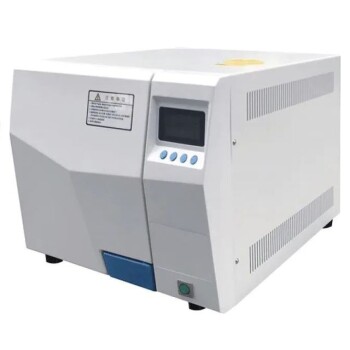
- Desktop Fast Laboratory Autoclave Sterilizer 35L 50L 90L for Lab Use
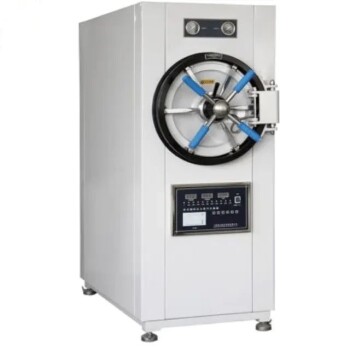
- Laboratory High Pressure Horizontal Autoclave Steam Sterilizer for Lab Use
- Desktop Fast Laboratory Autoclave Sterilizer 20L 24L for Lab Use
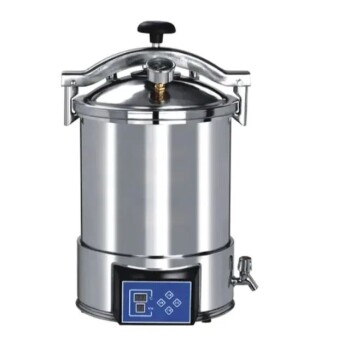
- Desktop Fast High Pressure Laboratory Autoclave Sterilizer 16L 24L for Lab Use
- Laboratory Horizontal Autoclave Steam Sterilizer Lab Microcomputer Sterilizer
People Also Ask
- What is the primary function of a laboratory autoclave in the pre-treatment of medical plastic waste for liquid fuel?
- What is an autoclave laboratory equipment? The Ultimate Guide to Steam Sterilization
- What precautions should be taken during autoclave in laboratory? A Complete Safety Guide to Prevent Burns and Explosions
- What extreme conditions does a laboratory autoclave simulate? Testing Wear Resistance of Nuclear Fuel Cladding
- Why is a laboratory autoclave necessary for Postgate Medium B (PMB)? Ensure Pure SRB Cultures & Accurate MIC Research