Data integrity is paramount in dynamic simulation experiments. An ultrapure water circulation system serves as a critical control mechanism to ensure the validity of your results during both the pre-flushing and post-flushing phases. Its primary purpose is to establish a chemically neutral baseline before experimentation and to objectively verify the permanence of physical changes to the rock core after stimulation.
The use of ultrapure water is not merely a cleaning procedure; it is a calibration step. It ensures that observed geochemical reactions are authentic and that permeability improvements are structural rather than temporary artifacts of residual fluids.
The Critical Role of Pre-Flushing
Eliminating Geochemical Noise
The presence of foreign ions can disastrously skew experimental data. Ultrapure water is strictly required to exclude interference from impurity ions during the initial setup.
By using a medium free of contaminants, you ensure that any subsequent geochemical reactions are solely the result of the interaction between your stimulation fluid and the rock sample.
Establishing the Baseline
Before any stimulation occurs, you must define the "zero point" of the experiment. The circulation system helps establish an accurate baseline for the initial permeability of the rock core.
Using a standardized, neutral fluid like ultrapure water guarantees that this baseline measurement is consistent and reproducible.
The Critical Role of Post-Flushing
Neutralizing the Environment
Once the chemical stimulation is complete, the reaction must be effectively stopped. The ultrapure water system washes away residual chemical agents remaining in the system.
This prevents ongoing, unmonitored reactions from altering the rock structure after the data collection phase is supposed to have ended.
Clearing Physical Debris
Chemical stimulation often dislodges material within the rock structure. The post-flush phase is necessary to wash away loose particles from the fractures.
Removing this debris prevents mechanical clogging, which could otherwise lead to false readings regarding the rock's flow capacity.
Validating Permeability Gains
The ultimate goal is to measure improvement. By monitoring changes in flow rate and pressure of the flushing fluid, researchers can objectively evaluate the stimulation.
This step confirms whether the permeability enhancement is a permanent structural change or a temporary effect of the fluid presence.
Understanding the Trade-offs
Sensitivity to Contamination
Ultrapure water is chemically "hungry" and can aggressively leach ions from inferior piping materials or absorb CO2 from the air.
While necessary for accuracy, the system requires rigorous maintenance and high-quality construction materials to ensure the water actually remains ultrapure throughout the cycle.
Interpretation Lag
Changes in pressure and flow during flushing are not instantaneous indicators of success.
You must allow sufficient circulation time for readings to stabilize. Rushing the flushing phase can lead to premature conclusions regarding the permanence of the permeability enhancement.
Ensuring Experimental Validity
To maximize the reliability of your dynamic simulation data, align your flushing protocols with your specific analytical requirements.
- If your primary focus is geochemical accuracy: Monitor the pre-flush phase until ionic conductivity is negligible to confirm the total exclusion of interference ions.
- If your primary focus is hydraulic performance: Continue the post-flush phase until pressure and flow rate stabilize to verify that the permeability enhancement is permanent.
The ultrapure water system is the invisible control variable that transforms a simple flow test into a rigorous scientific experiment.
Summary Table:
| Experimental Phase | Primary Function | Scientific Benefit |
|---|---|---|
| Pre-Flushing | Ion exclusion & baseline setting | Eliminates geochemical noise; defines initial permeability "zero point." |
| Post-Flushing | Residual removal & debris clearing | Stops ongoing chemical reactions; prevents mechanical clogging of fractures. |
| Evaluation | Flow & pressure monitoring | Confirms permanent permeability enhancement vs. temporary fluid effects. |
| System Control | Continuous circulation | Maintains chemical neutrality and ensures stabilized, reproducible data. |
Elevate Your Laboratory Precision with KINTEK
High-stakes dynamic simulation experiments demand uncompromising fluid purity. KINTEK specializes in advanced laboratory equipment and consumables designed for the most rigorous research environments. Our comprehensive portfolio—ranging from high-temperature high-pressure reactors and autoclaves to precision cooling solutions, ultrapure water components, and specialized ceramics—is engineered to protect your data integrity.
Whether you are conducting rock core stimulation, battery research, or complex geochemical analysis, our team provides the reliable tools you need to establish accurate baselines and validate structural results.
Ready to optimize your experimental workflow? Contact us today to find the perfect solution for your lab!
References
- Zhenpeng Cui, Bo Feng. Experimental Study on the Effect and Mechanism of Chemical Stimulation on Deep High-Temperature Granite. DOI: 10.3389/feart.2022.893969
This article is also based on technical information from Kintek Solution Knowledge Base .
Related Products
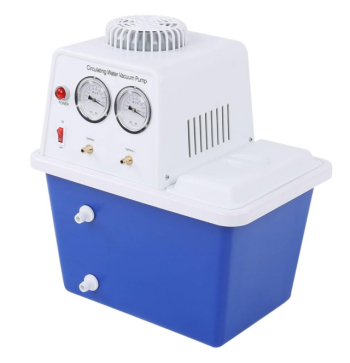
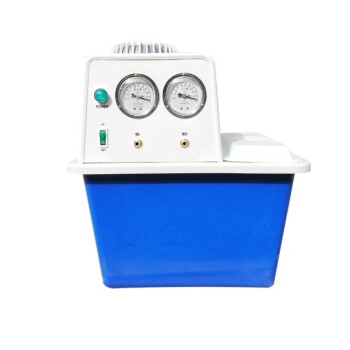
- Circulating Water Vacuum Pump for Laboratory and Industrial Use
- Laboratory Vertical Water Circulating Vacuum Pump for Lab Use
- Laboratory Benchtop Water Circulating Vacuum Pump for Lab Use
- 50L Chiller Water Bath Cooling Circulator Low Temperature Constant Temperature Reaction Bath
- 100L Chilling Circulator Cooling Water Circulator for Low Temperature Constant Temperature Reaction Bath Water Bath Cooling
People Also Ask
- How is a circulating water vacuum pump utilized for hydrogen production residues? Optimize Your Solid-Liquid Separation
- How does the impeller rotation affect the gas flow in a water circulating vacuum pump? A Guide to the Liquid Ring Principle
- What determines the vacuum degree achievable by a water circulating vacuum pump? Unlock the Physics of Its Limits
- What are the advantages of a water circulating vacuum pump? Superior Durability for Demanding Lab Environments
- How does a water circulating vacuum pump operate? Discover the Efficient Liquid Piston Principle