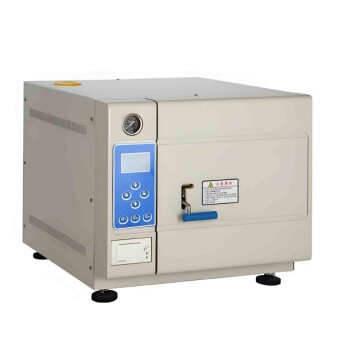
The primary necessity of using a laboratory drying oven is to gently remove residual moisture from hydrothermal reaction products, typically at a controlled temperature of 80 °C, before they undergo high-temperature treatment.
For Mo-Ti-N catalysts specifically, this step is non-negotiable; skipping it causes rapid vaporization of internal water during the subsequent heating stage, which destroys the microporous structure of the activated carbon carrier and disrupts the critical chemical equilibrium required for nitridation.
Core Takeaway The drying oven acts as a structural stabilizer. By removing moisture slowly at low temperatures, it prevents "flash evaporation" during the high-heat nitridation phase, thereby preserving the catalyst's delicate porous architecture and ensuring the ammonia atmosphere remains chemically pure for effective reaction.
Preserving the Catalyst's Physical Architecture
The transition from a wet hydrothermal product to a finished catalyst involves extreme thermal stress. The drying oven mitigates this stress by handling the moisture removal phase separately from the high-temperature reaction phase.
Preventing Structural Collapse
The activated carbon carrier in Mo-Ti-N catalysts relies on a specific microporous structure to function effectively.
If the material enters the high-temperature nitridation stage while still wet, the trapped water effectively boils instantly. This rapid vaporization creates massive internal pressure within the pores.
The result is a physical breakdown of the carbon carrier, leading to the collapse of the pore structure. Without the drying step, you sacrifice the surface area and porosity that make the catalyst effective.
Controlling Particle Agglomeration
Beyond the carbon carrier, moisture management is critical for the metal components (Molybdenum and Titanium).
Violent evaporation during calcination can force particles to clump together. By using a drying oven to remove physically adsorbed water gently, you prevent severe particle agglomeration.
This ensures the final powder maintains a uniform particle size distribution, which is essential for consistent catalytic performance.
Ensuring Chemical Reaction Stability
The heat treatment phase for Mo-Ti-N catalysts is not just about drying; it is a chemical reaction involving ammonia (NH3) nitridation. The presence of water is chemically disruptive to this process.
Maintaining Nitridation Equilibrium
The nitridation process relies on a precise chemical equilibrium between the solid precursors and the ammonia gas.
If the sample introduces significant moisture into the high-temperature reactor, the water vapor acts as a contaminant. It interferes with the chemical equilibrium of the ammonia nitridation process.
This interference can prevent the proper formation of the active Mo-Ti-N species, leading to a catalyst with poor activity or incorrect stoichiometry.
Stabilizing the Active Surface
Proper drying prepares a "clean" surface for the reaction.
By thoroughly removing moisture and potential solvent residues, the drying oven ensures that the active sites on the material are accessible.
This stabilization allows the subsequent chemical processes to occur on the intended surface sites rather than being blocked or altered by evaporating fluids.
Common Pitfalls and Trade-offs
While drying is essential, the method and parameters matter. It is not enough to simply apply heat; precision is key to avoiding secondary damage.
The Risk of Thermal Shock
There is a trade-off between speed and structural integrity.
Attempting to dry the material too quickly at temperatures significantly higher than 80 °C (or the specific protocol limit) can mimic the effects of the high-temperature furnace, causing hard agglomeration.
The drying process must be slow enough to allow moisture to diffuse out of the pores without rupturing the material walls.
Oxidation Risks
In some contexts, exposure to air during drying can be detrimental.
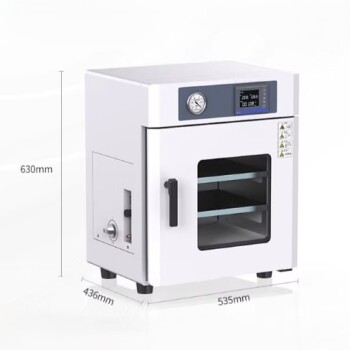
While a standard drying oven is sufficient for many steps, if the precursor materials are sensitive to oxidation (similar to zero-valent iron or specific nanoparticles), a vacuum drying oven may be required.
This lowers the boiling point of the water, allowing for dehydration at even lower temperatures and reduced oxygen exposure, though the standard protocol for Mo-Ti-N emphasizes the 80 °C convection method for the carbon carrier's safety.
Making the Right Choice for Your Goal
The necessity of the drying oven ultimately depends on which performance metric is most critical to your application.
- If your primary focus is Surface Area: You must strictly adhere to the 80 °C pre-drying step to prevent rapid steam expansion from shattering the activated carbon's microporous network.
- If your primary focus is Chemical Purity: You must ensure total moisture removal to prevent water vapor from shifting the equilibrium during the ammonia nitridation reaction.
Summary: The laboratory drying oven is not merely a preparation tool but a quality control gate that safeguards the catalyst’s geometric structure and ensures the chemical fidelity of the nitridation process.
Summary Table:
| Feature | Impact of Proper Drying (80°C) | Risk of Skipping Drying Phase |
|---|---|---|
| Microporous Structure | Preserves activated carbon architecture | Rapid vaporization causes pore collapse |
| Particle Size | Prevents agglomeration; ensures uniformity | Severe clumping and particle growth |
| Chemical Reaction | Maintains ammonia nitridation equilibrium | Water vapor disrupts chemical stoichiometry |
| Surface Activity | Ensures accessible active sites | Surface sites blocked by solvent residues |
| Thermal Stress | Gradual moisture removal | Thermal shock and hard agglomeration |
Elevate Your Catalyst Research with KINTEK Precision
Don't let improper drying compromise your material's integrity. KINTEK specializes in high-performance laboratory equipment designed for the rigorous demands of catalyst synthesis and materials science. From precision drying ovens and vacuum systems to high-temperature tube and atmosphere furnaces for nitridation, we provide the tools you need for consistent, scalable results.
Our extensive portfolio includes:
- High-Temperature Furnaces: Muffle, tube, and atmosphere models for precise chemical reactions.
- Thermal Processing: Specialized drying ovens and ULT freezers for sensitive precursors.
- Material Preparation: Advanced crushing, milling, and hydraulic pellet presses.
- Reactor Solutions: High-temperature high-pressure reactors and autoclaves for hydrothermal synthesis.
Ready to optimize your heat treatment protocol? Contact our laboratory specialists today to find the perfect equipment solution for your Mo-Ti-N research and beyond.
References
- Hui Dai, Bin Dai. Activated Carbon Supported Mo-Ti-N Binary Transition Metal Nitride as Catalyst for Acetylene Hydrochlorination. DOI: 10.3390/catal7070200
This article is also based on technical information from Kintek Solution Knowledge Base .
Related Products
- Laboratory Scientific Electric Heating Blast Drying Oven
- 56L Vertical Laboratory Vacuum Drying Oven
- 23L Laboratory Vacuum Drying Oven
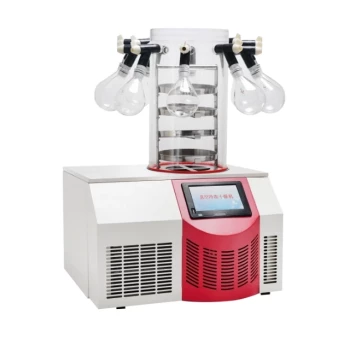
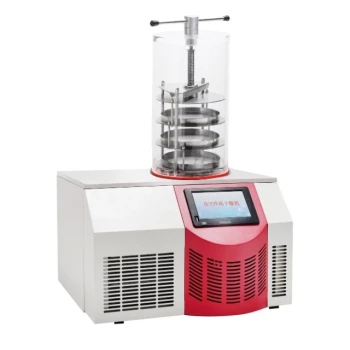
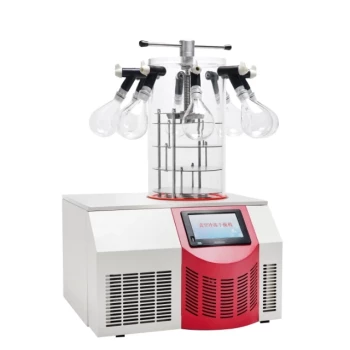
- High Performance Laboratory Freeze Dryer
- High Performance Laboratory Freeze Dryer for Research and Development
People Also Ask
- How does a laboratory electric drying oven contribute to the formation of the initial coating? Expert Insights
- What role does a precision laboratory drying oven play in the synthesis of GO-PANI nanocomposites? Protect Material Integrity
- What role does a laboratory drying oven play in the preparation of zinc oxide nanoparticle precursors?
- What is the necessity of using a laboratory drying oven when processing MoO3/GO composite nanopowders? Find out here.
- What is the role of a laboratory drying oven in cellulose citrate production? Ensure Material Stability & Purity