A PTFE liner is indispensable for maintaining chemical purity and protecting the structural integrity of the autoclave during synthesis. In the specific case of FePc catalyst production, the liner acts as a critical barrier that prevents corrosive reagents from attacking the stainless steel shell and stops metallic impurities from leaching into the reaction, which would otherwise invalidate the electrocatalytic performance data.
The primary necessity of a PTFE liner is to isolate the chemical reaction from the metal vessel walls. This ensures that the catalyst's active sites are formed without interference from external metal ions while simultaneously protecting the expensive hardware from chemical degradation.
Protecting the Chemical Environment
Prevention of Metal Ion Leaching
During the synthesis of FePc catalysts at 200°C, the reaction environment can cause metal ions to leach from the stainless steel autoclave walls. These impurity ions can infiltrate the reaction system and disrupt the axial coordination environment between the iron phthalocyanine molecules and their support.
Maintaining the purity of this environment is critical for the accurate evaluation of electrocatalytic active sites. If external metals like nickel or chromium from the steel enter the catalyst structure, the resulting performance data will be misleading or entirely compromised.
Eliminating Non-Specific Catalytic Interference
The metal walls of a standard autoclave can sometimes act as a catalyst themselves under high pressure and temperature. A PTFE liner provides chemical inertness, ensuring that any observed catalytic activity is derived solely from the synthesized FePc.
This isolation is a fundamental requirement for scientific rigor. It prevents "background noise" in the data, allowing researchers to confirm that the reaction results are a direct consequence of their specific precursors and not the vessel material.
Safeguarding the Reaction Hardware
Corrosion Resistance Against Aggressive Reagents
Hydrothermal and solvothermal syntheses often involve acidic or highly alkaline reagents that would rapidly corrode stainless steel. PTFE (Polytetrafluoroethylene) possesses exceptional resistance to nearly all chemical solvents.
By utilizing a liner, you protect the mechanical integrity of the outer shell. This is especially important in high-pressure environments where even minor surface pitting or corrosion can lead to dangerous structural failure of the pressure vessel.
Structural Synergy: Strength vs. Inertness
The stainless steel autoclave provides the mechanical strength required to withstand the high autogenous pressures generated at 200°C. However, steel lacks the chemical stability needed for most catalyst precursors.
The PTFE liner solves this by providing the chemical "armor" while the steel provides the physical "skeleton." This combination allows for a controlled thermodynamic environment that is both safe for the user and clean for the chemistry.
Enhancing Synthesis Quality
Anti-Adhesion and Uniform Nucleation
PTFE is known for its anti-adhesion properties, which prevent the FePc precursors or the final catalyst from sticking to the container walls. This facilitates easier recovery of the synthesized material and reduces waste.
Furthermore, the smooth surface of the liner aids in the convection of precursor gels. This ensures that heat is distributed more evenly throughout the solution, promoting uniform nucleation and consistent structural integrity of the synthesized nanomaterials.
Understanding the Trade-offs
Temperature and Pressure Constraints
While PTFE is highly inert, it has a physical limit; it generally should not be used for reactions exceeding 250°C. At temperatures near or above this threshold, the liner may soften or undergo thermal deformation, potentially leading to a seal failure.
Thermal Expansion Differences
PTFE has a significantly higher coefficient of thermal expansion than stainless steel. If the liner is not sized correctly for the autoclave, the expansion during heating can cause it to crack or deform. Users must ensure the liner is compatible with the specific dimensions of the pressure vessel to avoid "creeping" or leakage.
How to Apply This to Your Project
Recommendations Based on Research Goals
- If your primary focus is Electrocatalytic Precision: Always use a high-quality PTFE liner to ensure the axial coordination of your iron centers remains uncontaminated by leaching iron, nickel, or chromium.
- If your primary focus is High-Yield Recovery: Leverage the anti-adhesion properties of the liner to ensure you can recover the maximum amount of synthesized FePc without loss to the vessel walls.
- If your primary focus is Equipment Longevity: Utilize liners specifically when working with acidic or alkaline precursors to prevent pitting and stress corrosion cracking in your stainless steel autoclaves.
By prioritizing the use of a PTFE liner, you ensure that your catalyst synthesis is both scientifically valid and operationally safe.
Summary Table:
| Feature | Benefit for FePc Synthesis | Technical Reason |
|---|---|---|
| Chemical Inertness | Prevents Metal Leaching | Blocks Ni/Cr ions from entering the catalyst structure. |
| Corrosion Resistance | Protects Equipment | Shields the steel shell from aggressive hydrothermal reagents. |
| Anti-Adhesion | Higher Product Recovery | Prevents precursors from sticking to the vessel walls. |
| Thermal Stability | Safe Reaction Environment | Maintains integrity during 200°C solvothermal processes. |
| Physical Isolation | Accurate Data | Eliminates non-specific catalytic activity from the steel wall. |
Elevate Your Research Precision with KINTEK
Don't let impurities compromise your catalytic data. KINTEK specializes in high-performance laboratory equipment designed for the rigors of modern materials science. Whether you need high-temperature high-pressure reactors and autoclaves with precision-fitted PTFE liners, or advanced crushing and milling systems, we have the solution.
Our extensive portfolio—ranging from muffle and vacuum furnaces to electrolytic cells and battery research tools—is engineered to provide the chemical inertness and structural integrity your experiments demand.
Ready to optimize your synthesis workflow? Contact our technical experts today to find the perfect autoclave configuration or consumable solution for your lab.
References
- Qi Sun, Yan Zhao. Tailoring activity of iron phthalocyanine by edge-nitrogen sites induced electronic delocalization. DOI: 10.1016/j.apsusc.2023.157154
This article is also based on technical information from Kintek Solution Knowledge Base .
Related Products
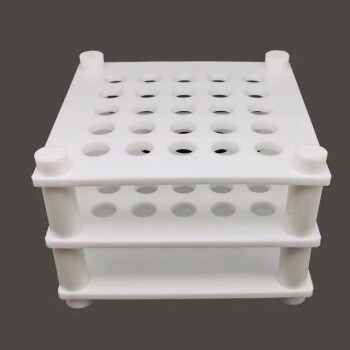
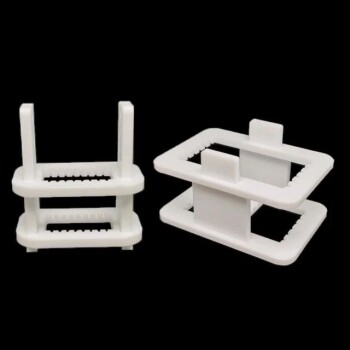
- Custom PTFE Teflon Parts Manufacturer for Centrifuge Tube Racks
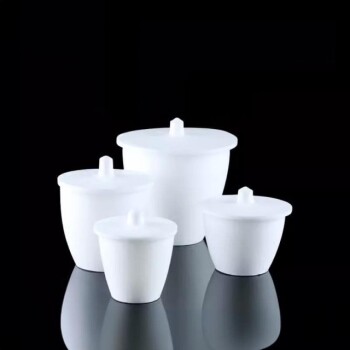
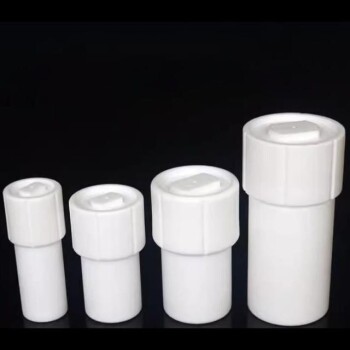
- Custom Machined and Molded PTFE Teflon Parts Manufacturer with PTFE Crucible and Lid
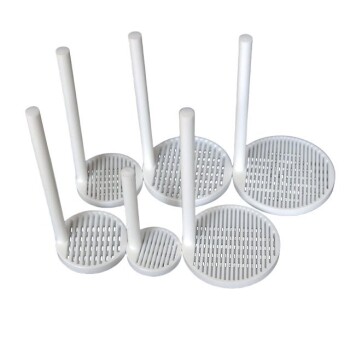
- Custom PTFE Teflon Parts Manufacturer for Hollow Cleaning Basket and Rack Carrier
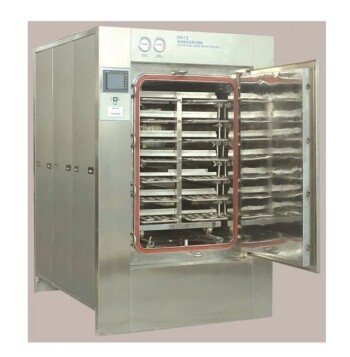
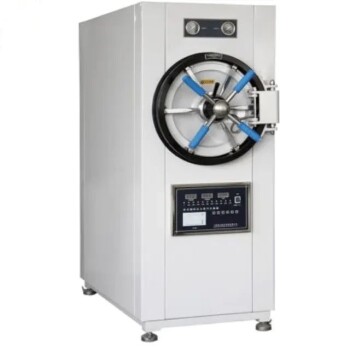
- Laboratory High Pressure Steam Sterilizer Vertical Autoclave for Lab Department
- Laboratory Sterilizer Lab Autoclave Herbal Powder Sterilization Machine for Plant
People Also Ask
- Why is slender PTFE tubing necessary for flow control in multi-channel catalyst aging? Ensure Equal Gas Distribution
- Why are PTFE containers required for PCT leaching tests? Ensure Chemical Inertness and Analytical Precision
- Why are PTFE containers necessary for selective HF etching of MAX phases? Ensure Safe & Pure MXene Synthesis
- What role do PTFE containers play in trace metal detection? Ensure Analytical Precision in Photocatalysis Studies
- Why is a PTFE container required for acid leaching of silicon nanosheets? Ensure High Purity and Safety