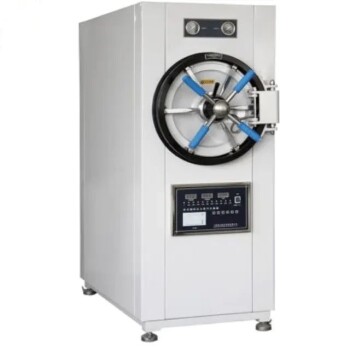
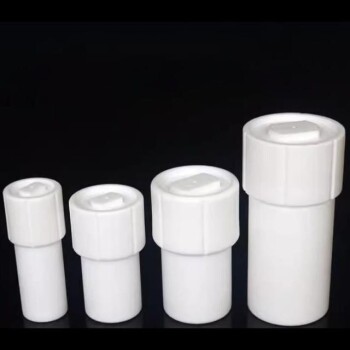
The use of a Teflon-lined high-pressure autoclave is essential for creating the subcritical environment required to drive complex chemical assembly. In the synthesis of Co@M-TiO2/C precursors, this equipment facilitates thorough ion exchange between metal ions, organic ligands like folic acid, and MXene nanosheets. The specialized environment ensures uniform component integration while protecting the reactor's integrity through chemical inertness.
Core Takeaway: The autoclave provides the necessary thermodynamic conditions—high pressure and temperature—to enable the in-situ growth and assembly of nanocomposites while the Teflon lining prevents corrosive precursors from damaging the reactor or contaminating the product.
Facilitating Complex Structural Assembly
Driving Subcritical Water Reactions
The autoclave creates a sealed environment where water can reach temperatures well above its boiling point, entering a subcritical state. This state significantly increases the reaction kinetics, allowing for rapid hydrolysis and the thorough ion exchange required for Co@M-TiO2/C synthesis.
Enabling Uniform Precursor Integration
Under high autogenous pressure, metal ions and organic ligands like folic acid can effectively penetrate the layers of MXene nanosheets. This pressure ensures that the precursor components integrate uniformly, preventing the phase separation that often occurs in open-vessel synthesis.
Promoting In-Situ Growth and Morphology
The pressurized environment is critical for the in-situ growth of molybdenum oxides or other metal species on carbon-based supports. This ensures the formation of specific, well-dispersed, and porous morphologies that are vital for maximizing the catalytic activity of the final material.
Chemical Protection and Product Purity
Resistance to Corrosive Precursors
Synthesis often involves aggressive chemicals, such as strong acids or concentrated sodium hydroxide, which are necessary for exfoliating TiO2 or modifying MXene. The polytetrafluoroethylene (PTFE/Teflon) lining is chemically inert and protects the stainless steel outer shell from severe corrosion.
Preventing Metal Ion Contamination
If the reaction solution were to come into direct contact with the metallic body of the autoclave, it could leach external metal ions into the mixture. The Teflon barrier ensures the chemical purity of the Co@M-TiO2/C precursor, preventing unwanted elements from altering the catalyst's performance.
Maintaining Structural Regularity
By providing a stable, sealed environment, the autoclave allows for precise control over the nucleation and growth of TiO2 crystals. This stability is essential for achieving high crystallinity and developing specific exposed facets, such as the 010 or 101 planes, which enhance structural regularity.
Understanding the Trade-offs
Temperature and Pressure Limitations
While Teflon is highly inert, it has a physical limit, typically around 250 °C, beyond which it may soften or release toxic fumes. Researchers must carefully balance the need for high reaction temperatures with the structural integrity of the PTFE liner.
Heat Transfer Inefficiency
The Teflon liner acts as an insulator, which can lead to a lag between the oven temperature and the actual temperature of the reaction solution. This requires longer equilibration times to ensure the internal environment has reached the desired thermal state for consistent synthesis.
Making the Right Choice for Your Goal
How to Apply This to Your Project
- If your primary focus is structural uniformity: Utilize the autoclave to maintain consistent autogenous pressure, which prevents the aggregation of MXene nanosheets and ensures even ligand distribution.
- If your primary focus is catalyst purity: Ensure the Teflon liner is free of scratches or degradation to prevent the acidic or alkaline precursor from leaching chromium or nickel from the steel shell.
- If your primary focus is morphology control: Focus on the cooling rate post-reaction, as the pressurized environment within the autoclave influences how crystals settle and organize into hierarchical structures.
A Teflon-lined autoclave is not merely a container, but a pressurized chemical reactor that dictates the final atomic architecture and purity of high-performance Co@M-TiO2/C precursors.
Summary Table:
| Feature | Role in Co@M-TiO2/C Synthesis |
|---|---|
| Subcritical Environment | Drives rapid hydrolysis and thorough ion exchange between metal ions and ligands. |
| High Autogenous Pressure | Forces uniform integration of folic acid and MXene; prevents phase separation. |
| PTFE (Teflon) Lining | Provides chemical inertness against aggressive acids/bases; prevents metal leaching. |
| Sealed Thermal Stability | Enables precise control over TiO2 nucleation and growth of specific crystal facets. |
| In-situ Growth Support | Facilitates the formation of well-dispersed, porous morphologies on carbon supports. |
Advance Your Material Synthesis with KINTEK
Precision in nanomaterial assembly requires equipment that can withstand extreme conditions without compromising purity. KINTEK specializes in high-performance laboratory solutions, offering a premium range of:
- High-Pressure Reactors & Autoclaves: Featuring durable PTFE/Teflon liners for corrosive synthesis.
- Advanced Thermal Systems: Muffle, tube, and vacuum furnaces for precise calcination.
- Specialized Consumables: High-purity ceramics, crucibles, and PTFE products designed for chemical inertness.
Whether you are developing next-generation catalysts like Co@M-TiO2/C or conducting battery research, our tools ensure structural regularity and maximum catalytic activity.
Ready to upgrade your lab's capabilities? Contact KINTEK today to discuss your specific research requirements and find the perfect reactor solution.
References
- Zhihua Chang, Guoxiu Wang. Cobalt/MXene‐derived TiO<sub>2</sub> Heterostructure as a Functional Separator Coating to Trap Polysulfide and Accelerate Redox Kinetics for Reliable Lithium‐sulfur Battery. DOI: 10.1002/batt.202300516
This article is also based on technical information from Kintek Solution Knowledge Base .
Related Products
- Laboratory High Pressure Horizontal Autoclave Steam Sterilizer for Lab Use
- Stainless High Pressure Autoclave Reactor Laboratory Pressure Reactor
- Desktop Fast High Pressure Laboratory Autoclave Sterilizer 16L 24L for Lab Use
- High Pressure Laboratory Autoclave Reactor for Hydrothermal Synthesis
- Laboratory High Pressure Steam Sterilizer Vertical Autoclave for Lab Department
People Also Ask
- Why is a laboratory high-pressure autoclave sterilizer necessary? Ensure Accuracy in Antibacterial Research
- What is the role of a laboratory high-pressure autoclave in the conversion of furfural to piperidine? Optimize Yields
- What is the primary function of a laboratory autoclave in the pre-treatment of medical plastic waste for liquid fuel?
- What is an autoclave laboratory equipment? The Ultimate Guide to Steam Sterilization
- What is a laboratory autoclave? A Guide to Sterilization with Pressurized Steam