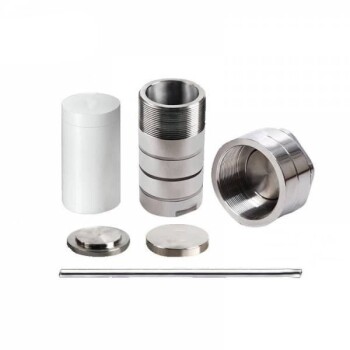
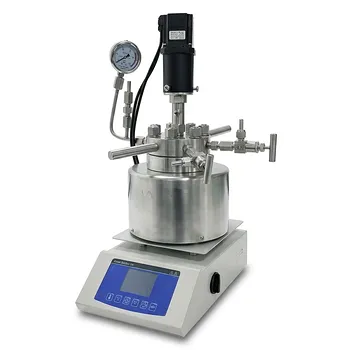
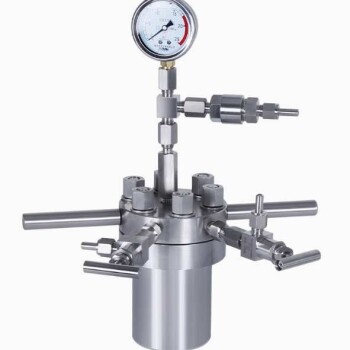
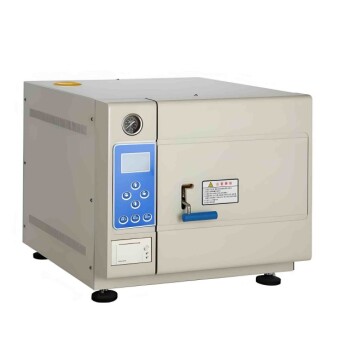
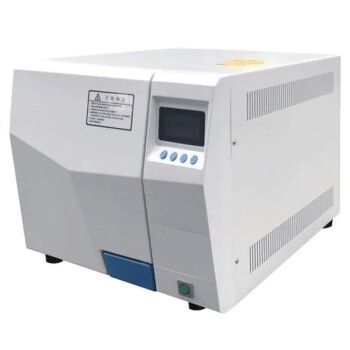
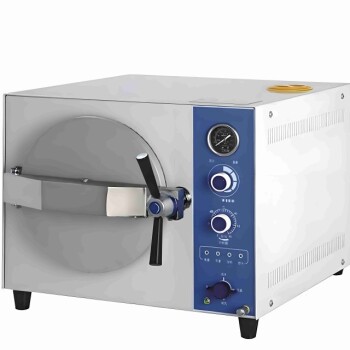
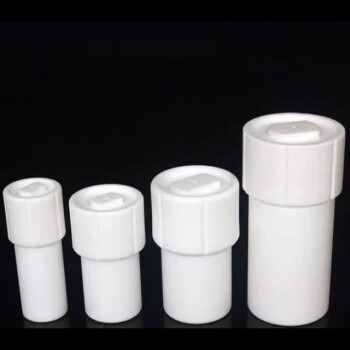
The Teflon-lined high-pressure autoclave is the fundamental catalyst for the hydrothermal or solvothermal selenization reactions required to form H-CoNiSe2/NC composite structures. It provides a sealed, high-temperature environment (typically around 200 °C) that generates autogenous pressure, which is critical for driving the diffusion of selenium and nickel sources into the pre-existing H-Co/NC framework. This specific equipment ensures the in-situ growth of metal selenide nanoparticles onto the hollow structure, resulting in a complex hierarchical composite that cannot be achieved under ambient conditions.
The necessity of the Teflon-lined autoclave lies in its dual ability to generate the high-pressure environment needed to overcome reaction activation energies and to provide a chemically inert chamber that prevents contamination while protecting the vessel from corrosive precursors.
Driving Enhanced Reaction Kinetics and Diffusion
Overcoming Solubility and Diffusion Barriers
At standard pressure, the solubility of nickel and selenium precursors in solvents can be insufficient for uniform integration. The high-pressure environment created within the autoclave significantly increases the solubility and diffusion rates of these salts, ensuring they penetrate the hollow H-Co/NC framework thoroughly.
Reducing Reaction Activation Energy
The subcritical conditions generated by heating a sealed solvent beyond its boiling point provide the energy necessary to lower reaction activation barriers. This facilitates the complex chelation and assembly processes required for the transition from a simple framework to a multi-element selenide composite.
Promoting In-Situ Nucleation
The controlled, pressurized environment allows for the uniform nucleation of nanoparticles directly on the surface of the carbon support. This "in-situ" growth is vital for creating a strong mechanical and electrical bond between the H-CoNiSe2 and the nitrogen-doped carbon (NC) matrix.
The Critical Role of Chemical Inertness
Preventing Reactor Corrosion
The selenization process often involves aggressive chemical species or acidic precursors that can be highly corrosive to standard metals. The Polytetrafluoroethylene (PTFE/Teflon) liner acts as a robust barrier, protecting the stainless steel outer shell of the autoclave from chemical attack.
Ensuring High Product Purity
By isolating the reaction mixture from the metallic body of the reactor, the Teflon liner prevents external metal ion contamination. This is essential for the synthesis of H-CoNiSe2/NC, as stray ions from the reactor wall could alter the catalytic properties or the structural morphology of the final composite.
Maintaining a Hermetic Seal
The design of the Teflon liner, often combined with a stainless steel jacket, ensures a hermetic seal that maintains constant pressure throughout the reaction duration. This stability is required to achieve the specific hierarchical morphology and "hollow" nature of the H-CoNiSe2/NC structure.
Understanding the Trade-offs
Temperature and Pressure Limitations
While Teflon is highly inert, it has a physical limit; it generally cannot be used for reactions exceeding 250 °C as the material begins to soften and lose structural integrity. Researchers must carefully balance the need for high-temperature kinetics with the safety limits of the PTFE insert.
Scaling and Volume Constraints
Autoclaves are batch reactors, meaning the volume of H-CoNiSe2/NC produced is strictly limited by the size of the liner. Furthermore, the filling ratio (typically 60-80%) must be strictly managed to prevent over-pressurization, which limits the throughput compared to continuous-flow synthesis methods.
Thermal Lag and Cooling Rates
The thick walls of the stainless steel jacket and the insulating properties of the Teflon liner create significant thermal inertia. This makes it difficult to achieve rapid heating or quenching, which can lead to variations in nanoparticle size distribution if the cooling phase is not standardized.
Applying This to Your Synthesis Goals
Recommendations for Targeted Outcomes
- If your primary focus is structural uniformity: Ensure a consistent filling ratio (around 70%) to maintain stable autogenous pressure throughout the selenization process.
- If your primary focus is preventing contamination: Inspect the Teflon liner for any pitting or discoloration before each run, as damaged liners can leach impurities from the steel shell.
- If your primary focus is maximizing reaction speed: Gradually increase the temperature toward the 200 °C threshold to optimize diffusion, while ensuring you do not exceed the pressure rating of the specific autoclave model.
The Teflon-lined autoclave is not merely a container, but a pressurized chemical reactor that enables the precise architectural engineering of H-CoNiSe2/NC composites.
Summary Table:
| Feature | Role in H-CoNiSe2/NC Synthesis |
|---|---|
| High-Pressure Environment | Increases solubility and drives diffusion into the H-Co/NC framework. |
| PTFE (Teflon) Liner | Provides chemical inertness, preventing corrosion and metal ion contamination. |
| In-Situ Nucleation | Facilitates direct growth of nanoparticles on carbon support for strong bonding. |
| Thermal Stability | Maintains stable autogenous pressure at subcritical temperatures (up to 250°C). |
| Hermetic Sealing | Ensures a closed system for consistent hierarchical structural formation. |
Elevate Your Material Synthesis with KINTEK Precision
Achieving the perfect H-CoNiSe2/NC composite structure requires more than just a recipe—it demands reliable, high-performance equipment. KINTEK specializes in laboratory solutions that empower researchers to push the boundaries of material science.
Our premium high-temperature high-pressure reactors and autoclaves are designed for durability and chemical purity, ensuring your hydrothermal reactions remain contamination-free. Beyond autoclaves, KINTEK offers a comprehensive range of equipment, including:
- Thermal Processing: Muffle, tube, vacuum, and atmosphere furnaces for precise heat treatment.
- Sample Preparation: Hydraulic presses (pellet, hot, isostatic) and advanced crushing/milling systems.
- Electrochemical Research: High-quality electrolytic cells, electrodes, and specialized battery research tools.
- Laboratory Essentials: ULT freezers, freeze dryers, and high-purity ceramics or crucibles.
Whether you are a researcher aiming for high-purity in-situ growth or a lab manager seeking reliable consumables, KINTEK provides the tools necessary for excellence.
Ready to optimize your lab's performance? Contact our specialists today to find the perfect equipment for your synthesis goals!
References
- P. Salehan, Behzad Rezaei. H-CoNiSe2/NC dodecahedral hollow structures for high-performance supercapacitors. DOI: 10.1038/s41598-023-29398-y
This article is also based on technical information from Kintek Solution Knowledge Base .
Related Products
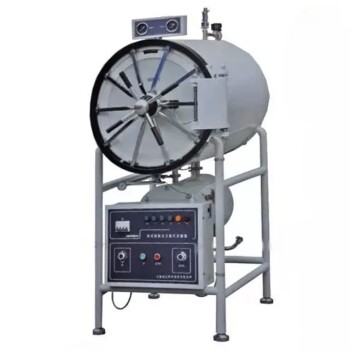
- Laboratory High Pressure Horizontal Autoclave Steam Sterilizer for Lab Use
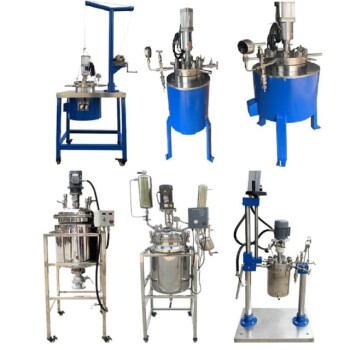
- Stainless High Pressure Autoclave Reactor Laboratory Pressure Reactor
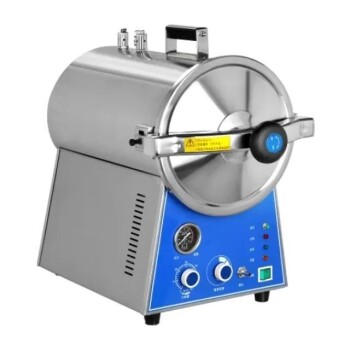
- Desktop Fast High Pressure Laboratory Autoclave Sterilizer 16L 24L for Lab Use
- High Pressure Laboratory Autoclave Reactor for Hydrothermal Synthesis
- Laboratory High Pressure Steam Sterilizer Vertical Autoclave for Lab Department
People Also Ask
- Why is a laboratory high-pressure autoclave sterilizer necessary? Ensure Accuracy in Antibacterial Research
- What is the role of a laboratory high-pressure autoclave in the conversion of furfural to piperidine? Optimize Yields
- What is the primary function of a laboratory autoclave in the pre-treatment of medical plastic waste for liquid fuel?
- What is an autoclave laboratory equipment? The Ultimate Guide to Steam Sterilization
- What is a laboratory autoclave? A Guide to Sterilization with Pressurized Steam