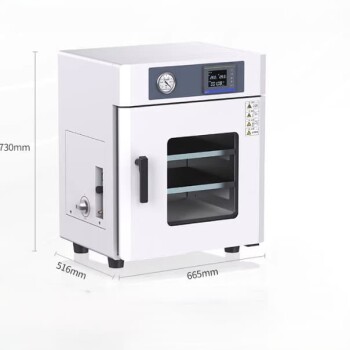
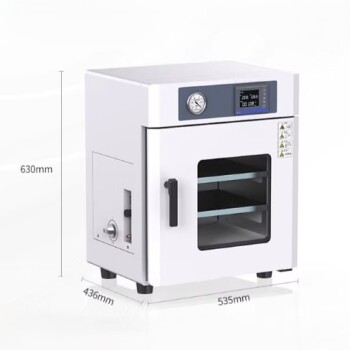
The use of a vacuum drying oven is an absolute necessity for the successful recycling and regeneration of nanoscale zero-valent iron (nZVI) catalysts. It serves the critical function of removing moisture and solvents at low temperatures while maintaining an oxygen-deprived environment. Without this specific apparatus, the catalyst suffers rapid oxidation and structural degradation, rendering it ineffective for future applications.
Core Takeaway The vacuum drying oven prevents the "chemical death" of nZVI by eliminating the two primary threats to its reactivity: atmospheric oxygen and high heat. By drying under negative pressure, you preserve the zero-valent iron core and any surface modifications, ensuring the catalyst maintains its reduction capacity for subsequent Fenton cycles.
The Critical Role of Oxidation Prevention
Protecting the Zero-Valent Core
The primary value of nZVI lies in its high reduction capacity, which is driven by its zero-valent iron core. However, this material is highly susceptible to rapid oxidation when exposed to air, particularly in moist environments.
The Low-Oxygen Advantage
A vacuum drying oven operates by evacuating the chamber, thereby creating a negative pressure environment that is virtually oxygen-free. This isolation is essential during the drying phase. It prevents the thickening of the oxide film on the particle surface, which would otherwise block the active sites and drastically reduce catalytic efficiency.
Preserving Reactivity for Fenton Cycles
By inhibiting oxidation during the regeneration phase, the vacuum oven ensures the material retains the high reactivity needed for advanced oxidation processes. This is directly linked to the catalyst's ability to perform effectively in subsequent Fenton cycles, such as the degradation of contaminants like tetracycline.
Thermal Protection of Surface Chemistry
Low-Temperature Solvent Removal
Regenerating nZVI often involves washing with solvents like water or ethanol. Under standard atmospheric pressure, removing these solvents requires high heat, which can damage the catalyst.
The Physics of Negative Pressure
Vacuum drying reduces the boiling point of these residual solvents. This allows them to volatilize rapidly at significantly lower temperatures (e.g., 60°C). This "gentle" drying process removes liquid efficiently without subjecting the metal nanoparticles to thermal stress.
Stability of Functional Groups
Many advanced nZVI catalysts are modified with surface coatings, such as amino functional groups, to enhance performance. High-temperature drying can cause the thermal decomposition of these organic groups. The mild temperature profile of a vacuum oven protects these delicate surface modifications, ensuring the chemical stability of the regenerated particle.
Risks of Alternative Drying Methods
The Consequence of Atmospheric Drying
Attempting to dry nZVI in a standard air oven is a critical error. The combination of heat and abundant atmospheric oxygen accelerates the corrosion of the iron core. This leads to oxidative failure, where the material converts to iron oxide (rust) before it can ever be reused.
Structural Collapse
While nZVI is the primary focus, the principles of vacuum drying also apply to preserving pore structures. High heat at atmospheric pressure can lead to the collapse of porous structures or the aggregation of nanoparticles. Vacuum drying preserves the integrity of the particle's physical structure, maintaining the high surface area required for contact with contaminants.
Making the Right Choice for Your Goal
To maximize the lifespan and efficiency of your nZVI catalysts, align your drying protocol with your specific regeneration targets:
- If your primary focus is Maximum Reduction Capacity: Ensure your vacuum system is capable of reaching and maintaining a deep negative pressure to completely eliminate oxygen exposure during the vulnerable drying phase.
- If your primary focus is Surface Modification Stability: Utilize the vacuum oven's ability to lower boiling points by setting the temperature cap at 60°C, preventing the thermal degradation of grafted amino groups or organic ligands.
The vacuum drying oven is not merely a drying tool; it is a preservation chamber that safeguards the chemical potency of your catalyst.
Summary Table:
| Feature | Standard Air Oven | Vacuum Drying Oven |
|---|---|---|
| Oxygen Levels | High (leads to rapid oxidation) | Minimal/None (protects iron core) |
| Drying Temperature | High (risk of thermal damage) | Low (boiling point reduction) |
| Particle Integrity | Risk of aggregation/collapse | Preserves structure & surface area |
| Surface Groups | Potential decomposition | Protects amino & functional groups |
| Result | Oxidative failure (Rust) | High-reactivity regenerated nZVI |
Maximize Your Catalyst Life with KINTEK Precision Solutions
Don't let oxidation compromise your research. KINTEK specializes in advanced laboratory equipment designed to protect sensitive materials like nZVI. Our high-performance vacuum ovens and high-temperature furnaces provide the precise environment needed to maintain the reduction capacity of your catalysts.
From high-temperature high-pressure reactors for advanced oxidation processes to PTFE consumables and cooling solutions, KINTEK offers a comprehensive range of tools for battery research, chemical synthesis, and material regeneration.
Ready to upgrade your lab's efficiency? Contact us today to find the perfect drying solution for your application!
References
- Yaneth Vásquez, Oscar Herrera. Removal of Cr and Organic Matter from Real Tannery Wastewater via Fenton-like Process Using Commercial Nano-Scale Zero-Valent Iron. DOI: 10.3390/w16050754
This article is also based on technical information from Kintek Solution Knowledge Base .
Related Products
- 56L Vertical Laboratory Vacuum Drying Oven
- 23L Laboratory Vacuum Drying Oven
- Laboratory Scientific Electric Heating Blast Drying Oven
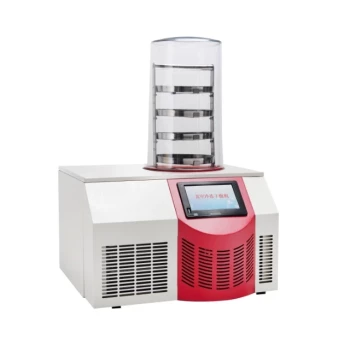
- Benchtop Laboratory Vacuum Freeze Dryer
- Dental Porcelain Zirconia Sintering Ceramic Vacuum Press Furnace
People Also Ask
- Why is a laboratory vacuum drying oven recommended for rice straw residues? Protect Your Biomass Integrity
- What role does a laboratory vacuum drying oven play in the preparation of modified multi-walled carbon nanotubes?
- What is the importance of using a laboratory vacuum drying oven? Preserving Slow-Release Microcapsule Integrity
- Why is a Laboratory Vacuum Drying Oven recommended for PBAT microspheres? Protect Sensitive Polymer Integrity
- What role does a laboratory vacuum drying oven play in processing nanoparticle powder samples? Protect Sample Integrity