The necessity of utilizing corrosion-resistant high-pressure reactors in the Organosolv fractionation of eucalyptus bark is dictated by the aggressive chemical and physical environment required to break down biomass. Because the process involves heating volatile organic solvents and acidic catalysts to extreme temperatures, specialized equipment is non-negotiable to prevent containment failure, ensure operator safety, and guarantee the successful isolation of high-purity components.
The Organosolv process subjects equipment to a volatile combination of acidic solvents, high heat, and intense pressure. Corrosion-resistant reactors are the only defense against structural failure, ensuring safe operations while preventing dissolved metals from contaminating the extracted lignin and hemicellulose.
The Chemistry of Organosolv Fractionation
Aggressive Solvent Mixtures
Processing eucalyptus bark via Organosolv requires the use of organic solvents, typically ethanol or methanol.
While these solvents are common, they become highly volatile when subjected to the temperatures required for fractionation.
The Role of Acidic Catalysts
To effectively break down the robust structure of eucalyptus bark, acidic catalysts are often added to the solvent mixture.
These acids significantly increase the corrosive potential of the fluid, chemically attacking standard reactor materials and necessitating the use of resistant alloys.
Managing Extreme Operating Parameters
Handling High Pressure
To keep the organic solvents in a liquid phase at high temperatures, the reactor must operate under high pressure.
Standard vessels cannot safely contain the immense internal forces generated by these volatile mixtures, making high-pressure ratings a critical safety requirement.
Thermal Stress and Corrosion Rates
High temperatures are essential for the effective separation of lignin and hemicellulose.
However, heat accelerates chemical reactions, meaning the rate of corrosion increases exponentially at operating temperatures, rapidly degrading non-resistant materials.
Ensuring Process Integrity and Longevity
Preserving Product Purity
A primary goal of Organosolv fractionation is obtaining high-purity lignin and hemicellulose.
If the reactor walls corrode, metal ions leach into the mixture, contaminating the final product and rendering it unsuitable for high-value applications.
Extending Equipment Service Life
Industrial processing equipment represents a significant capital investment.
Using corrosion-resistant materials ensures the reactor can withstand repeated cycles of exposure to harsh chemicals, significantly extending the service life of the processing unit and reducing replacement costs.
Understanding the Trade-offs
Higher Capital Expenditure
The primary downside to specifying corrosion-resistant high-pressure reactors is the initial cost.
Materials capable of withstanding acidic solvents at high pressure, such as high-grade stainless steel or Hastelloy, are significantly more expensive than standard carbon steel.
Maintenance and Inspection
While these reactors are built for durability, they are not maintenance-free.
Operators must strictly adhere to inspection schedules to detect stress corrosion cracking or pitting, as even resistant materials have limits under extreme cyclic loading.
Making the Right Choice for Your Project
When designing a system for eucalyptus bark fractionation, your equipment choice dictates both safety and product quality.
- If your primary focus is Operational Safety: Prioritize reactors with certified pressure ratings well above your target operating range to handle unexpected volatility.
- If your primary focus is Product Quality: Select reactor materials specifically rated for high resistance to your chosen acid catalyst to prevent metal leaching and contamination.
By investing in the correct reactor architecture now, you secure a safe, efficient, and sustainable process for the long term.
Summary Table:
| Feature | Requirement in Organosolv Process | Benefit of Corrosion-Resistant Reactors |
|---|---|---|
| Material Durability | Resistance to acidic catalysts & ethanol/methanol | Prevents structural failure and equipment degradation |
| Pressure Rating | Must contain high-pressure volatile solvents | Ensures operator safety and process containment |
| Thermal Stability | Handles heat-accelerated chemical reactions | Maintains integrity during high-temperature fractionation |
| Product Purity | Prevention of metal ion leaching | Guarantees high-purity lignin and hemicellulose output |
| Cost Efficiency | Long-term resistance to harsh chemicals | Extends equipment service life and reduces replacement costs |
Maximize Your Research Precision with KINTEK
Advanced biomass fractionation like the Organosolv process demands uncompromising equipment reliability. KINTEK specializes in high-performance laboratory solutions, providing the industry-leading high-temperature high-pressure reactors and autoclaves needed to withstand aggressive acidic catalysts and volatile solvents.
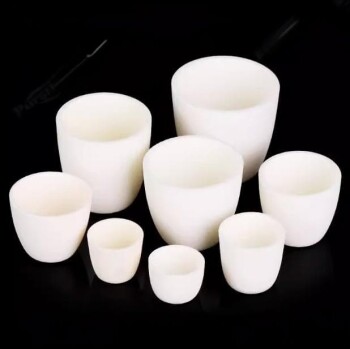
Whether you are processing eucalyptus bark or developing next-generation biofuels, our robust reactor systems ensure maximum safety, prevent sample contamination, and offer the thermal stability required for high-purity results. From crushing and milling systems for feedstock preparation to high-grade ceramic crucibles and cooling solutions, KINTEK provides the comprehensive tools your lab needs to succeed.
Ready to upgrade your lab's capabilities? Contact our specialists today to find the perfect corrosion-resistant solution for your application!
References
- Adewumi Chizoma Nwakego, Agbaghare Daniel Enajeme. Advances in Bioethanol Production: Innovations in Feedstocks, Pretreatment, and Fermentation Technologies. DOI: 10.35629/5252-0708743753
This article is also based on technical information from Kintek Solution Knowledge Base .
Related Products
- Stainless High Pressure Autoclave Reactor Laboratory Pressure Reactor
- Customizable High Pressure Reactors for Advanced Scientific and Industrial Applications
- Customizable Laboratory High Temperature High Pressure Reactors for Diverse Scientific Applications
- Mini SS High Pressure Autoclave Reactor for Laboratory Use
- High Pressure Laboratory Autoclave Reactor for Hydrothermal Synthesis
People Also Ask
- Why is a laboratory high-pressure reactor used in the hydrothermal synthesis of hydroxyapatite catalysts?
- Why is a laboratory high-pressure reactor necessary for synthesizing fly ash-based zeolite? Achieve Pure Crystallization
- What role does a laboratory high-pressure reactor play in the leaching process of spent cathode materials? Optimize Recovery
- What conditions do laboratory high-pressure reactors provide for HTC? Optimize Your Biochar Production Processes
- How are high-pressure reactors used to prepare metaphosphate electrocatalysts? Master In-Situ Precursor Growth