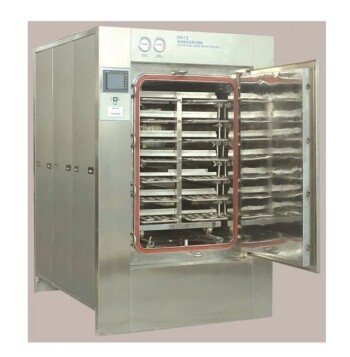
A laboratory sterilization autoclave acts as a specialized pressure chamber designed to eradicate biological agents from research and medical supplies. Its primary function is to eliminate viruses, bacteria, spores, and fungi by subjecting equipment and materials to a rigorous combination of high temperature and high pressure.
The autoclave functions as a steam sterilizer, utilizing the physical principles of "wet heat" to denature proteins. It is the gold standard for decontamination in microbiology and medicine because it utilizes pressure to reach temperatures far exceeding the boiling point of water.
The Operating Principle: Physics and Biology
To understand the autoclave, one must look beyond the simple application of heat. The effectiveness of the device relies on the interplay between physical pressure and biological destruction.
The Role of Pressurized Steam
An autoclave operates on the principle of steam sterilization. Under normal atmospheric conditions, water boils at 100°C (212°F), which is often insufficient to kill resilient spores.
By sealing the chamber and increasing the pressure, the autoclave forces the boiling point of water to rise. This allows the steam to reach significantly higher temperatures—typically 121°C (250°F) or higher—without evaporating immediately.
The moisture in this high-temperature steam is a far more efficient conductor of heat than dry air. This allows the thermal energy to penetrate porous materials and wrapped instruments rapidly.
The Biological Mechanism: Protein Denaturation
The ultimate goal of this process is to cause thermal stress to microorganisms.
When bacteria, viruses, or fungi are exposed to this pressurized wet heat, their structural stability fails. The process destroys the microorganism's protein structure, a phenomenon known as denaturation.
Once these proteins are denatured, the metabolic functions of the agent cease effectively killing the organism and rendering the material sterile.
Core Laboratory Applications
While the mechanism is consistent, the practical application of autoclaves varies depending on the specific goals of the laboratory.
Preparation of Sterile Media
In microbiology, the autoclave is essential for preparing culture media and reagents.
Before an experiment begins, nutrient agar and solutions must be free of any pre-existing life forms. Autoclaving ensures that the only organisms growing in the culture are the ones the researcher intends to study.
Decontamination of Biohazardous Waste
The autoclave is equally important at the end of a workflow for safety and waste management.
It is used to decontaminate biohazardous waste materials before they leave the facility. This prevents the accidental release of infectious agents into the environment or the general waste stream.
Understanding the Trade-offs
While autoclaving is the most reliable method for sterilization, it is not a universal solution for all laboratory equipment.
Moisture and Heat Sensitivity
Because the process relies on wet heat, it is destructive to materials that are sensitive to moisture. Paper products or powders that must remain dry cannot be sterilized this way.
Furthermore, the high temperatures can melt certain plastics or damage sensitive electronics. Users must verify that equipment is rated as "autoclavable" before placing it in the chamber.
Making the Right Choice for Your Goal
When deciding how to utilize an autoclave in your workflow, consider your specific objective:
- If your primary focus is Experiment Preparation: Prioritize the sterilization of culture media and reagents to ensure your data is not compromised by cross-contamination.
- If your primary focus is Lab Safety: Focus on the rigorous decontamination of biohazardous waste to maintain a safe working environment and comply with disposal regulations.
The autoclave remains the "key" to laboratory safety, acting as the definitive barrier between biological potential and sterile certainty.
Summary Table:
| Feature | Description |
|---|---|
| Operating Principle | Saturated steam under pressure (Wet Heat) |
| Mechanism of Action | Protein denaturation and coagulation |
| Standard Temperature | Typically 121°C (250°F) |
| Primary Goal | Elimination of bacteria, viruses, spores, and fungi |
| Key Applications | Media preparation, waste decontamination, instrument sterilization |
| Limitations | Unsuitable for heat-sensitive plastics or moisture-sensitive powders |
Elevate Your Laboratory Safety and Precision with KINTEK
Ensure your research remains uncontaminated and your facility stays safe with KINTEK’s advanced sterilization solutions. As experts in laboratory equipment, KINTEK specializes in high-temperature high-pressure reactors and autoclaves designed to meet the rigorous demands of modern microbiology and medical research.
Whether you are preparing culture media or managing biohazardous waste, our durable and precise autoclaves provide the 'gold standard' in decontamination. Beyond sterilization, we offer a comprehensive range of laboratory essentials, including high-temperature furnaces, crushing systems, and cooling solutions like ULT freezers and freeze dryers.
Ready to optimize your workflow with reliable, professional-grade equipment? Contact our experts today to find the perfect autoclave for your lab!
Related Products
- Portable Digital Display Automatic Laboratory Sterilizer Lab Autoclave for Sterilization Pressure
- Desktop Fast Laboratory Autoclave Sterilizer 20L 24L for Lab Use
- Desktop Fast Laboratory Autoclave Sterilizer 35L 50L 90L for Lab Use
- Desktop Fast High Pressure Laboratory Autoclave Sterilizer 16L 24L for Lab Use
- Laboratory Horizontal Autoclave Steam Sterilizer Lab Microcomputer Sterilizer
People Also Ask
- What are the two types of autoclave used in the laboratory? Gravity vs. Pre-Vacuum Explained
- What is the autoclave temperature for sterilization? Master the 121°C Standard for Guaranteed Sterility
- What precautions should be taken during autoclave in laboratory? A Complete Safety Guide to Prevent Burns and Explosions
- What extreme conditions does a laboratory autoclave simulate? Testing Wear Resistance of Nuclear Fuel Cladding
- What role does a laboratory autoclave play in HEA corrosion research? Key to Validating Advanced Reactor Materials