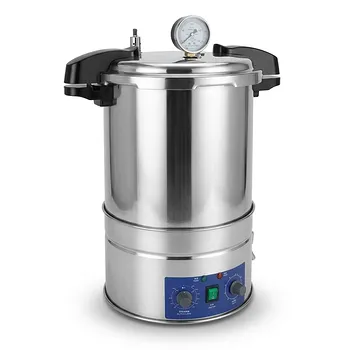
The primary function of a high-pressure reactor in the Biomass Hydrothermal Liquefaction (HTL) process is to maintain an internal pressure between 10 and 25 MPa. This extreme pressure prevents water from boiling off at elevated temperatures (typically 300–350 °C), forcing it into a subcritical or supercritical state. In this specialized environment, water transforms into a dual-purpose medium—acting as both a solvent and a reactant—to decompose complex organic polymers like lignin and cellulose into bio-crude oil.
By keeping water in a liquid or supercritical phase at high temperatures, the reactor fundamentally alters the fluid's chemical properties, allowing it to dissolve and restructure wet biomass without the energy-intensive step of pre-drying.
Controlling the Phase Transition
The reactor is not merely a container; it is a mechanism for altering the physics of water.
Preventing Evaporation
Under normal atmospheric conditions, water boils and turns to steam at 100 °C. The reactor's high-pressure environment suppresses this phase change.
Achieving the Subcritical State
By maintaining pressures up to 25 MPa, the reactor keeps water in a liquid-like density even when heated well beyond 300 °C. This ensures the reaction occurs in a condensed phase, which significantly improves energy density and the recovery rate of the resulting bio-oil.
The Chemical Mechanism of Liquefaction
Once the reactor establishes the correct pressure and temperature, the chemical behavior of the water changes to facilitate the breakdown of biomass.
Water as an Organic Solvent
In this high-pressure, high-temperature environment, the dielectric constant of water decreases significantly. This causes water to behave similarly to an organic solvent, allowing it to interact with and dissolve organic macromolecules that would normally be insoluble.
Water as a Reactant and Catalyst
The environment created by the reactor increases the ionic product of water. Water actively participates in chemical reactions, promoting hydrolysis, decarboxylation, and deamination. This breaks down the long polymer chains found in biomass (such as microalgae or lignocellulose) into shorter hydrocarbon chains.
Understanding the Operational Trade-offs
While the high-pressure reactor enables the HTL process, it introduces specific complexities that must be managed.
Equipment Complexity
High-pressure reactors are specialized "autoclaves" requiring robust pressure vessels, closures, and safety devices. The system relies on precise valves and monitoring equipment to regulate the 10–25 MPa environment safely.
Homogeneity Requirements
Because the reaction occurs in a closed, high-pressure system, achieving uniform results is challenging. The reactor must employ a stirring or mixing mechanism (such as a magnetic stirrer) to ensure heat is distributed evenly and reactants are mixed uniformly throughout the vessel.
Making the Right Choice for Your Goal
The high-pressure reactor is the engine that makes processing wet biomass economically viable.
- If your primary focus is energy efficiency: Utilize the reactor's ability to process wet biomass directly, eliminating the costly pre-drying stage required by other conversion methods.
- If your primary focus is product quality: Ensure your reactor maintains stable pressure in the upper range (near 25 MPa) to maximize the solvent properties of water, ensuring complete decomposition of complex polymers into bio-crude.
The high-pressure reactor transforms water from a passive carrier into a chemically aggressive solvent, unlocking the energy potential of wet biomass.
Summary Table:
| Feature | Operational Range | Role in HTL Process |
|---|---|---|
| Pressure Control | 10 – 25 MPa | Prevents water evaporation; maintains condensed phase. |
| Temperature | 300 – 350 °C | Facilitates subcritical/supercritical water states. |
| Water Role | Solvent & Reactant | Dissolves organic polymers and promotes hydrolysis. |
| Core Benefit | Energy Efficiency | Processes wet biomass without costly pre-drying stages. |
Elevate Your Biomass Research with KINTEK
Transitioning from wet biomass to high-grade bio-crude requires precision and safety. KINTEK specializes in high-performance laboratory equipment, providing the robust high-temperature high-pressure reactors and autoclaves essential for successful Hydrothermal Liquefaction (HTL).
Our advanced reactor systems are designed to withstand the rigors of subcritical and supercritical water environments, ensuring uniform heat distribution and precise pressure regulation. Beyond reactors, we offer a comprehensive suite of laboratory solutions—from crushing and milling systems for feedstock preparation to cooling solutions like ULT freezers and cold traps for product stability.
Ready to optimize your HTL efficiency? Contact us today to consult with our experts and find the perfect reactor system for your sustainable energy research.
References
- Frank Gronwald, Lijung Wang. Advancing Renewable Energy: The Prospects of Hydrothermal Liquefaction (HTL) for Biomass into Bio-oil Conversion. DOI: 10.55151/ijeedu.v6i3.138
This article is also based on technical information from Kintek Solution Knowledge Base .
Related Products
- Customizable Laboratory High Temperature High Pressure Reactors for Diverse Scientific Applications
- High Pressure Laboratory Autoclave Reactor for Hydrothermal Synthesis
- Customizable High Pressure Reactors for Advanced Scientific and Industrial Applications
- Stainless High Pressure Autoclave Reactor Laboratory Pressure Reactor
- Mini SS High Pressure Autoclave Reactor for Laboratory Use
People Also Ask
- How do high-pressure and high-temperature reactors ensure the effective treatment of lignocellulosic wastewater in WAO?
- What equipment is required for high-pressure high-temperature reactions? Master Extreme Chemistry Safely
- How do you control high pressure in a reactor? A Guide to Safe & Stable Operation
- Why is argon better than nitrogen for inert atmosphere? Ensure Absolute Reactivity & Stability
- How does initial oxygen pressure affect the wet oxidation of pharmaceutical sludge? Master Your Oxidation Depth