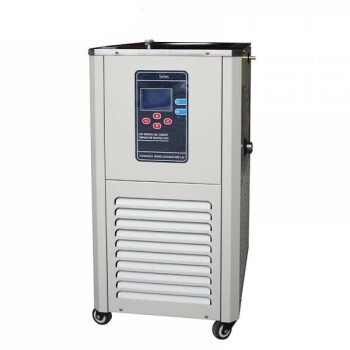
The primary function of a hydrothermal reactor is to generate a stable, high-temperature and high-pressure environment that maintains water in a subcritical state. By securing these specific thermodynamic conditions, the reactor facilitates the critical chemical reactions—dehydration, decarboxylation, and polymerization—required to convert raw biomass substrates into hydrochar.
Core Takeaway The hydrothermal reactor serves as a containment vessel that transforms water into a reactive, subcritical solvent. This environment allows for the direct carbonization of wet biomass without pre-drying, resulting in a hydrochar characterized by high porosity and rich surface functional groups.
The Mechanism of Transformation
The reactor does not merely heat the biomass; it fundamentally alters the physical and chemical properties of the processing medium to drive conversion.
Creating a Subcritical State
The reactor is designed to maintain water in a subcritical state, typically at temperatures around 180°C to 250°C.
Crucially, the reactor maintains autogenous pressure (often between 2 and 10 MPa). This pressure ensures the water remains in a liquid phase even well above its boiling point, which is essential for deep thermochemical conversion.
Ensuring Thermal Uniformity
A critical function of the reactor design is providing thermal uniformity throughout the biomass slurry.
Consistent heat distribution allows for homogeneous reactions across the entire substrate. This prevents uneven carbonization and ensures the final hydrochar has consistent structural properties.
Facilitating Chemical Reactions
Within this pressurized, hot aqueous environment, the reactor enables water to act as a catalyst.
This promotes hydrolysis, where polysaccharides breakdown into monosaccharides. Subsequently, the reactor facilitates dehydration and decarboxylation, effectively removing oxygen and hydrogen from the biomass structure to increase carbon density.
Enhancing Material Properties
The specific environment provided by the reactor directly dictates the quality and utility of the resulting hydrochar.
Developing Pore Structure
The reactor’s high-pressure environment is responsible for creating a highly developed pore structure within the hydrochar.
This porosity is a key determinant of the material's performance. For applications involving remediation, this structure provides the physical space necessary to trap contaminants.
Surface Functionalization
The liquid-phase environment promotes the formation of abundant oxygen-containing functional groups (such as carboxyl and hydroxyl groups) on the hydrochar surface.
These functional groups are chemically active sites. They significantly enhance the material's adsorption capacity for heavy metals like cadmium and improve its interaction with other chemical agents.
Understanding Operational Trade-offs
While the hydrothermal reactor offers distinct advantages for biomass processing, it introduces specific operational considerations.
Pressure Management Requirements
The reliance on autogenous high pressure (up to 10 MPa) necessitates robust vessel construction and rigorous safety protocols.
Unlike atmospheric reactors, a hydrothermal system must be perfectly sealed. Any failure in the seal compromises the subcritical state, halting the carbonization process and potentially posing safety risks.
The "Wet" Advantage vs. Limitation
The reactor is specifically optimized for high-moisture feedstocks (like sludge or manure) because it eliminates the energy-intensive need for pre-drying.
However, this reliance on an aqueous medium means the process is inherently different from dry pyrolysis. It is a solution designed to leverage the solvent properties of water, making it less distinct or advantageous if the starting biomass is already extremely dry.
Making the Right Choice for Your Goal
The hydrothermal reactor converts waste into value, but the specific utility of that value depends on your end goal.
- If your primary focus is Environmental Remediation: Prioritize the reactor's ability to generate oxygen-rich functional groups, as these are the primary drivers for adsorbing heavy metal ions like Cadmium.
- If your primary focus is Solid Fuel Production: Focus on the reactor's ability to facilitate dehydration and decarboxylation, which increases the carbon content and combustion kinetics of the final hydrochar.
- If your primary focus is Waste Management Efficiency: Leverage the reactor's ability to process wet biomass without pre-drying, converting sludge or high-moisture waste directly into usable resources.
By controlling temperature and pressure to harness the power of subcritical water, the hydrothermal reactor turns biological waste into a highly engineered carbon material.
Summary Table:
| Feature | Function in HTC Process | Benefit for Hydrochar |
|---|---|---|
| Subcritical Water | Acts as a reactive solvent and catalyst | Enables carbonization without pre-drying |
| High Pressure | Maintains liquid phase at high temperatures | Develops highly porous internal structures |
| Thermal Uniformity | Ensures consistent heat distribution | Produces homogeneous material properties |
| Chemical Drive | Facilitates dehydration & decarboxylation | Increases carbon density and surface groups |
Revolutionize Your Biomass Research with KINTEK
Unlock the full potential of Hydrothermal Carbonization with KINTEK’s precision-engineered laboratory equipment. Whether you are focused on environmental remediation, waste management, or renewable energy, our high-performance high-temperature high-pressure reactors and autoclaves are designed to deliver the stable subcritical environments necessary for superior hydrochar production.
From crushing and milling systems to advanced porous ceramics and crucibles, KINTEK provides the comprehensive tools needed for every stage of material synthesis. Our expertise helps target customers in academia and industry achieve higher carbon density and enhanced surface functionalization in their research.
Ready to upgrade your laboratory’s capabilities? Contact KINTEK today to discuss our custom solutions for biomass processing and battery research.
References
- Petronela Gheorghe, Ileana Rău. All-optical spatial phase modulation in dye-doped DNA films. DOI: 10.21175/rad.abstr.book.2023.19.17
This article is also based on technical information from Kintek Solution Knowledge Base .
Related Products
- High Pressure Laboratory Autoclave Reactor for Hydrothermal Synthesis
- Customizable Laboratory High Temperature High Pressure Reactors for Diverse Scientific Applications
- Custom PTFE Teflon Parts Manufacturer for Hydrothermal Synthesis Reactor Polytetrafluoroethylene Carbon Paper and Carbon Cloth Nano-growth
- Electric Rotary Kiln Small Rotary Furnace Biomass Pyrolysis Plant
- Stainless High Pressure Autoclave Reactor Laboratory Pressure Reactor
People Also Ask
- What role does a high-pressure reactor (autoclave) play in the synthesis of NiCuFe-LDH? Master Hydrothermal Growth
- What Role Does a High-Pressure Reactor or Autoclave Play in HA Catalyst Synthesis? Achieve High Surface Area Materials
- What equipment is required for hydrothermal synthesis of Ga0.25Zn4.67S5.08? Optimize Your Semiconductor Production
- What is the function of a high-pressure reactor in the hydrothermal synthesis of boehmite? Expert Process Insights
- What role does an autoclave play in the synthesis of MnO2 nanofibers? Mastering Hydrothermal Growth