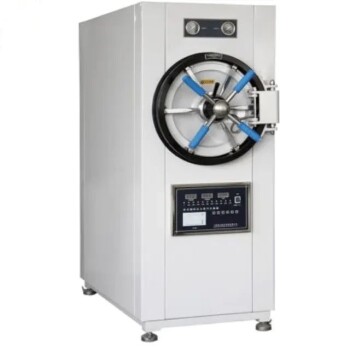
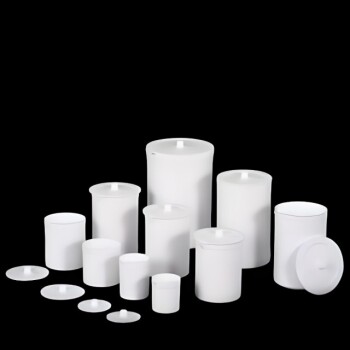
The primary function of a PTFE-lined hydrothermal autoclave in synthesizing Fe-NH2-BDC is to provide a sealed, high-pressure, and high-temperature environment that facilitates the subcritical state of the solvent. This specific environment is essential for enhancing the solubility and chemical activity of the reactants, which directly enables the coordination assembly of iron ions with aminoterephthalic acid ligands.
A PTFE-lined autoclave acts as a specialized chemical reactor that uses heat and autogenous pressure to drive the formation of metal-organic frameworks. It ensures the reaction occurs under subcritical conditions while providing a chemically inert barrier that prevents metallic contamination.
Creating the Necessary Reaction Environment
Achieving the Subcritical State
The sealed nature of the autoclave allows the internal solvent to be heated beyond its atmospheric boiling point. This creates a subcritical state, where the liquid exhibits properties between a gas and a liquid.
In this state, the dielectric constant of the solvent changes, significantly increasing its ability to dissolve the iron salts and the aminoterephthalic acid (NH2-BDC) organic ligands.
Enhancing Chemical Activity
High pressure and temperature within the vessel increase the kinetic energy of the molecules. This heightened activity is necessary to overcome energy barriers required for the ligands to bond with the metal centers.
Without these elevated conditions, the coordination assembly—the process where iron ions and amino-functionalized ligands organize into a structured framework—would be too slow or fail to occur entirely.
Ensuring Precursor Purity and Integrity
The Role of Chemical Inertness
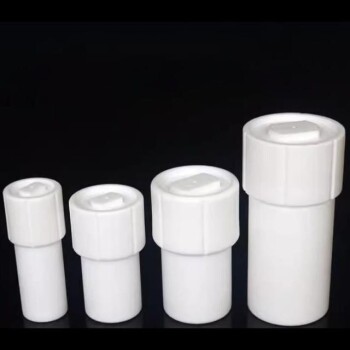
The Polytetrafluoroethylene (PTFE) liner is highly resistant to chemical corrosion. It acts as a protective shield between the reaction mixture and the stainless steel outer shell of the autoclave.
This inertness is critical because the synthesis often involves acidic or alkaline environments that would otherwise leach chromium, nickel, or iron from the steel walls. By preventing this leaching, the PTFE liner ensures the high purity of the synthesized Fe-NH2-BDC precursor.
Promoting Ordered Morphology
The stable, constant temperature maintained by the autoclave allows for directed self-assembly. This controlled environment is what enables the precursor to form organized structures with high surface areas.
Consistent pressure ensures that the nucleation and growth of the crystals happen uniformly throughout the solution. This results in a final product with regular morphology and predictable chemical properties.
Understanding the Trade-offs
Temperature Limitations of PTFE
While PTFE is exceptionally inert, it has a functional temperature ceiling, typically around 220°C to 250°C. Exceeding these temperatures can cause the liner to soften or deform, leading to potential leaks or vessel failure.
Thermal Lag and Pressure Risks
The thick walls of the stainless steel jacket and the internal PTFE liner create thermal lag. This means the temperature inside the reaction chamber may take significant time to reach the setpoint of the external oven.
Furthermore, because the pressure is autogenous (generated by the heating of the solvent), it cannot be directly controlled independently of the temperature. This requires careful calculation of the "filling degree" to avoid over-pressurization.
How to Apply This to Your Project
Making the Right Choice for Your Goal
- If your primary focus is High-Purity Research: Use a high-quality PTFE liner to eliminate any background ion effects and ensure the organic ligands bond only to the intended iron centers.
- If your primary focus is Structural Consistency: Maintain a strictly constant temperature for the duration of the reaction (e.g., 24 hours) to allow for the slow, ordered growth of the MOF crystals.
- If your primary focus is Safety and Longevity: Never exceed the 70-80% fill volume limit of the liner to ensure there is enough headspace for gas expansion as the solvent reaches its subcritical state.
The PTFE-lined autoclave is an indispensable tool that transforms slow, inefficient chemical mixtures into highly ordered, high-purity crystalline precursors through the power of subcritical synthesis.
Summary Table:
| Key Feature | Primary Function in Synthesis | Technical Benefit |
|---|---|---|
| Subcritical Environment | Heats solvent above boiling point | Increases solubility & reactant kinetic energy |
| PTFE Lining | Provides a chemically inert barrier | Prevents metal leaching & ensures high purity |
| Autogenous Pressure | Maintains high-pressure state | Enables coordination assembly of Fe ions & ligands |
| Stable Temperature | Controlled thermal environment | Promotes ordered morphology & regular crystal growth |
Elevate Your MOF Research with KINTEK Precision
Achieving the perfect Fe-NH2-BDC precursor requires uncompromising purity and stable reaction conditions. KINTEK specializes in high-performance laboratory equipment, providing the high-temperature high-pressure reactors and autoclaves essential for successful hydrothermal synthesis. Our PTFE-lined solutions are designed to resist corrosion and prevent contamination, ensuring your metal-organic frameworks meet the highest research standards.
Beyond autoclaves, KINTEK offers a comprehensive portfolio including:
- High-temperature furnaces (Muffle, Tube, Vacuum, CVD/PECVD)
- Material processing tools (Crushing, milling, and hydraulic presses)
- Advanced consumables (Crucibles, ceramics, and PTFE products)
Ready to optimize your synthesis workflow? Contact our technical experts today to find the ideal reactor configuration for your laboratory's needs.
References
- Fenglai Pei, Xiangzhi Cui. Constructing FeS and ZnS Heterojunction on N,S-Codoped Carbon as Robust Electrocatalyst toward Oxygen Reduction Reaction. DOI: 10.3390/nano13192682
This article is also based on technical information from Kintek Solution Knowledge Base .
Related Products
- Custom PTFE Teflon Parts Manufacturer for Hydrothermal Synthesis Reactor Polytetrafluoroethylene Carbon Paper and Carbon Cloth Nano-growth
- High Pressure Laboratory Autoclave Reactor for Hydrothermal Synthesis
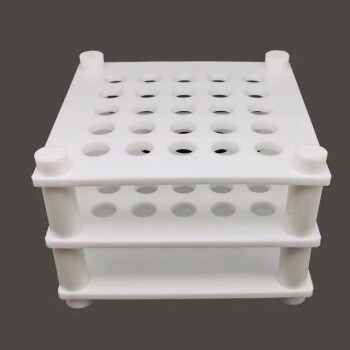
- Custom PTFE Teflon Parts Manufacturer for Centrifuge Tube Racks
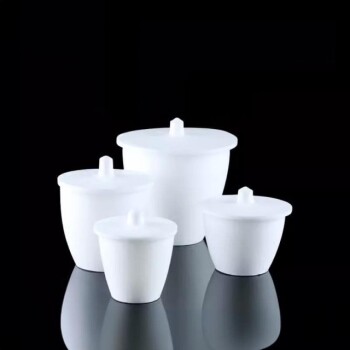
- Custom Machined and Molded PTFE Teflon Parts Manufacturer with PTFE Crucible and Lid
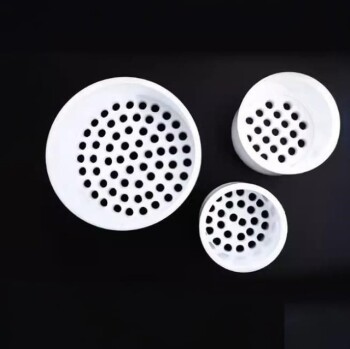
- Custom PTFE Teflon Parts Manufacturer for PTFE Mesh F4 Sieve
People Also Ask
- What is the function of a PTFE reactor in MXene etching? Ensure Safe, High-Purity MAX Phase Conversion
- Why is a PTFE reactor required for titanium-based nano-ceramic coating solutions? Ensure Chemical Inertness & Purity
- Why must a Polytetrafluoroethylene (PTFE) reactor be used for Ti3C2TX MXene etching? Ensure Safety and Purity
- Why are PTFE reactors preferred for silver phosphate glass testing? Ensure Purity and Kinetic Accuracy
- What are the advantages of using polytetrafluoroethylene (PTFE) liners in hydrothermal synthesis reactors? High Purity