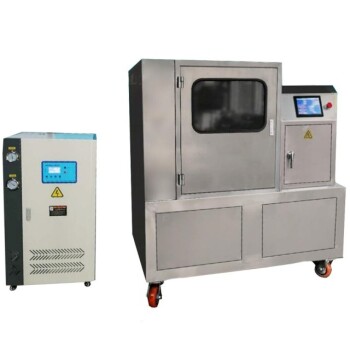
The primary function of an ultra-low temperature cooling system in Deep Cryogenic Treatment (DCT) is to fundamentally alter the microstructure of ferrous metals by exposing them to extreme cold (approximately -196°C). Utilizing liquid nitrogen as a medium, the system facilitates the conversion of soft residual austenite into hard martensite and promotes the uniform precipitation of fine carbides.
Deep Cryogenic Treatment goes beyond standard heat treating by eliminating microscopic weaknesses. It forces a complete structural transformation that significantly boosts hardness, wear resistance, and fatigue strength for critical components.
The Mechanism of Microstructural Transformation
Reaching Extreme Thermal Lows
The system utilizes liquid nitrogen to create an environment capable of reaching temperatures as low as 77 K (approximately -196°C).
This is not merely about cooling metal; it is about reaching a specific cryogenic threshold where atomic-level changes occur. Standard refrigeration cannot reach the depths required to trigger these specific phase changes in steel.
Eliminating Residual Austenite
The most critical function of the system is facilitating the transformation of residual austenite into martensite.
In standard heat treatment, some austenite (a softer phase of steel) often remains, creating weak points. The ultra-low temperature forces this "leftover" material to convert into martensite, which is significantly harder and more stable.
Promoting Carbide Precipitation
Beyond phase conversion, the intense cold promotes the uniform precipitation of fine carbides.
These carbides act as microscopic reinforcements within the metal matrix. Their uniform distribution is essential for eliminating internal stress concentrations and improving the material's overall density and toughness.
Impact on Material Performance
Enhancing Mechanical Properties
The structural changes driven by the cooling system directly result in enhanced hardness and wear resistance.
By solidifying the microstructure, the metal becomes far more resistant to abrasion and surface degradation. This is vital for extending the lifespan of tools and parts subject to high friction.
Increasing Fatigue Strength
The treatment significantly improves fatigue strength, allowing components to withstand repeated stress cycles without failing.
This is particularly crucial for essential metal components used in the energy sector, where reliability under constant load is non-negotiable.
Understanding the Operational Requirements
Dependence on Liquid Nitrogen
The system relies entirely on liquid nitrogen as the cooling medium to achieve the necessary 77 K.
This requirement necessitates specialized infrastructure for handling cryogenic fluids safely. Without a consistent supply and precise control of this medium, the process cannot achieve the uniform temperature required for successful treatment.
Making the Right Choice for Your Goal
If you are evaluating Deep Cryogenic Treatment for your applications, consider your specific performance targets:
- If your primary focus is maximum durability: Ensure the cooling profile is sufficient to trigger the complete precipitation of fine carbides to resist surface wear.
- If your primary focus is structural reliability: Prioritize the system's ability to maximize the transformation of residual austenite to martensite to prevent fatigue failure.
The value of an ultra-low temperature cooling system lies in its ability to unlock the full potential of ferrous metals, turning standard components into high-performance assets.
Summary Table:
| Feature | Primary Function in DCT | Impact on Material |
|---|---|---|
| Cooling Medium | Liquid Nitrogen (77 K / -196°C) | Reaches cryogenic thresholds for phase changes |
| Phase Transformation | Residual Austenite to Martensite | Eliminates weak points and increases hardness |
| Carbide Action | Uniform Precipitation of Fine Carbides | Enhances material density and toughness |
| Performance Gain | Structural Stabilization | Improves wear resistance and fatigue strength |
Elevate Your Material Performance with KINTEK Precision
Maximize the lifespan and reliability of your critical components with KINTEK’s advanced laboratory solutions. Whether you are optimizing metal microstructures through Deep Cryogenic Treatment or conducting cutting-edge research, we provide the specialized equipment you need.
Our comprehensive portfolio includes:
- Cooling Solutions: High-performance ULT freezers, cold traps, and freeze dryers.
- Thermal Processing: Muffle, vacuum, and atmosphere furnaces for precise heat treatment.
- Material Preparation: Crushing, milling, and high-pressure hydraulic presses.
- Specialized Research: High-pressure reactors, autoclaves, and battery research tools.
Ready to transform your laboratory capabilities? Contact our experts today to discover how KINTEK can deliver the precision and durability your industry demands.
References
- Patricia Jovičević-Klug, Michael Rohwerder. Sustainable New Technology for the Improvement of Metallic Materials for Future Energy Applications. DOI: 10.3390/coatings13111822
This article is also based on technical information from Kintek Solution Knowledge Base .
Related Products
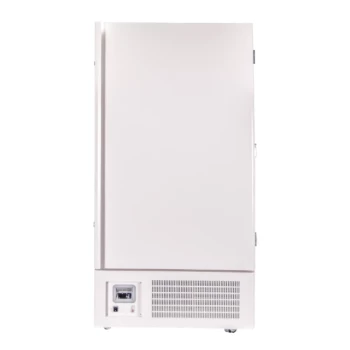
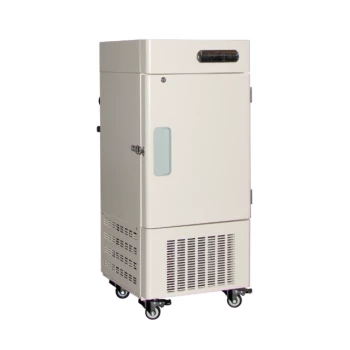
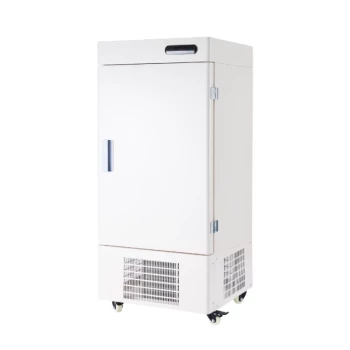
- 108L Vertical Ultra Low Temperature ULT Freezer
- 938L Vertical Ultra Low Temperature Freezer for Advanced Laboratory Storage
- 508L Advanced Vertical Ultra Low Temperature Freezer for Critical Laboratory Storage
- 608L Essential Laboratory Ultra Low Temperature Freezer For Critical Sample Preservation
- 408L Advanced Vertical Laboratory Ultra Low Temperature Freezer for Critical Research Material Preservation
People Also Ask
- What are the common applications of ultra-low temperature freezers? Preserve Your Most Valuable Samples
- What are the different types of ultra-low temperature freezers available? Choose the Right ULT Freezer for Your Lab
- What are some key features of ultra-low temperature freezers? Essential Guide to Reliable Sample Storage
- Have other labs successfully stored samples at -70°C? Proven Long-Term Preservation for Biological Materials
- What features should be considered when choosing an ultra low temperature freezer? Secure Your Samples with Precision