The primary function of an ultrasonic generator in liquid-phase exfoliation is to induce acoustic cavitation within the solvent. This process creates high-energy shock waves and micro-jets that physically break the weak bonds holding graphite layers together, effectively separating them into single or multi-layer graphene sheets.
The ultrasonic generator acts as a precise mechanical wedge. By converting electrical energy into intense physical force, it overcomes interlayer adhesion to produce graphene dispersions without relying on harsh chemical oxidation.
The Mechanics of Exfoliation
Creating the Cavitation Effect
The core mechanism at work is cavitation. The generator transmits high-frequency sound waves into the liquid, causing the rapid formation and collapse of microscopic bubbles.
Releasing Kinetic Energy
When these bubbles collapse, they release a tremendous amount of energy locally. This manifests as instantaneous high-pressure shock waves and fluid micro-jets that impact the suspended graphite particles.
Overcoming Interlayer Adhesion
Graphite consists of stacked layers held together by Van der Waals forces. While individually weak, these forces are significant in aggregate; the physical energy from cavitation is specifically tuned to overpower this attraction and pry the layers apart.
The Role of Physical Forces
Shear Forces and Vibration
Beyond shock waves, equipment like probe-type ultrasonic homogenizers generates high-frequency mechanical vibrations. These vibrations create significant local shear forces in the liquid medium.
Resulting Material Structure
The exfoliation process yields graphene nanosheets (GNS) that possess a large specific surface area. Because the process is physical rather than chemical, it facilitates the production of dispersions that retain the material's essential properties.
Understanding the Trade-offs
Preservation vs. Fragmentation
A key advantage of this method is its non-destructive nature regarding the chemical structure. Unlike chemical oxidation methods, ultrasonic exfoliation preserves the intrinsic two-dimensional lattice of the graphene.
Maintaining Performance Characteristics
By keeping the structural integrity intact, the resulting graphene retains its superior electrical and thermal characteristics. This makes the output particularly valuable for high-performance applications, such as reinforcement in ceramic composites or active sites for photocatalytic reactions.
Making the Right Choice for Your Goal
Depending on your specific application requirements, the utility of ultrasonic exfoliation varies.
- If your primary focus is material purity: The ultrasonic method is ideal because it exfoliates without chemically altering the graphene lattice, preserving its conductivity and strength.
- If your primary focus is surface area: This technique efficiently produces thinner nanosheets with high specific surface areas, which is critical for maximizing active sites in catalytic applications.
Ultrasonic generation provides a robust, physical pathway to transform bulk graphite into high-quality graphene while maintaining the material's fundamental advantages.
Summary Table:
| Feature | Description |
|---|---|
| Core Mechanism | Acoustic Cavitation (bubble formation and collapse) |
| Energy Source | High-frequency sound waves & micro-jets |
| Target Force | Overcoming Van der Waals forces between graphite layers |
| Key Outcome | High-purity graphene nanosheets (GNS) with intact lattice |
| Main Advantage | Non-destructive, physical exfoliation vs. chemical oxidation |
Elevate Your Nanomaterial Research with KINTEK
Precision is paramount when transitioning from bulk graphite to high-performance graphene. KINTEK specializes in advanced laboratory solutions, offering high-intensity ultrasonic homogenizers, crushing and milling systems, and cooling solutions designed to maintain material integrity during intense exfoliation processes.
Whether you are developing ceramic composites or enhancing photocatalytic reactions, our equipment ensures your dispersions retain superior electrical and thermal characteristics.
Ready to optimize your liquid-phase exfoliation? Contact KINTEK today to discover our comprehensive range of laboratory equipment and consumables tailored for cutting-edge battery research and material science.
References
- Liangchuan Li, Hongwei Zhu. Research Progress of the Liquid-Phase Exfoliation and Stable Dispersion Mechanism and Method of Graphene. DOI: 10.3389/fmats.2019.00325
This article is also based on technical information from Kintek Solution Knowledge Base .
Related Products
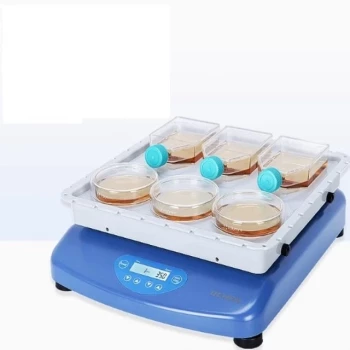
- Laboratory Oscillating Orbital Shaker
- 5L Heating Chilling Circulator Cooling Water Bath Circulator for High and Low Temperature Constant Temperature Reaction
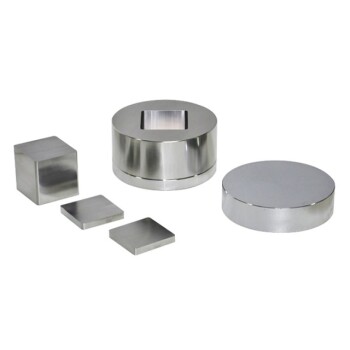
- Square Lab Press Mold for Laboratory Applications
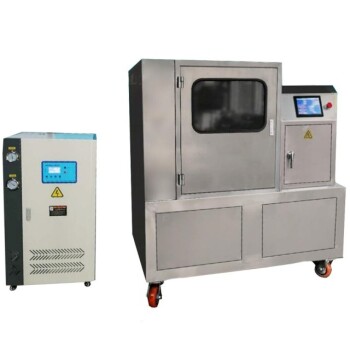
- 50L Heating Chilling Circulator Cooling Water Bath Circulator for High and Low Temperature Constant Temperature Reaction
- 10L Chilling Circulator Cooling Water Bath Low Temperature Constant Temperature Reaction Bath
People Also Ask
- What is the role of a laboratory orbital shaker in activated carbon synthesis? Maximize Pore Depth & Surface Area
- What is the role of a laboratory orbital shaker in copper recovery? Optimize Industrial Waste Liquid Processing
- Why are high-precision shakers required for graphene oxide kinetic studies? Ensure Data Accuracy and Rapid Equilibrium
- What is the role of a laboratory shaker in silane sol preparation? Master Uniform Aramid Fabric Coating
- Why is a laboratory shaker required for continuous 24-hour catalyst treatment? Achieve Deep Uniform Impregnation