The primary advantage of using freeze drying (lyophilization) for phase change materials (PCMs) is its ability to preserve the integrity of heat-sensitive biopolymer shells through low-temperature moisture removal. By utilizing sublimation rather than heat evaporation, the process safeguards materials like proteins, starch, and alginate from thermal degradation.
The Core Insight Freeze drying bypasses the destructive forces of heat and liquid evaporation, ensuring that delicate biopolymer shells retain their original architecture. This preservation is the critical factor that allows the final composite material to maintain the high thermal conductivity and structural stability required for effective energy storage.
Preserving Material Integrity
The fundamental benefit of freeze drying lies in how it handles the physical stress placed on the encapsulation shell during preparation.
Avoiding Thermal Degradation
Many biopolymers used for PCM shells, such as proteins and starch, are inherently heat-sensitive. Traditional drying methods involve heat that can denature or chemically alter these components.
The Power of Sublimation
Freeze drying removes moisture by converting ice directly into vapor (sublimation) at low temperatures. This bypasses the liquid phase entirely, preventing the structural collapse often caused by the capillary forces associated with liquid evaporation.
Retaining Biological Activity
For shells derived from biological sources, maintaining chemical fidelity is crucial. Freeze drying protects the biological activity of the shell material, ensuring it functions as intended within the composite.
Enhancing Performance Characteristics
The method of preparation directly dictates the final performance metrics of the phase change material.
Microporous Structure Retention
Because the polymer does not collapse during drying, the material retains a highly organized microporous structure. This open structure is vital for accommodating the phase change material effectively.
Optimized Thermal Conductivity
The preservation of the microporous network has a direct positive impact on performance. An intact, well-structured shell ensures the composite maintains excellent thermal conductivity, allowing for efficient heat transfer during phase change cycles.
Long-Term Structural Stability
Beyond immediate performance, the structural integrity gained from freeze drying contributes to the overall stability of the composite. This ensures the PCM can withstand repeated thermal cycling without breaking down.
Common Pitfalls to Avoid
While freeze drying is highly effective, it is important to understand why it is necessary compared to other methods.
The Risk of Heat Evaporation
Attempting to dry biopolymer shells using standard thermal evaporation is the most common cause of material failure. This approach almost invariably leads to the collapse of the polymer network and loss of porosity.
Material Specificity
It is critical to note that this advantage is most pronounced when using heat-sensitive biopolymers. If your shell material is not sensitive to heat (e.g., certain synthetic polymers), the specific advantages of freeze drying regarding degradation prevention may be less relevant.
Making the Right Choice for Your Goal
When designing phase change materials with biopolymer shells, align your processing method with your specific performance targets.
- If your primary focus is Structural Stability: Prioritize freeze drying to prevent polymer collapse and maintain a robust microporous network.
- If your primary focus is Thermal Performance: Use freeze drying to ensure the shell structure remains open and conductive for maximum heat transfer efficiency.
- If your primary focus is Material Preservation: Rely on this method to protect the biological activity and chemical structure of sensitive proteins or alginates.
Freeze drying is not just a drying method; it is a structural preservation strategy essential for high-performance biopolymer PCMs.
Summary Table:
| Feature | Advantage of Freeze Drying | Benefit for Phase Change Materials (PCMs) |
|---|---|---|
| Drying Mechanism | Sublimation (Ice to Vapor) | Prevents structural collapse caused by capillary forces |
| Temperature Control | Low-temperature processing | Protects heat-sensitive biopolymers (proteins, starch, alginate) |
| Structure | Microporous network retention | Maintains original architecture for effective PCM loading |
| Thermal Performance | Optimized conductivity | Ensures efficient heat transfer during phase change cycles |
| Durability | Long-term stability | Withstands repeated thermal cycling without breakdown |
Elevate Your Materials Research with KINTEK
Precision matters when preserving the integrity of delicate biopolymer shells. At KINTEK, we specialize in providing advanced laboratory solutions tailored for researchers working with phase change materials and sophisticated energy storage composites.
Our extensive portfolio includes high-performance freeze dryers (cold traps), precision high-temperature furnaces, and crushing and milling systems designed to meet the rigorous demands of your laboratory. Whether you are developing microporous biopolymer networks or testing thermal conductivity, our range of PTFE products, ceramics, and crucibles ensures your materials remain uncontaminated and thermally stable.
Ready to optimize your PCM preparation process? Contact our technical experts today to discover how KINTEK's equipment can enhance your lab's efficiency and structural preservation strategies.
References
- Aikaterini Feizatidou, Ioannis Α. Kartsonakis. Green Synthesis of Core/Shell Phase Change Materials: Applications in Industry and Energy Sectors. DOI: 10.3390/en18082127
This article is also based on technical information from Kintek Solution Knowledge Base .
Related Products
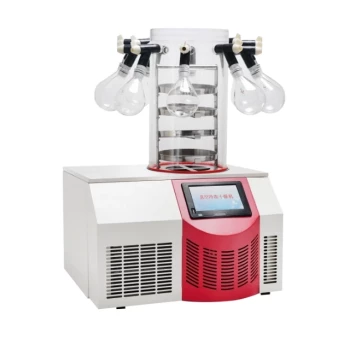
- High Performance Laboratory Freeze Dryer
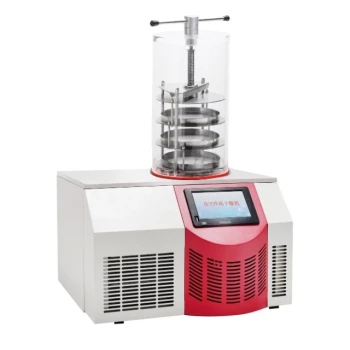
- High Performance Laboratory Freeze Dryer for Research and Development
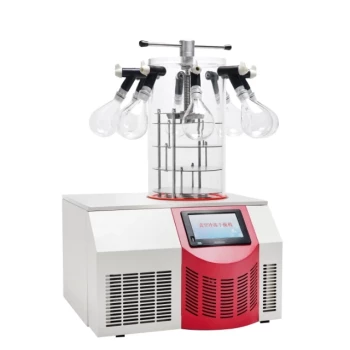
- Benchtop Laboratory Freeze Dryer for Lab Use
- Benchtop Laboratory Vacuum Freeze Dryer
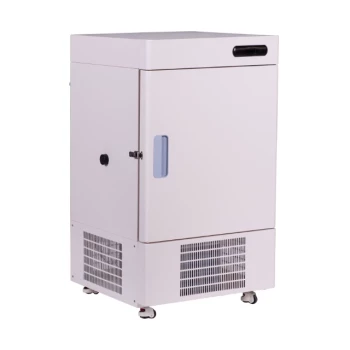
- 108L Vertical Ultra Low Temperature ULT Freezer
People Also Ask
- What role does a laboratory freeze dryer play in the synthesis of graphene-based electrocatalysts? Preserve 3D Structures
- What are the technical advantages of using a laboratory freeze dryer for porous carbon precursors? Preserve 3D Networks
- What types of liquid samples can be processed using a laboratory freeze dryer? Preserve Your Sensitive Materials
- How do laboratory freeze dryers support scientific research? Preserve Sample Integrity for Reproducible Results
- Why is a laboratory freeze dryer preferred over traditional heating? Preserve Biochar Structure & Maximize Porosity