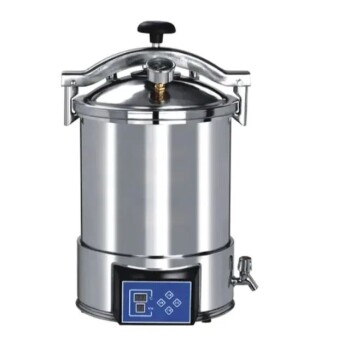
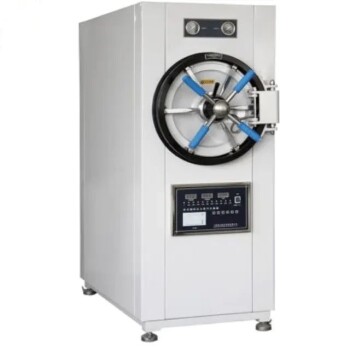
The use of a high-pressure reactor is the essential driver for hydrothermal synthesis. It creates a sealed, pressurized environment where high temperatures force molybdenum disulfide (MoS2) to grow directly and uniformly onto the biochar surface. This one-step process fundamentally alters the composite's physical structure, significantly enhancing its hydrophobic properties and surface area.
The high-pressure reactor enables subcritical water conditions that accelerate chemical reaction rates and promote crystallization. This ensures the formation of stable, layered MoS2 nanosheets on the biochar, creating a high-performance material that cannot be synthesized under standard atmospheric conditions.
The Role of Hydrothermal Synthesis in Material Growth
Facilitating Subcritical Conditions
A high-pressure reactor, or autoclave, allows solvents to reach temperatures well above their atmospheric boiling points. In the case of MoS2 and biochar, operating at temperatures like 200°C to 220°C increases the solubility and activity of precursors such as sodium molybdate and thiourea.
Promoting Crystallization Kinetics
The pressurized environment is critical for crystallization kinetics, ensuring that the MoS2 forms a distinct two-dimensional layered structure. This pressure allows the precursors to react fully within the liquid phase, producing monodisperse nanosheets that adhere firmly to the biochar substrate.
Precision Phase Control
The autoclave environment allows for the synthesis of specific phases, such as 1T-phase MoS2 nanosheets. By precisely controlling the internal pressure and thermal energy, researchers can guide the phase transformation and morphology of the resulting crystals.
Enhancing the Properties of the Biochar Composite
Increasing Surface Roughness
As MoS2 grows on the biochar, it creates a layered structure that significantly increases the surface roughness of the composite. This increased surface area is vital for applications involving catalysis or the adsorption of pollutants.
Improving Hydrophobic Properties
The hydrothermal process helps remove oxygen-containing functional groups from the biochar surface. This chemical modification, combined with the presence of MoS2, makes the resulting composite much more hydrophobic, which is often desirable for moisture-resistant applications.
Structural Transformation
Similar to the process of wet torrefaction, the high-pressure environment can alter the fibrous structure of the biochar itself. This can increase the material's brittleness and energy density, making it a more robust support for the MoS2 catalyst.
Understanding the Trade-offs
Equipment and Safety Requirements
The primary drawback of using a high-pressure reactor is the requirement for specialized, high-strength equipment. Operating at subcritical temperatures and pressures requires rigorous safety protocols to prevent vessel failure.
Energy and Time Intensity
While hydrothermal synthesis is a powerful "one-step" method, it often requires extended reaction times—sometimes up to 48 hours—to ensure full crystallization. This high energy consumption must be balanced against the performance gains of the final material.
Scaling Limitations
Scaling hydrothermal synthesis from a laboratory autoclave to industrial production is technically challenging. Maintaining uniform temperature and pressure across a large-scale reactor is significantly more complex than in small-batch laboratory settings.
How to Apply This to Your Project
Before initiating the loading of MoS2 onto biochar, you must align your reactor parameters with your specific material requirements.
- If your primary focus is maximizing surface area: Prioritize a higher temperature (near 220°C) to encourage the growth of thin, monodisperse MoS2 nanolayers.
- If your primary focus is increasing hydrophobicity: Focus on the duration of the hydrothermal treatment to ensure the maximum removal of oxygen-containing functional groups from the biochar.
- If your primary focus is phase purity: Utilize precise temperature control (typically around 180°C to 200°C) to ensure the formation of the desired 1T or 2H crystalline phases of MoS2.
By leveraging the unique conditions of a high-pressure reactor, you can transform simple biochar into a sophisticated, high-performance catalyst support.
Summary Table:
| Function | Impact on MoS2-Biochar Composite | Key Process Parameters |
|---|---|---|
| Subcritical Conditions | Increases precursor solubility and chemical activity | Temperatures of 200°C – 220°C |
| Crystallization Kinetics | Promotes 2D layered nanosheet growth (1T/2H phases) | High internal vessel pressure |
| Surface Modification | Enhances hydrophobicity by removing oxygen groups | Extended reaction (up to 48h) |
| Structural Growth | Increases surface roughness and active catalytic sites | Precise thermal/phase control |
Elevate Your Material Synthesis with KINTEK Precision
Unlock the full potential of hydrothermal synthesis with KINTEK’s specialized high-temperature high-pressure reactors and autoclaves. Whether you are loading MoS2 onto biochar or developing next-generation catalysts, our equipment provides the stability and precision phase control required for superior material performance.
Beyond our industry-leading reactors, KINTEK offers a comprehensive laboratory portfolio, including:
- High-Temperature Furnaces: Muffle, tube, and vacuum systems for advanced thermal processing.
- Material Preparation: Precision crushing, milling, and hydraulic pellet presses.
- Lab Essentials: High-purity ceramics, crucibles, and cooling solutions like ULT freezers.
Don't let equipment limitations bottleneck your research. Ensure uniform crystallization and optimized surface properties with our robust laboratory solutions. Contact KINTEK today to discuss your project requirements!
References
- Zhiyuan Liu, Zhiyuan He. Ice-phobic properties of MoS2-loaded rice straw biogas residue biochar-based photothermal and anti-corrosion coating with low oxygen to carbon ratio. DOI: 10.1007/s42773-023-00276-0
This article is also based on technical information from Kintek Solution Knowledge Base .
Related Products
- Customizable High Pressure Reactors for Advanced Scientific and Industrial Applications
- High Pressure Laboratory Autoclave Reactor for Hydrothermal Synthesis
- Mini SS High Pressure Autoclave Reactor for Laboratory Use
- Stainless High Pressure Autoclave Reactor Laboratory Pressure Reactor
- Portable High Pressure Laboratory Autoclave Steam Sterilizer for Lab Use
People Also Ask
- What is the function of high-pressure reactors in the synthesis of MFI-type zeolites? Master Dry Gel Conversion.
- Graphene Fiber Synthesis: Key High-Pressure Reactor Processing Conditions Explained
- What is the primary function of a high-pressure reactor in NiMoO4 preparation? Optimize Hydrothermal Catalyst Synthesis
- What reactor is used for high pressure reactions? Select the Right Autoclave for Your Lab
- What are the hazards of high pressure reactors? A Guide to Managing Explosive Risks