Knowledge high pressure reactor What is the purpose of a PTFE-lined reactor in CNF synthesis? Ensure Purity and Safety in High-Pressure Reactions.
Author avatar

Tech Team · Kintek Solution

Updated 2 months ago

What is the purpose of a PTFE-lined reactor in CNF synthesis? Ensure Purity and Safety in High-Pressure Reactions.


The primary purpose of using a PTFE-lined stainless steel reactor is to create a controlled, high-pressure hydrothermal environment that facilitates the precise growth of metal oxides onto carbon nanofibers. This specific configuration ensures that the reaction occurs under elevated temperatures and pressures while maintaining the chemical purity of the resulting composite material by isolating the reactants from the metallic vessel walls.

This equipment combination solves the dual challenge of providing the structural strength required for high-pressure hydrothermal synthesis and the chemical inertness necessary to prevent contamination and corrosion during the material fabrication process.

The Synergistic Role of Stainless Steel and PTFE

Maintaining Structural Integrity Under Extreme Pressure

The stainless steel exterior of the reactor serves as a pressure-resistant shell. Hydrothermal and solvothermal synthesis often require temperatures exceeding the atmospheric boiling point of the solvent, which generates significant internal pressure.

The high tensile strength of stainless steel ensures the vessel remains sealed and safe during these reactions. Without this outer casing, the PTFE liner—which is relatively soft—would deform or fail under the internal stresses.

Facilitating Hydrothermal Kinetics for Composite Formation

The sealed environment allows for controlled nucleation and growth of metal precursor salts, such as tin tetrachloride or ferric chloride, directly onto the surface of carbon nanofibers (CNFs).

By operating at temperatures and pressures beyond standard conditions, the reactor provides the energy necessary for precursors to dehydrate, polymerize, or coordinate with ligands. This leads to a more uniform distribution of metal oxides across the CNF substrate, which is critical for the performance of the final composite.

The Critical Importance of the PTFE Liner

Prevention of Metal Ion Contamination

A primary concern in materials science is the introduction of unwanted impurities. The polytetrafluoroethylene (PTFE) liner acts as a barrier that prevents the reaction solution from contacting the stainless steel walls.

If the solution were to touch the steel, metal ions like iron, nickel, or chromium could leach into the reaction. For CNF and metal oxide composites, even trace amounts of these impurities can significantly alter the electrical or catalytic properties of the material.

Chemical Inertness Against Corrosive Precursors

Many metal salts used in synthesis, such as ferric chloride hexahydrate, create corrosive media when dissolved. PTFE is chosen for its exceptional chemical stability and resistance to both strong acids and alkalis.

This inertness protects the expensive stainless steel outer shell from corrosion. By preserving the reactor's interior surface, the liner ensures a long equipment lifespan and consistent reaction results across multiple batches.

Understanding the Trade-offs

Temperature Limitations of PTFE

While PTFE is chemically robust, it has a clear thermal ceiling, typically around 250°C. Exceeding this temperature can cause the liner to soften, lose its shape, or even release toxic fumes.

If a synthesis requires temperatures above this range, researchers must pivot to different liner materials, such as PPL (polyphenylene polymers) or even gold-lined vessels.

Thermal Lag and Heat Transfer

PTFE is an effective insulator, which introduces a thermal lag between the heating element and the reactants. The stainless steel shell must be heated significantly before the internal solution reaches the target temperature.

Users must account for this delay in their experimental protocols. Rapid temperature ramping is difficult to achieve in this setup, which can influence the crystallization rates of the metal oxides.

Making the Right Choice for Your Goal

How to Apply This to Your Project

When selecting or using a PTFE-lined reactor for CNF composite synthesis, consider your specific experimental requirements:

  • If your primary focus is high material purity: Always inspect the PTFE liner for scratches or pitting, as these can harbor contaminants from previous runs or allow the current reaction to reach the steel wall.
  • If your primary focus is large-scale crystal growth: Ensure the reactor is filled to approximately 60-80% capacity to optimize the internal pressure generated during the hydrothermal process.
  • If your primary focus is operating at temperatures above 230°C: Monitor the liner for signs of deformation and consider switching to a PPL liner to maintain safety and structural integrity.

By balancing the mechanical strength of stainless steel with the chemical protection of PTFE, you can reliably synthesize high-performance carbon nanofiber and metal oxide composites.

Summary Table:

Component Primary Function Benefit to CNF Synthesis
Stainless Steel Shell Structural Support High-pressure resistance for hydrothermal environments.
PTFE Liner Chemical Barrier Prevents metal ion leaching and ensures material purity.
Sealed Environment Pressure Control Facilitates precise nucleation of metal oxides on CNFs.
Thermal Stability Heat Management Safely operates up to 250°C for solvothermal processes.

Elevate Your Synthesis Precision with KINTEK

Achieve unmatched purity and performance in your material research. KINTEK specializes in advanced laboratory equipment, offering a robust selection of high-temperature high-pressure reactors and autoclaves designed specifically for hydrothermal and solvothermal synthesis.

Whether you are developing next-generation carbon nanofiber composites or high-performance battery materials, our portfolio—including muffle furnaces, hydraulic presses, and high-purity ceramic consumables—provides the reliability your lab demands.

Ready to optimize your reactor setup? Contact our technical experts today for tailored solutions and high-quality equipment that drives innovation.

References

  1. Chang‐Min Yoon, Won‐Chun Oh. 3D Hierarchically Structured Tin Oxide and Iron Oxide-Embedded Carbon Nanofiber with Outermost Polypyrrole Layer for High-Performance Asymmetric Supercapacitor. DOI: 10.3390/nano13101614

This article is also based on technical information from Kintek Solution Knowledge Base .

Related Products

People Also Ask

Related Products

Stainless High Pressure Autoclave Reactor Laboratory Pressure Reactor

Stainless High Pressure Autoclave Reactor Laboratory Pressure Reactor

Discover the versatility of Stainless High Pressure Reactor - a safe and reliable solution for direct and indirect heating. Built with stainless steel, it can withstand high temperatures and pressures. Learn more now.

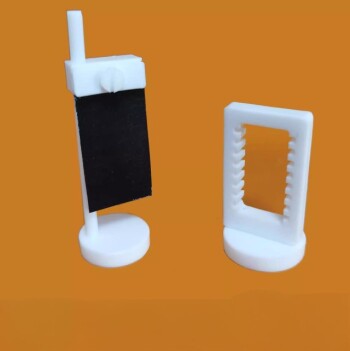
Custom PTFE Teflon Parts Manufacturer for Hydrothermal Synthesis Reactor Polytetrafluoroethylene Carbon Paper and Carbon Cloth Nano-growth

Custom PTFE Teflon Parts Manufacturer for Hydrothermal Synthesis Reactor Polytetrafluoroethylene Carbon Paper and Carbon Cloth Nano-growth

Acid and alkali resistant polytetrafluoroethylene experimental fixtures meet different requirements. The material is made of brand new polytetrafluoroethylene material, which has excellent chemical stability, corrosion resistance, airtightness, high lubricity and non-stickiness, electrical corrosion and good anti-aging ability, and can work for a long time at temperatures from -180℃ to +250℃.

Mini SS High Pressure Autoclave Reactor for Laboratory Use

Mini SS High Pressure Autoclave Reactor for Laboratory Use

Mini SS High Pressure Reactor - Ideal for medicine, chemical, and scientific research industries. Programmed heating temp and stirring speed, up to 22Mpa pressure.

Custom PTFE Teflon Parts Manufacturer for Microwave Digestion Tank

Custom PTFE Teflon Parts Manufacturer for Microwave Digestion Tank

PTFE digestion tanks are renowned for their exceptional chemical resistance, high-temperature stability, and non-stick properties. These tanks are ideal for harsh laboratory environments, Their low coefficient of friction and inert nature prevent chemical interactions, ensuring purity in experimental results.

Customizable High Pressure Reactors for Advanced Scientific and Industrial Applications

Customizable High Pressure Reactors for Advanced Scientific and Industrial Applications

This laboratory-scale high-pressure reactor is a high-performance autoclave engineered for precision and safety in demanding research and development environments.

Custom PTFE Teflon Parts Manufacturer for Reagent Wide Mouth Fine Mouth Sample High Temperature Bottles

Custom PTFE Teflon Parts Manufacturer for Reagent Wide Mouth Fine Mouth Sample High Temperature Bottles

The PTFE Reagent Bottle, also known as PTFE Chemical Bottles or Teflon Reagent Bottle, is a robust alternative to traditional glass reagent bottles. These bottles are highly resistant to both acids and alkalis, featuring a leak-proof screw cap. Ideal for laboratory use, they offer excellent chemical resistance, high temperature capabilities up to 260°C, and superior durability.

Customizable Laboratory High Temperature High Pressure Reactors for Diverse Scientific Applications

Customizable Laboratory High Temperature High Pressure Reactors for Diverse Scientific Applications

High-pressure lab reactor for precise hydrothermal synthesis. Durable SU304L/316L, PTFE liner, PID control. Customizable volume & materials. Contact us!

High Pressure Laboratory Autoclave Reactor for Hydrothermal Synthesis

High Pressure Laboratory Autoclave Reactor for Hydrothermal Synthesis

Discover the applications of Hydrothermal Synthesis Reactor - a small, corrosion-resistant reactor for chemical labs. Achieve rapid digestion of insoluble substances in a safe and reliable way. Learn more now.

Custom PTFE Teflon Parts Manufacturer Laboratory High Temperature Mixing Paddle Mixer

Custom PTFE Teflon Parts Manufacturer Laboratory High Temperature Mixing Paddle Mixer

The PTFE mixing paddle mixer is a versatile and robust tool designed for laboratory use, particularly in environments requiring high resistance to chemicals and extreme temperatures. Crafted from high-quality PTFE, this mixer boasts several key features that enhance its functionality and durability.

Custom Machined and Molded PTFE Teflon Parts Manufacturer with PTFE Crucible and Lid

Custom Machined and Molded PTFE Teflon Parts Manufacturer with PTFE Crucible and Lid

PTFE crucibles, made from pure Teflon, offer chemical inertness and resistance from -196°C to 280°C, ensuring compatibility with a wide range of temperatures and chemicals. These crucibles feature machine-finished surfaces for easy cleaning and prevention of contamination, making them ideal for precise laboratory applications.

Visual High-Pressure Reactor for In-Situ Observation

Visual High-Pressure Reactor for In-Situ Observation

The visual high-pressure reactor uses transparent sapphire or quartz glass, maintaining high strength and optical clarity under extreme conditions for real-time reaction observation.

Custom PTFE Teflon Parts Manufacturer for Centrifuge Tubes

Custom PTFE Teflon Parts Manufacturer for Centrifuge Tubes

PTFE centrifugal tubes are highly valued for their exceptional chemical resistance, thermal stability, and non-stick properties, making them indispensable in various high-demand sectors. These tubes are particularly useful in environments where exposure to corrosive substances, high temperatures, or stringent cleanliness requirements are prevalent.

Custom PTFE Teflon Parts Manufacturer for PTFE Containers

Custom PTFE Teflon Parts Manufacturer for PTFE Containers

PTFE container is a container with excellent corrosion resistance and chemical inertness.

Custom PTFE Teflon Parts Manufacturer for PTFE Measuring Cylinder 10/50/100ml

Custom PTFE Teflon Parts Manufacturer for PTFE Measuring Cylinder 10/50/100ml

PTFE measuring cylinder are a rugged alternative to traditional glass cylinders. They are chemically inert over a wide temperature range (up to 260º C), have excellent corrosion resistance and maintain a low coefficient of friction, ensuring ease of use and cleaning.

Custom PTFE Teflon Parts Manufacturer PTFE Beaker and Lids

Custom PTFE Teflon Parts Manufacturer PTFE Beaker and Lids

The PTFE beaker is a laboratory container that is resistant to acid, alkali, high and low temperatures and is suitable for temperatures ranging from -200ºC to +250ºC. This beaker has excellent chemical stability and is widely used for heat treatment samples and volume analysis.

Custom PTFE Teflon Parts Manufacturer for Centrifuge Tube Racks

Custom PTFE Teflon Parts Manufacturer for Centrifuge Tube Racks

The precision-made PTFE test tube racks are completely inert and, due to the high temperature properties of PTFE, these test tube racks can be sterilized (autoclaved) without any problems.

Custom PTFE Teflon Parts Manufacturer for Three-Necked Round Bottom Flask

Custom PTFE Teflon Parts Manufacturer for Three-Necked Round Bottom Flask

PTFE flask, is a versatile laboratory container made from PTFE, offering exceptional chemical resistance, temperature stability, and non-stick properties. Ideal for handling corrosive substances and high-temperature applications, these flasks are essential in various laboratory procedures, including heating, mixing, and storage of chemicals.

Custom PTFE Teflon Parts Manufacturer for Culture Dish and Evaporation Dish

Custom PTFE Teflon Parts Manufacturer for Culture Dish and Evaporation Dish

The PTFE culture dish evaporating dish is a versatile laboratory tool known for its chemical resistance and high-temperature stability. PTFE, a fluoropolymer, offers exceptional non-stick properties and durability, making it ideal for various applications in research and industry, including filtration, pyrolysis, and membrane technology.

Desktop Fast High Pressure Laboratory Autoclave Sterilizer 16L 24L for Lab Use

Desktop Fast High Pressure Laboratory Autoclave Sterilizer 16L 24L for Lab Use

The desktop fast steam sterilizer is a compact and reliable device used for rapid sterilization of medical, pharmaceutical, and research items.

PTFE Electrolytic Cell Electrochemical Cell Corrosion-Resistant Sealed and Non-Sealed

PTFE Electrolytic Cell Electrochemical Cell Corrosion-Resistant Sealed and Non-Sealed

Choose our PTFE Electrolytic Cell for reliable, corrosion-resistant performance. Customize specifications with optional sealing. Explore now.


Leave Your Message