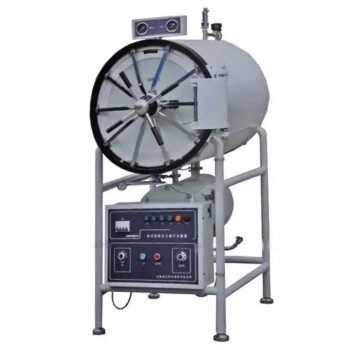
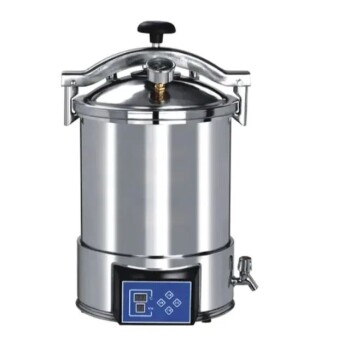
In the hydrothermal synthesis of Cadmium Sulfide (CdS), the high-pressure reactor (autoclave) acts as the critical environment for controlled crystal growth. It provides a sealed vessel that maintains high temperatures and generates autogenous pressure, significantly increasing the chemical activity of precursors. This localized environment facilitates oriented nucleation, allowing CdS to grow into vertically aligned nanorod arrays directly on a substrate.
The high-pressure reactor is essential for transforming precursor solutions into structured CdS nanorod arrays by providing the thermodynamic conditions necessary for oriented nucleation and uniform crystal growth. It ensures a regular, vertical morphology that is required for high-performance applications like light-absorbing layer infiltration.
Enhancing Chemical Reaction Activity
Overcoming Energy Barriers
The autoclave creates a sealed environment where temperatures can exceed the boiling point of the solvent. This increases the kinetic energy of the metal salts and sulfur sources (such as thiourea), facilitating chemical reactions that are impossible at ambient pressure.
Increasing Solvent Solubility and Diffusion
Under high pressure, solvents like deionized water or ethylene glycol exhibit enhanced solubility and diffusion rates. This allows for a more uniform distribution of cadmium and sulfur ions, ensuring consistent growth across the entire substrate surface.
Facilitating In-Situ Crystal Growth
The reactor ensures that the reaction between metal ions and sulfur sources occurs directly in the liquid phase under constant conditions. This promotes stable, in-situ growth and can even allow for the interstitial doping of elements into the lattice structure.
Directing Structural Morphology
Promoting Oriented Nucleation
The extreme conditions inside the reactor guide the crystal growth along specific crystallographic directions. For CdS, this results in the formation of nanorod structures rather than disorganized clusters or bulk films.
Achieving Vertical Alignment
By precisely controlling the temperature and pressure, the autoclave enables the growth of vertically aligned arrays. This specific geometry increases the active surface area and provides a structured framework for subsequent material layers to infiltrate.
Establishing the Morphological Foundation
The resulting regular morphology of the nanorods is critical for downstream applications. These arrays serve as an effective framework for light-absorbing layer infiltration, which is vital for the efficiency of optoelectronic devices.
Understanding the Trade-offs
Process Sensitivity
Small variations in temperature or reaction time can drastically alter the aspect ratio of the nanorods. Over-pressurization or excessive heating may lead to the collapse of the vertical structure or the formation of unwanted secondary nucleation sites.
Substrate Compatibility
The substrate must be chemically and thermally stable enough to withstand the corrosive hydrothermal environment inside the reactor. High pressures can also induce mechanical stress that may lead to the delamination of the CdS layer from certain fragile materials.
Equipment Limitations
While the autoclave provides a superior environment for growth, it is a batch process that can be difficult to scale. Monitoring the reaction in real-time is challenging because the environment is sealed and under high pressure, requiring precise initial calibrations.
How to Apply This to Your Project
Recommendations Based on Your Objectives
- If your primary focus is maximizing active surface area: Prioritize precise temperature control to ensure the growth of high-aspect-ratio nanorods with a porous, hierarchical structure.
- If your primary focus is subsequent layer infiltration: Optimize the reaction time to ensure the nanorods are vertically aligned and have sufficient spacing to allow for a secondary material to penetrate the array.
- If your primary focus is material purity and composition: Use the high-pressure environment to facilitate thorough contact between ions, ensuring uniform sulfur penetration and a consistent CdS lattice.
The high-pressure reactor is the indispensable tool for moving beyond simple thin films to the creation of sophisticated, vertically aligned CdS nanorod architectures.
Summary Table:
| Feature | Function in CdS Growth | Benefit for Nanorod Arrays |
|---|---|---|
| High Temperature | Overcomes energy barriers for precursors | Facilitates chemical reaction activity |
| Autogenous Pressure | Increases solvent solubility and diffusion | Ensures uniform ion distribution across substrate |
| Sealed Environment | Provides thermodynamic stability | Promotes oriented nucleation and in-situ growth |
| Growth Direction | Guides crystals along specific axes | Results in vertically aligned, high-surface-area arrays |
Elevate Your Material Synthesis with KINTEK
Are you looking to achieve superior precision in CdS nanorod growth or other hydrothermal processes? KINTEK specializes in high-performance laboratory equipment tailored for advanced research. Our expertise in high-temperature high-pressure reactors and autoclaves ensures you have the reliable environment needed for oriented nucleation and uniform crystal growth.
Beyond reactors, KINTEK offers a comprehensive range of laboratory solutions, including:
- Thermal Processing: Muffle, tube, vacuum, CVD, and PECVD furnaces.
- Material Preparation: Crushing, milling, sieving equipment, and hydraulic presses.
- Research Tools: Electrolytic cells, battery research consumables, and cooling solutions like ULT freezers.
- Lab Essentials: High-quality ceramics, crucibles, and PTFE products.
Don't let equipment limitations hinder your innovation. Partner with KINTEK for durable, high-precision tools designed to meet the rigorous demands of modern science.
Contact our experts today to find the perfect reactor for your project!
References
- Ru Zhou, Baomin Xu. Bulk Heterojunction Antimony Selenosulfide Thin‐Film Solar Cells with Efficient Charge Extraction and Suppressed Recombination. DOI: 10.1002/adfm.202308021
This article is also based on technical information from Kintek Solution Knowledge Base .
Related Products
- Stainless High Pressure Autoclave Reactor Laboratory Pressure Reactor
- Customizable High Pressure Reactors for Advanced Scientific and Industrial Applications
- Mini SS High Pressure Autoclave Reactor for Laboratory Use
- High Pressure Laboratory Autoclave Reactor for Hydrothermal Synthesis
- Customizable Laboratory High Temperature High Pressure Reactors for Diverse Scientific Applications
People Also Ask
- Why is a laboratory high-pressure reactor used in the hydrothermal synthesis of hydroxyapatite catalysts?
- What role does a laboratory high-pressure reactor play in the leaching process of spent cathode materials? Optimize Recovery
- Why is a laboratory high-pressure reactor necessary for synthesizing fly ash-based zeolite? Achieve Pure Crystallization
- What conditions do laboratory high-pressure reactors provide for HTC? Optimize Your Biochar Production Processes
- What is the function of a high-pressure reactor autoclave? Enhancing Cu/N Co-Doped Carbon Catalyst Synthesis