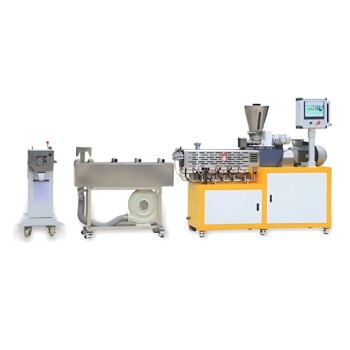
A laboratory mechanical stirrer acts as the critical homogenization engine in the preparation of sodium alginate/polyaspartic acid/rectorite (SA/PASP/RE) composite solutions. Its primary function is to provide the continuous power output and shear force necessary to dissolve high-viscosity sodium alginate (SA) while simultaneously achieving a uniform, micron-level dispersion of polyaspartic acid (PASP) and rectorite (RE) particles.
The mechanical stirrer is the foundational processing tool that overcomes high polymer viscosity and prevents particle agglomeration. By ensuring a thorough physical mixture, it creates the uniform network structure and even distribution of adsorption sites required for the composite's functionality.
Overcoming Viscosity Barriers
Generating Essential Shear Force
Sodium alginate (SA) is a high-viscosity polymer that resists simple mixing. The mechanical stirrer provides continuous power output to generate significant shear force.
Driving Convection for Dissolution
This mechanical action drives convection throughout the vessel. This ensures the SA powder interacts fully with deionized water, facilitating complete dissolution rather than just surface wetting.
Ensuring Homogeneous Dispersion
Micron-Level Particle Distribution
Beyond simple mixing, the device is responsible for the micron-level dispersion of functional additives. It integrates polyaspartic acid (PASP) and layered rectorite (RE) nanoclay evenly throughout the polymer matrix.
Preventing Agglomeration
Nanoclays like rectorite have a natural tendency to clump together. The mechanical agitation disrupts these attractive forces, preventing the agglomeration of clay particles that would otherwise compromise the material's properties.
Building the Material Structure
Establishing the Network Architecture
Thorough physical mixing is a prerequisite for building a uniform network structure. The stirrer ensures that the structural backbone of the composite is consistent throughout the solution.
Optimizing Adsorption Sites
The performance of SA/PASP/RE composites often depends on their adsorption capabilities. Mechanical stirring guarantees an even distribution of adsorption sites, ensuring the final material performs consistently across its entire surface area.
The Consequences of Inadequate Mixing
Incomplete Polymer Hydration
If the shear force is insufficient, the high-viscosity SA may result in a heterogeneous solution. This leads to weak points in the final composite structure where the polymer network has not fully formed.
Reduced Functional Efficiency
Without sufficient agitation to prevent agglomeration, the rectorite particles may cluster. This reduces the available surface area for reaction or adsorption, significantly degrading the composite's intended performance.
Making the Right Choice for Your Goal
To ensure the success of your SA/PASP/RE preparation, consider the specific requirements of your final application:
- If your primary focus is Structural Integrity: Prioritize stirring duration and power to ensure the high-viscosity Sodium Alginate is completely dissolved and the network is fully established.
- If your primary focus is Adsorption Performance: Focus on maintaining constant shear to prevent Rectorite agglomeration, maximizing the availability of distributed adsorption sites.
Effective mechanical stirring is not just a mixing step; it is the process that defines the structural and functional quality of the final composite.
Summary Table:
| Function | Mechanism | Impact on SA/PASP/RE Composite |
|---|---|---|
| Polymer Dissolution | High shear force & convection | Ensures complete hydration of high-viscosity Sodium Alginate (SA). |
| Particle Dispersion | Micron-level agitation | Distributes PASP and Rectorite (RE) evenly throughout the matrix. |
| Structural Integrity | Physical network formation | Establishes a uniform backbone for consistent material strength. |
| Performance Optimization | Anti-agglomeration | Maximizes available adsorption sites by preventing nanoclay clumping. |
Elevate Your Composite Material Research with KINTEK
Precision in material synthesis starts with reliable laboratory equipment. At KINTEK, we specialize in high-performance solutions designed to meet the rigorous demands of advanced chemical research. Whether you are developing SA/PASP/RE composites or other sophisticated materials, our range of laboratory mechanical stirrers, high-temperature furnaces, and crushing/milling systems ensures your samples achieve perfect homogeneity and structural integrity.
Why partner with KINTEK?
- Comprehensive Equipment Portfolio: From high-pressure reactors and autoclaves to hydraulic presses and cooling solutions.
- Reliability & Precision: Tools engineered for consistent power output and meticulous control.
- Full Lab Support: We provide essential consumables including PTFE products, ceramics, and crucibles to keep your research moving.
Don't let inadequate mixing compromise your results. Contact KINTEK today to find the perfect mechanical stirring solution for your lab!
References
- Jie Qi, Fang Guo. Biopolymer Meets Nanoclay: Rational Fabrication of Superb Adsorption Beads from Green Precursors for Efficient Capture of Pb(II) and Dyes. DOI: 10.3390/nano14090766
This article is also based on technical information from Kintek Solution Knowledge Base .
Related Products
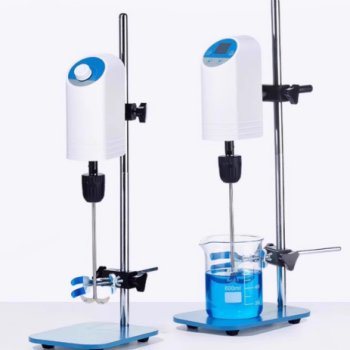
- High Performance Laboratory Stirrers for Diverse Applications
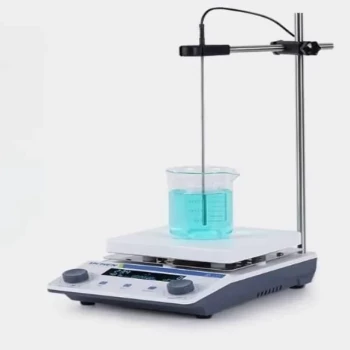
- Laboratory Small Constant Temperature Heated Magnetic Stirrer Heater and Stirrer
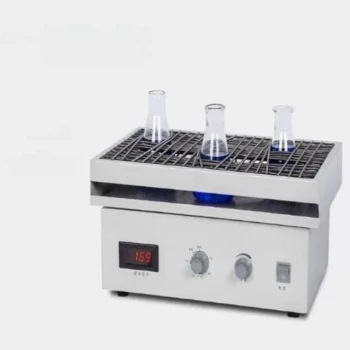
- Laboratory Multifunctional Small Speed-Adjustable Horizontal Mechanical Shaker for Lab
- Custom PTFE Teflon Parts Manufacturer for Magnetic Stirring Bar
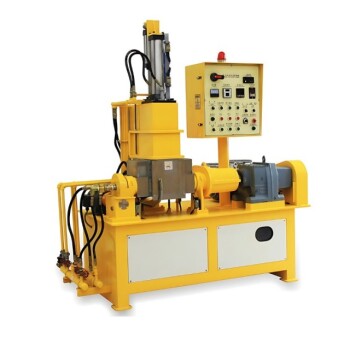
- Lab Internal Rubber Mixer Rubber Kneader Machine for Mixing and Kneading
People Also Ask
- How does a laboratory stirrer influence MOF product quality? Master Precision in Non-Solvothermal Synthesis
- What critical role does a Laboratory Stirrer play during leaching? Enhance Titanium-Magnesium Waste Recovery
- What is the primary function of laboratory stirring equipment in the preparation of compost leachate? Optimize Extraction
- What is a laboratory mixer? A Guide to Achieving Perfect Sample Homogeneity
- What is a laboratory mixer used for? Choose the Right Tool for Liquids or Solids