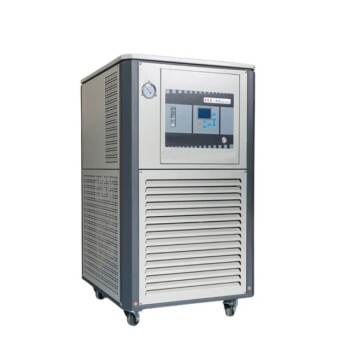
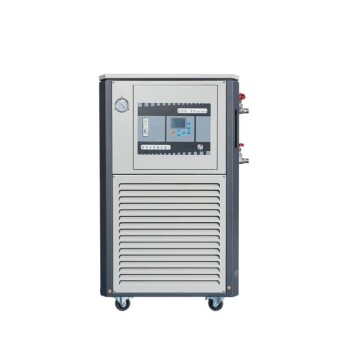
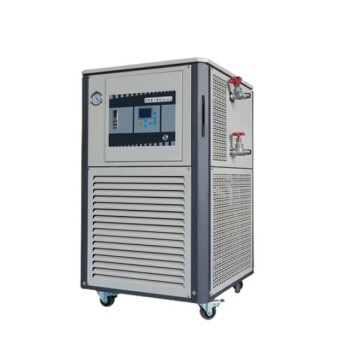
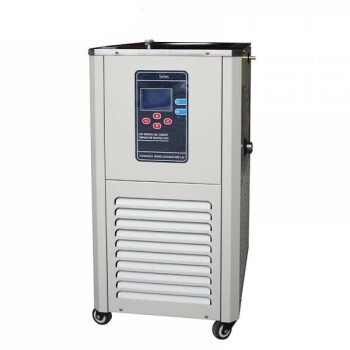
A Hydrothermal Reactor establishes a sealed, high-temperature, and high-pressure environment essential for the synthesis of mesoporous hydroxyapatite (HA) powders. Within this closed system, solvents are maintained above their normal boiling points, creating a unique thermodynamic state that facilitates critical chemical behaviors like ion exchange and adsorption in the precursor solution.
Core Takeaway: The Hydrothermal Reactor is not merely a heating vessel; it is a precision instrument that utilizes a closed, high-pressure aqueous environment to drive uniform precipitation. By manipulating temperature and pressure within this system, you gain direct control over the crystallinity, stoichiometric ratio, and mesoporous structure of the final material with exceptional repeatability.
The Critical Process Environment
High-Temperature and High-Pressure Conditions
The fundamental condition provided by the reactor is a sealed, high-pressure atmosphere capable of sustaining temperatures well above the boiling point of the solvent.
This extreme environment increases the reactivity and solubility of precursors, enabling chemical transformations that are impossible under standard ambient conditions.
Facilitating Ion Exchange
The hydrothermal environment actively promotes ion exchange and adsorption behaviors within the liquid-phase precursor solution.
This mechanism is vital for ensuring the components react uniformly, leading to the formation of hydroxyapatite with an ideal stoichiometric ratio.
Uniform Precipitation
The reactor provides a stable liquid-phase environment that supports uniform precipitation and crystallization at the molecular level.
This ensures that the resulting powder has high dispersibility, avoiding the inconsistent clumping often seen in open-system synthesis methods.
Controlling Material Properties
Regulating Phase and Crystallinity
By maintaining precise control over the internal temperature and reaction time, the reactor drives the formation of powders with high crystallinity.
This allows for the accurate regulation of the material's phase composition, ensuring the final product is pure hydroxyapatite rather than a mix of calcium phosphates.
Engineering the Mesoporous Structure
The specific combination of pressure and temperature allows you to tailor the mesoporous structure and specific surface area of the powder.
This structural control is critical when the hydroxyapatite is intended for use as a heterogeneous catalyst, where surface area directly correlates to performance.
Customizing Functionalization
The stable environment facilitates the effective incorporation of functional groups or dopants (such as molybdate anions) into the crystal lattice.
This capability allows for the creation of customized, high-performance biological coating powders or catalysts with specific chemical activities.
Understanding the Trade-offs
Sensitivity to Variables
While the reactor offers precision, the quality of the output is highly sensitive to reaction time and temperature.
Deviating even slightly from optimal parameters can significantly alter the pore size distribution or phase purity, requiring rigorous optimization for each new formulation.
Complexity of Scale-up
The requirement for a closed, high-pressure system ensures repeatability but can complicate the transition from lab-scale synthesis to mass production.
Maintaining uniform temperature and pressure gradients becomes more challenging as the reactor volume increases, potentially affecting the consistency of the mesoporous structure.
Making the Right Choice for Your Goal
If your primary focus is Catalytic Performance:
- Prioritize optimizing temperature and pressure to maximize specific surface area and develop a robust mesoporous structure.
If your primary focus is Biological Stability:
- Focus on reaction time and stoichiometry to ensure high crystallinity and an ideal calcium-to-phosphate ratio.
If your primary focus is Doping or Functionalization:
- Leverage the closed system's high solubility to ensure uniform embedding of ions into the lattice structure.
By mastering the thermodynamic levers of the Hydrothermal Reactor, you can transform basic precursors into highly specialized, crystalline hydroxyapatite tailored to your exact specifications.
Summary Table:
| Process Condition | Role in HA Synthesis | Key Material Impact |
|---|---|---|
| High Temperature | Increases precursor solubility & reactivity | Enhances crystallinity and phase purity |
| High Pressure | Maintains solvents above boiling point | Controls mesoporous structure & surface area |
| Sealed System | Facilitates ion exchange & adsorption | Ensures ideal Ca/P stoichiometric ratios |
| Liquid Phase | Provides stable crystallization environment | Promotes uniform precipitation & high dispersibility |
Elevate your material synthesis with KINTEK’s precision engineering. Whether you are developing heterogeneous catalysts or biocompatible coatings, our high-temperature high-pressure reactors and autoclaves provide the stable thermodynamic environment required for superior crystallinity and mesoporous control. From laboratory-scale research to pilot production, KINTEK specializes in high-performance laboratory equipment including muffle furnaces, crushing systems, and hydraulic presses. Contact us today to optimize your HA synthesis workflow!
References
- Iuliana Urzică, Petronela Gheorghe. Microfluidic properties of laser exposed metallic surface. DOI: 10.21175/rad.abstr.book.2023.5.6
This article is also based on technical information from Kintek Solution Knowledge Base .
Related Products
- High Pressure Laboratory Autoclave Reactor for Hydrothermal Synthesis
- Customizable Laboratory High Temperature High Pressure Reactors for Diverse Scientific Applications
- Custom PTFE Teflon Parts Manufacturer for Hydrothermal Synthesis Reactor Polytetrafluoroethylene Carbon Paper and Carbon Cloth Nano-growth
- Electric Rotary Kiln Small Rotary Furnace Biomass Pyrolysis Plant
- Customizable High Pressure Reactors for Advanced Scientific and Industrial Applications
People Also Ask
- What role does a high-pressure reactor (autoclave) play in the synthesis of NiCuFe-LDH? Master Hydrothermal Growth
- What Role Does a High-Pressure Reactor or Autoclave Play in HA Catalyst Synthesis? Achieve High Surface Area Materials
- What equipment is required for hydrothermal synthesis of Ga0.25Zn4.67S5.08? Optimize Your Semiconductor Production
- What is the function of a high-pressure reactor in the hydrothermal synthesis of boehmite? Expert Process Insights
- What role does an autoclave play in the synthesis of MnO2 nanofibers? Mastering Hydrothermal Growth