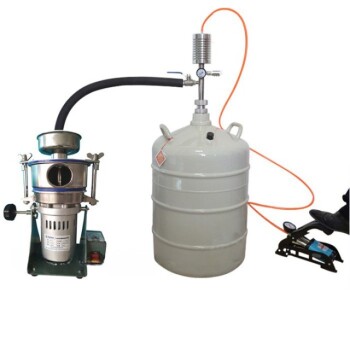
Industrial-grade crushing and milling systems serve as the critical bridge between bulky waste tires and efficient thermal conversion. These systems use mechanical force to transform heterogeneous tire waste into refined rubber powder, typically ranging from 1mm to 5mm in size. This size reduction is the fundamental prerequisite for maximizing heat transfer efficiency and ensuring the purity of the final pyrolysis outputs.
The primary role of these systems is to maximize the surface-area-to-volume ratio of the rubber while facilitating the mechanical removal of steel and fiber contaminants. This ensures a uniform, high-purity feedstock that reacts predictably and efficiently within the pyrolysis reactor.
Maximizing Thermal Efficiency Through Surface Area
Overcoming Rubber's Natural Insulation
Rubber is a poor thermal conductor, meaning heat travels slowly through large chunks of material. By milling tires into small particles, the system drastically increases the specific surface area, allowing heat to penetrate the core of the material almost instantaneously.
Ensuring Uniform Decomposition
Uniformity in particle size leads to consistent heat transfer throughout the reactor load. This prevents the "core" of the material from remaining unreacted while the exterior over-carbonizes, resulting in a more stable and high-quality bio-oil yield.
Accelerating Reaction Kinetics
Similar to how milling increases catalyst erosion in polymer recycling, smaller rubber particles allow for faster thermal degradation. This increased reactive contact area shortens the residence time required in the reactor, effectively increasing the hourly throughput of the plant.
Material Purification and Feedstock Quality
Extracting Steel and Fiber Contaminants
Waste tires are complex composites containing high-tensile steel wires and synthetic fibers. Industrial crushing breaks the mechanical bonds between these materials and the rubber, making it possible to use magnetic separators and air sifting to remove them.
Protecting Downstream Equipment
Removing steel and fiber during the pretreatment stage prevents mechanical wear and clogging in the pyrolysis reactor's feeding and discharge systems. This proactive maintenance step significantly extends the operational lifespan of the entire production line.
Improving End-Product Purity
High-precision milling and sorting ensure that the resulting carbon black and bio-oil are not contaminated by metallic residues or uncharred fiber. This purity is essential for the commercial viability of the recycled materials in secondary markets.
Understanding the Technical Trade-offs
Energy Consumption vs. Particle Size
While finer particles (under 1mm) offer the best heat transfer, the energy required to achieve this fineness increases exponentially. Most industrial operations target the 1mm to 5mm range as the "economic sweet spot" where heat efficiency and electricity costs are balanced.
Heat Management During Milling
The mechanical force required to crush reinforced tires generates significant friction heat. If not managed correctly, this heat can cause the rubber to soften or become "gummy," which can foul the milling equipment and reduce the efficiency of the pretreatment process.
Equipment Wear and Tear
Processing tires is inherently abrasive due to the presence of residual road grit and internal steel. Frequent maintenance of the cutting blades and milling surfaces is a necessary operational cost to ensure consistent particle size and prevent system downtime.
Optimizing Your Pretreatment Strategy
To achieve the best results in a waste tire pyrolysis operation, the pretreatment system must be calibrated to the specific goals of the facility.
- If your primary focus is maximizing oil yield: Prioritize a milling system that produces a consistent 1-3mm particle size to ensure the most rapid and complete thermal breakdown.
- If your primary focus is minimizing operational costs: Aim for a coarser 5mm grind, which reduces the electricity consumption of the milling stage while still providing sufficient surface area for standard reactors.
- If your primary focus is producing high-grade carbon black: Invest in advanced multi-stage sorting after milling to ensure the absolute removal of all steel and textile micro-fibers.
By viewing crushing and milling as a sophisticated refining step rather than simple waste reduction, operators can significantly enhance the profitability and stability of their pyrolysis projects.
Summary Table:
| Key Role | Impact on Pyrolysis | Optimal Particle Size |
|---|---|---|
| Thermal Efficiency | Increases surface area for rapid heat penetration and uniform decomposition. | 1mm - 3mm |
| Material Purification | Enables mechanical removal of steel and fiber contaminants via sorting. | N/A (Pre-treatment) |
| Reaction Kinetics | Accelerates thermal degradation, increasing hourly plant throughput. | 1mm - 5mm |
| Equipment Protection | Prevents mechanical wear and clogging in downstream reactor systems. | < 5mm |
| End-Product Quality | Ensures high-purity carbon black and bio-oil by removing metallic residues. | 1mm - 5mm |
Optimize Your Pyrolysis Yield with KINTEK Precision
High-quality feedstock is the foundation of a profitable waste-to-energy operation. KINTEK specializes in advanced crushing and milling systems designed to transform bulky waste into uniform, high-purity rubber powder, ensuring maximum thermal efficiency and equipment longevity.
Beyond pretreatment, our comprehensive portfolio includes:
- High-Temperature Reactors & Autoclaves for efficient thermal conversion.
- Crushing, Milling & Sieving Equipment for precise particle size control.
- Hydraulic Presses & Furnaces (Muffle, Vacuum, Tube) for material testing and production.
- Essential Consumables including ceramics, crucibles, and PTFE products.
Whether you are aiming to maximize bio-oil yield or produce high-grade carbon black, KINTEK provides the technical expertise and robust equipment you need to succeed.
Contact KINTEK experts today to refine your pretreatment strategy!
References
- Sangshin Park, Sung-Chan Nam. An Experimental Study on CO2 Characteristics of Waste Plastics Using a Lab-scale Tube Furnace. DOI: 10.11159/icesa23.145
This article is also based on technical information from Kintek Solution Knowledge Base .
Related Products
- Electric Rotary Kiln Pyrolysis Furnace Plant Machine Calciner Small Rotary Kiln Rotating Furnace
- Mini Planetary Ball Mill Machine for Laboratory Milling
- Small Cryogenic Grinder Cryomill Cryogrinder with Liquid Nitrogen for Laboratory Use
- High Energy Planetary Ball Mill Milling Machine for Laboratory
- High Energy Planetary Ball Mill Milling Machine for Laboratory
People Also Ask
- What is a rotary kiln electric furnace? Achieve Superior Uniform Heating for Your Materials
- What are the characteristics of the slipping, slumping, and rolling modes of bed motion? Optimize Your Rotary Process
- What are the advantages of rotary kiln furnace? Achieve Superior Uniformity & Efficiency
- What is the temperature of a rotating kiln? It Depends on Your Material and Process Goal
- What are the principles of a rotary kiln? Master the Mechanics of High-Temperature Processing