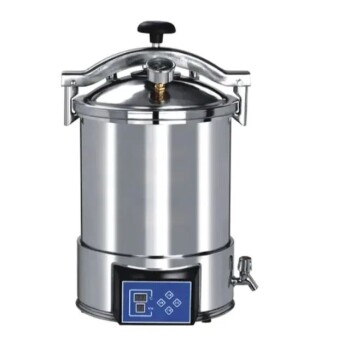
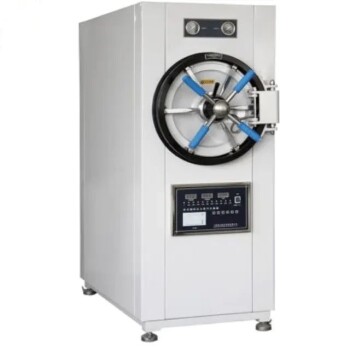
Laboratory high-pressure batch reactors, or autoclaves, serve as the essential containment and regulation systems required to cross and maintain the supercritical threshold of carbon dioxide. They provide a strictly controlled environment where pressure and temperature are elevated beyond the critical point—typically 7.38 MPa and 31.1°C—transforming $CO_2$ into a unique fluid phase. This equipment ensures that $CO_2$ retains the dual characteristics of liquid-like density and gas-like diffusivity throughout the duration of an experiment.
The primary role of a high-pressure reactor is to act as a stable, pressure-bearing boundary that precisely regulates the thermodynamic equilibrium required for the supercritical state. By integrating high-sealing chamber designs with precision regulation, these systems prevent phase reversion and ensure consistent fluid properties for chemical reactions or material evaluations.
Achieving and Sustaining the Supercritical Threshold
Precision Pressure Regulation
The reactor utilizes a precision pressure regulation system to increase and hold system pressure above the critical point of 7.38 MPa. In many advanced applications, such as power reactor simulations, these systems maintain much higher pressures, often reaching 20 MPa or more.
Continuous stability is often achieved through the use of a Back-Pressure Regulator (BPR). This component allows for the fine-tuning of internal pressure, ensuring that environmental parameters remain highly stable even during long-term exposure tests lasting hundreds or thousands of hours.
Thermal Management and Phase Stability
Supercritical $CO_2$ ($scCO_2$) requires the simultaneous maintenance of high temperatures alongside high pressures. High-pressure autoclaves are designed to provide a uniform thermal environment, sometimes exceeding 650°C, to ensure the $CO_2$ does not drop below its critical temperature.
This thermal stability is critical because the unique properties of $scCO_2$—such as its ability to effectively dissolve tars and promote carbon conversion—depend entirely on staying within the supercritical "envelope." Any significant fluctuation in temperature could cause the fluid to revert to a standard gas or liquid phase, compromising the experiment.
Ensuring System Integrity and Safety
High-Sealing Chamber Design
The core of the autoclave is its high-sealing integrity, which prevents the escape of high-pressure fluids. This is a prerequisite for gas saturation processes, where $CO_2$ must permeate into materials (such as polymers or composites) at a constant pressure.
Effective sealing ensures that the chemical potential of the $CO_2$ remains constant. This allows for accurate observations of oxidation kinetics, crack initiation, and the formation of protective layers, such as siderite or calcium carbonate, in corrosion studies.
Pressure-Bearing Structural Safety
A laboratory reactor provides a pressure-bearing structure that safely isolates extreme internal conditions from the external laboratory environment. This isolation is vital when simulating the high-temperature, high-pressure fluids found in Gen-IV nuclear reactors or carbon capture systems.
By providing a controlled platform for material evaluation, the reactor allows researchers to observe stress-enhanced corrosion and accelerated dissolution. These phenomena only occur under high-pressure fluid dynamics and cannot be replicated at atmospheric pressure.
Understanding the Trade-offs
Mechanical Stress and Seal Degradation
Operating at the extreme limits of pressure and temperature places immense mechanical stress on the reactor vessel and its seals. Over long-duration experiments, seals may undergo thermal degradation or "explosive decompression" during pressure relief, requiring frequent maintenance and specialized material selection for gaskets.
System Complexity vs. Measurement Accuracy
Integrating high-precision fluid control systems and sensors into a high-pressure environment increases system complexity. While these additions allow for more accurate data, they also introduce more potential failure points, such as sensor drift or clogging of the regulation valves by reaction byproducts like tars or coke.
How to Apply This to Your Project
When selecting or operating a laboratory high-pressure reactor for supercritical $CO_2$ work, your primary goal will dictate the necessary equipment specifications.
- If your primary focus is Biomass Pyrolysis: Prioritize a reactor with a robust internal stirring mechanism and a high tolerance for tar dissolution to maximize carbon conversion rates.
- If your primary focus is Material Corrosion Testing: Ensure the system includes a high-precision Back-Pressure Regulator (BPR) to maintain ultra-stable conditions over exposure periods exceeding 500 hours.
- If your primary focus is Supercritical Foaming: Focus on a reactor design that allows for rapid, controlled pressure relief to induce consistent micropore nucleation after the saturation phase.
By mastering the pressure-temperature equilibrium within the autoclave, you can harness the unique solvent and transport properties of supercritical fluids to achieve results unattainable in conventional laboratory settings.
Summary Table:
| Key Role | Primary Mechanism | Benefit to Experiment |
|---|---|---|
| Pressure Stability | Back-Pressure Regulator (BPR) | Maintains system pressure above critical 7.38 MPa for 500+ hours. |
| Thermal Control | Uniform Heating Chamber | Keeps CO2 above 31.1°C to prevent phase reversion to gas or liquid. |
| Fluid Integrity | High-Sealing Integrity | Ensures constant chemical potential for accurate gas saturation and corrosion kinetics. |
| System Safety | Pressure-Bearing Structure | Safely isolates extreme internal conditions (up to 20+ MPa) from the lab environment. |
Elevate Your Supercritical Research with KINTEK
Precision and safety are non-negotiable when working at the supercritical threshold. KINTEK specializes in advanced laboratory equipment, offering a premium range of high-temperature high-pressure reactors and autoclaves engineered to maintain the strict thermodynamic equilibrium required for $scCO_2$ experiments.
Whether you are optimizing biomass pyrolysis, conducting long-term material corrosion testing, or developing supercritical foaming processes, our systems provide the robust sealing and precise regulation your project demands. Beyond reactors, KINTEK offers a comprehensive portfolio including crushing systems, hydraulic presses, and specialized ceramics to support your entire workflow.
Ready to achieve superior fluid stability? Contact our engineering experts today to find the perfect high-pressure solution tailored to your research goals.
References
- Chenchen Zhou, Liejin Guo. Experimental study on supercritical carbon dioxide gasification of biomass. DOI: 10.1007/s43979-022-00043-3
This article is also based on technical information from Kintek Solution Knowledge Base .
Related Products
- High Pressure Laboratory Autoclave Reactor for Hydrothermal Synthesis
- Mini SS High Pressure Autoclave Reactor for Laboratory Use
- Stainless High Pressure Autoclave Reactor Laboratory Pressure Reactor
- Customizable High Pressure Reactors for Advanced Scientific and Industrial Applications
- Desktop Fast High Pressure Laboratory Autoclave Sterilizer 16L 24L for Lab Use
People Also Ask
- What role does a high-pressure reactor (autoclave) play in the synthesis of NiCuFe-LDH? Master Hydrothermal Growth
- What Role Does a High-Pressure Reactor or Autoclave Play in HA Catalyst Synthesis? Achieve High Surface Area Materials
- What equipment is required for hydrothermal synthesis of Ga0.25Zn4.67S5.08? Optimize Your Semiconductor Production
- What is the function of a high-pressure reactor in the hydrothermal synthesis of boehmite? Expert Process Insights
- What role does an autoclave play in the synthesis of MnO2 nanofibers? Mastering Hydrothermal Growth