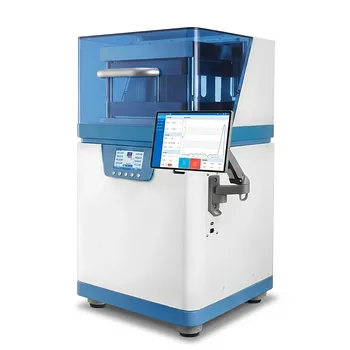
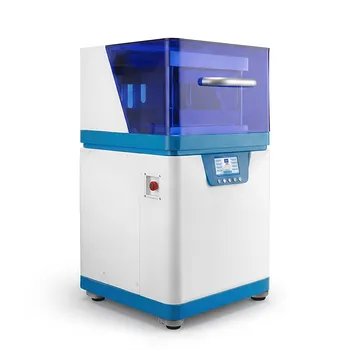
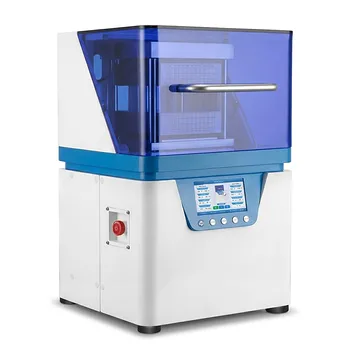
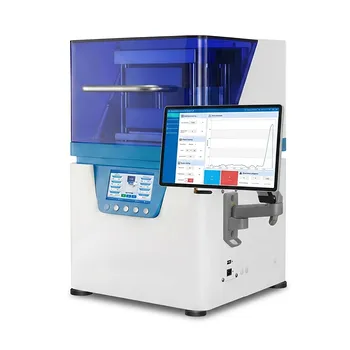
The hydrothermal reactor serves as a high-energy pressure vessel that enables the precise molecular coupling and structural transformation of metal oxide precursors. By maintaining temperatures often exceeding 180°C and pressures far above atmospheric levels, the reactor creates a unique thermodynamic environment where TiO2 and Fe2O3 can be chemically anchored to one another or a substrate. This process facilitates the in-situ conversion of ions into highly crystalline nanocomposites with specific morphologies—such as nanotubes or nanoneedles—that provide the high surface area necessary for advanced photocatalytic and redox reactions.
The high-pressure hydrothermal reactor is the critical engine for "bottom-up" synthesis, providing the necessary energy to drive chemical anchoring and phase transformations that are physically impossible under standard laboratory conditions.
Facilitating Molecular Coupling and In-Situ Conversion
Achieving Tight Molecular Bonds
A high-pressure reactor facilitates the chemical anchoring of metal ions onto functional groups, such as those found in chitosan or other stabilizing agents. In this closed system, precursors are captured and converted in situ, resulting in a tight molecular bond between the TiO2 and Fe2O3 components. This level of interfacial contact is essential for efficient electron transfer in the final nanocomposite.
Driving In-Situ Oxidation
The reactor provides the thermodynamic conditions required for in-situ oxidation of surfaces, allowing TiO2 to grow directly between layers of other materials. This "pillar effect" broadens interlaminar channels and prevents the restacking of nanosheets. This direct growth ensures the Fe2O3 and TiO2 phases are integrated at the atomic level rather than simply being a physical mixture.
Engineering Crystal Phase and Morphology
Controlling Crystallization and Phase Purity
High-pressure reactors (autoclaves) allow for the selective induction of crystallization, moving materials from an amorphous phase to specific crystalline structures like anatase TiO2. By precisely managing the internal temperature and pressure, researchers can ensure the production of nanoparticles with specific sizes and high crystallinity. This precision is vital for the stability and performance of Fe2O3-based composites.
Transforming Microscopic Morphology
The extreme environment inside the reactor facilitates the reorganization of crystal structures, such as transforming granular anatase into high-aspect-ratio nanotubes or nanobelts. These structural changes can increase the specific surface area to over 100 m²/g. Such a significant increase in surface area provides more active sites for chemical reactions and improves the overall efficiency of the composite.
Encouraging Anisotropic Growth
Under specific hydrothermal conditions, precursors are driven to grow anisotropically along specific crystal directions. This results in the formation of specialized structures, such as nanoneedles, on the surface of microspheres. These structures are difficult to achieve under standard atmospheric pressure but are easily facilitated by the controlled energy of a hydrothermal system.
Understanding the Trade-offs
Equipment and Safety Constraints
Operating at 180°C and high pressure requires specialized high-pressure autoclaves and rigorous safety protocols. The sealed nature of the reactor means that real-time monitoring of the reaction's progress is difficult, often requiring a "black box" approach to synthesis.
Sensitivity to Process Variables
Small fluctuations in temperature or pressure can lead to inconsistent morphologies, significantly affecting the performance of the TiO2/Fe2O3 composite. Achieving a specific nanostructure—such as a nanoneedle versus a nanobelt—requires highly repeatable control systems that may be expensive to implement at scale.
Making the Right Choice for Your Goal
How to Apply This to Your Synthesis Project
The effectiveness of your hydrothermal process depends entirely on your target application for the nanocomposite.
- If your primary focus is Photocatalytic Activity: Prioritize high-pressure settings that favor the formation of nanotube structures, as these provide the highest specific surface area and active sites.
- If your primary focus is Structural Stability: Focus on the chemical anchoring of precursors at temperatures near 180°C to ensure tight molecular bonding between the TiO2 and Fe2O3 phases.
- If your primary focus is Phase Purity: Use the reactor to selectively induce crystallization, ensuring the temperature remains consistent to avoid the formation of unwanted secondary crystalline phases.
By leveraging the unique thermodynamic environment of a hydrothermal reactor, you can engineer TiO2/Fe2O3 nanocomposites with the precise molecular and structural characteristics required for high-performance applications.
Summary Table:
| Synthesis Role | Process Mechanism | Key Outcome |
|---|---|---|
| Molecular Coupling | Chemical anchoring of ions via functional groups | Tight molecular bonds & efficient electron transfer |
| In-Situ Oxidation | Direct growth between material layers | Atomic-level integration; prevents restacking |
| Crystallization | Selective induction of phase purity (e.g., Anatase) | High crystallinity and structural stability |
| Morphology Control | Reorganization into nanotubes/nanoneedles | Specific surface area > 100 m²/g |
| Anisotropic Growth | Driven growth along specific crystal directions | Specialized structures for photocatalytic activity |
Elevate Your Nanomaterial Synthesis with KINTEK
Achieving the perfect TiO2/Fe2O3 nanocomposite requires more than just chemistry—it requires uncompromising precision and safety. KINTEK specializes in advanced laboratory equipment, offering industry-leading high-temperature high-pressure reactors and autoclaves designed to handle the rigorous thermodynamic demands of hydrothermal synthesis.
Whether you are engineering nanotubes for photocatalysis or seeking atomic-level phase purity, our portfolio supports your entire workflow. From crushing and milling systems for precursor preparation to high-temperature furnaces and hydraulic presses, we provide the tools to ensure repeatable, high-performance results.
Ready to scale your research? Contact our experts today to find the ideal reactor solution for your laboratory’s unique requirements.
References
- Amavin Mendis, Saravanamuthu Vigneswaran. Fabrication of Naturally Derived Chitosan and Ilmenite Sand-Based TiO2/Fe2O3/Fe-N-Doped Graphitic Carbon Composite for Photocatalytic Degradation of Methylene Blue under Sunlight. DOI: 10.3390/molecules28073154
This article is also based on technical information from Kintek Solution Knowledge Base .
Related Products
- Customizable Laboratory High Temperature High Pressure Reactors for Diverse Scientific Applications
- High Pressure Laboratory Autoclave Reactor for Hydrothermal Synthesis
- Customizable High Pressure Reactors for Advanced Scientific and Industrial Applications
- Stainless High Pressure Autoclave Reactor Laboratory Pressure Reactor
- Mini SS High Pressure Autoclave Reactor for Laboratory Use
People Also Ask
- How do high-pressure and high-temperature reactors ensure the effective treatment of lignocellulosic wastewater in WAO?
- What equipment is required for high-pressure high-temperature reactions? Master Extreme Chemistry Safely
- How do you control high pressure in a reactor? A Guide to Safe & Stable Operation
- How does initial oxygen pressure affect the wet oxidation of pharmaceutical sludge? Master Your Oxidation Depth
- Why is argon better than nitrogen for inert atmosphere? Ensure Absolute Reactivity & Stability