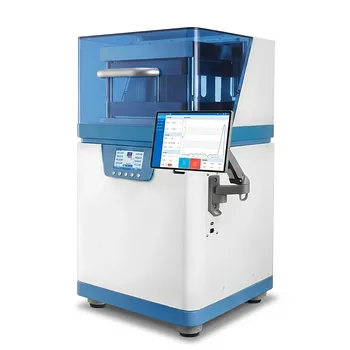
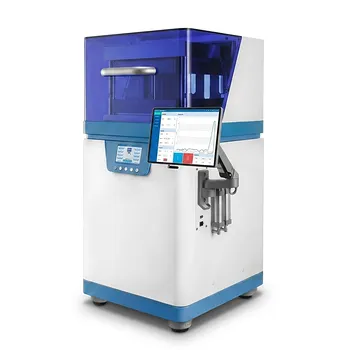
The role of a high-temperature high-pressure reactor in the solvothermal synthesis of copper oxide (CuO) nanopowders is to provide a sealed, superheated environment that accelerates chemical kinetics and facilitates crystal growth.
By maintaining solvents in a liquid state well above their standard boiling points, these reactors create the necessary thermodynamic conditions to dissolve precursors and transform them into solid crystal grains. This process allows for precise control over the final powder’s particle size, morphology, and crystalline purity.
A high-pressure reactor acts as a controlled chemical incubator that uses autogenous pressure to force reaction kinetics that are impossible at atmospheric pressure. This environment is the primary driver for achieving high crystallinity and specific nanostructures in copper oxide synthesis.
Driving Reaction Kinetics and Solubility
Maintaining Liquid States at Extreme Temperatures
In solvothermal synthesis, the reactor ensures the solvent remains in a liquid state even when heated beyond its boiling point. This creates a high-energy environment that significantly accelerates reaction kinetics, allowing for faster conversion of precursors into copper oxide.
Enhancing Precursor Dissolution
High-pressure conditions increase the solubility of precursors and organic ligands within the solvent. This thorough dissolution is critical for forming intermediate species, such as [Cu(OH)4]2- ions, which then undergo dehydration to form CuO crystal grains.
Generating Autogenous Pressure
As the sealed chamber is heated, it generates autogenous pressure, which facilitates the hydrothermal oxidation of copper components. This pressure acts as a catalyst for nucleation, ensuring that the chemical transformation occurs uniformly throughout the solution.
Precision Control of Nanostructure
Managing Nucleation and Crystallization
The reactor provides a stable environment for crystal nucleation and growth over extended periods. By controlling the temperature and pressure profile, researchers can ensure the synthesis of nanopowders with high crystallinity and regular pore structures.
Achieving Specific Morphologies
The extreme conditions within the reactor guide crystal growth along specific crystallographic directions. This is essential for producing diverse shapes, such as nanorods with high aspect ratios or uniform honeycomb-shaped layers, which define the material's final properties.
Ensuring Structural Uniformity
Because the reactor is a closed system, it maintains a constant pressure environment that prevents the evaporation of volatile components. This stability is the foundation for producing nanocomposites with uniform structures and preventing unwanted side reactions.
Understanding the Trade-offs
Equipment Integrity and Safety
Operating at high temperatures and pressures requires specialized, corrosion-resistant vessels (such as Teflon-lined autoclaves). Failure to monitor pressure limits can lead to equipment fatigue or catastrophic failure, making rigorous safety protocols mandatory.
Scalability vs. Precision
While these reactors offer unparalleled control at the laboratory scale, scaling the process for industrial production is challenging. Maintaining uniform temperature and pressure gradients across large volumes requires complex engineering and high energy consumption.
Kinetic Complexity
The accelerated kinetics can sometimes lead to overgrowth or agglomeration if the reaction time is not precisely calibrated. If the temperature is too high, the rapid nucleation may result in a wide particle size distribution rather than the desired monodisperse nanopowder.
How to Apply This to Your Project
When utilizing a high-pressure reactor for CuO synthesis, your approach should vary based on the desired characteristics of your nanopowder.
- If your primary focus is high crystallinity: Maintain a steady, elevated temperature (e.g., 120°C–160°C) for an extended duration to allow for complete dehydration and crystal perfection.
- If your primary focus is morphology control: Use specific organic ligands and adjust the reactor's fill level to manipulate the autogenous pressure, which guides growth into shapes like nanorods or nanoboxes.
- If your primary focus is small particle size: Shorten the reaction time and utilize lower temperatures to trigger rapid nucleation while limiting the subsequent growth phase.
By mastering the thermodynamic environment of the reactor, you can precisely engineer copper oxide nanopowders to meet specific technical requirements.
Summary Table:
| Feature | Role in CuO Synthesis | Impact on Final Product |
|---|---|---|
| Superheated Solvents | Maintains liquid state above boiling point | Accelerates chemical kinetics and conversion |
| Enhanced Solubility | Dissolves precursors and organic ligands | Ensures high-purity intermediate formation |
| Autogenous Pressure | Acts as a catalyst for hydrothermal oxidation | Facilitates uniform nucleation and crystal growth |
| Closed System | Prevents evaporation of volatile components | Ensures structural uniformity and specific morphologies |
Elevate Your Nanomaterial Research with KINTEK
Precision is the foundation of successful solvothermal synthesis. KINTEK specializes in high-performance laboratory equipment, offering a premium range of high-temperature high-pressure reactors and autoclaves designed to meet the rigorous demands of nanoparticle engineering.
Whether you are synthesizing CuO nanorods, honeycomb structures, or high-purity powders, our corrosion-resistant, Teflon-lined vessels provide the stable thermodynamic environment necessary for superior crystallinity and morphology control. Beyond reactors, KINTEK supports your entire workflow with:
- Advanced Furnaces: Muffle, tube, and vacuum systems for post-synthesis annealing.
- Processing Tools: Precision crushing, milling, and hydraulic presses for pellet preparation.
- Lab Essentials: High-quality ceramics, crucibles, and cooling solutions.
Ready to optimize your synthesis results? Contact our technical experts today to find the perfect reactor configuration for your laboratory and accelerate your path to discovery.
References
- Wenzhe Niu, Bo Zhang. Pb-rich Cu grain boundary sites for selective CO-to-n-propanol electroconversion. DOI: 10.1038/s41467-023-40689-w
This article is also based on technical information from Kintek Solution Knowledge Base .
Related Products
- Customizable Laboratory High Temperature High Pressure Reactors for Diverse Scientific Applications
- High Pressure Laboratory Autoclave Reactor for Hydrothermal Synthesis
- Stainless High Pressure Autoclave Reactor Laboratory Pressure Reactor
- Customizable High Pressure Reactors for Advanced Scientific and Industrial Applications
- Mini SS High Pressure Autoclave Reactor for Laboratory Use
People Also Ask
- How do high-pressure and high-temperature reactors ensure the effective treatment of lignocellulosic wastewater in WAO?
- What equipment is required for high-pressure high-temperature reactions? Master Extreme Chemistry Safely
- How do you control high pressure in a reactor? A Guide to Safe & Stable Operation
- Why is argon better than nitrogen for inert atmosphere? Ensure Absolute Reactivity & Stability
- How does initial oxygen pressure affect the wet oxidation of pharmaceutical sludge? Master Your Oxidation Depth