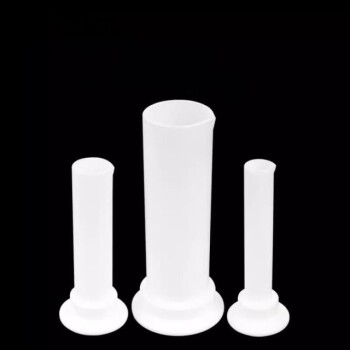
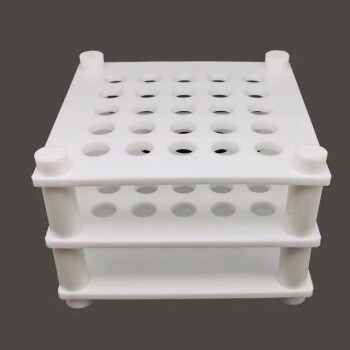
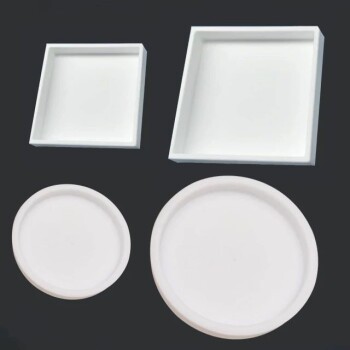
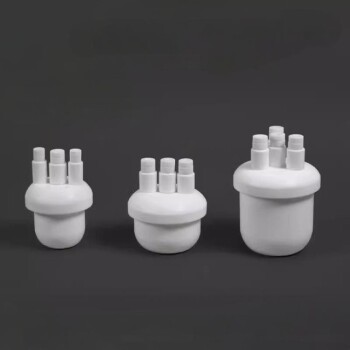
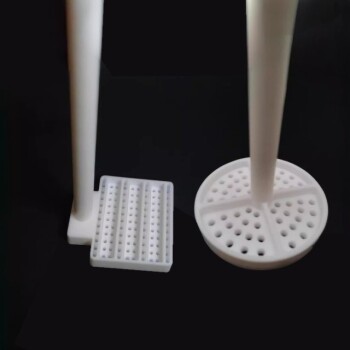
The high-pressure Teflon-lined reactor acts as a specialized pressure vessel that enables the hydrothermal synthesis of boehmite nanofibers. It creates a sealed, chemically inert environment capable of sustaining temperatures around 170 °C and the resulting autogenous pressures. This environment is essential for the precursor to undergo controlled crystal growth, transforming into nanofibers with high aspect ratios and high structural integrity.
The core role of the reactor is to maintain subcritical conditions that facilitate the dissolution and recrystallization of precursors. By combining thermal energy with internal pressure and chemical isolation, the reactor dictates the final morphology and purity of the boehmite nanofibers.
The Role of the Sealed High-Pressure Environment
Achieving Subcritical Temperatures
Hydrothermal synthesis requires the aqueous medium to reach temperatures significantly above its atmospheric boiling point. The sealed reactor allows the solution to reach 170 °C or higher without evaporating.
This thermal energy is necessary for the reactants to overcome energy barriers. High temperatures accelerate the reaction kinetics required for boehmite to transition from a colloidal state into a crystalline structure.
Harnessing Autogenous Pressure
As the liquid is heated within the fixed volume of the reactor, it generates autogenous pressure. This internal pressure is a critical driver for the deep physicochemical transformation of the precursor material.
Pressure promotes the dissolution and recrystallization of components within the liquid phase. In the synthesis of boehmite, this pressure ensures that the crystal growth is uniform and structurally sound.
Chemical Inertness and Purity Control
The Significance of the PTFE Lining
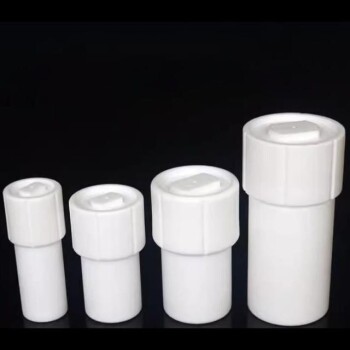
The inner liner is made of Polytetrafluoroethylene (PTFE), commonly known as Teflon. This material is chosen for its exceptional chemical stability and resistance to corrosion.
During the synthesis of boehmite, the environment can become aggressive. The Teflon liner ensures that the reaction solution does not react with the reactor walls, which could compromise the experiment.
Preventing Metallic Contamination
Standard metallic reactors can leach impurities into the solution when exposed to high heat and pressure. The PTFE liner acts as a protective barrier between the reaction and the external stainless steel shell.
By eliminating the risk of introducing metallic impurities, the reactor ensures the high-purity growth of the nanofibers. This is essential for maintaining the specific mechanical and chemical properties of the boehmite.
Influencing Morphology and Structural Integrity
Driving Morphological Evolution
The reactor provides the specific environment needed for morphological evolution. Under pressurized conditions, boehmite crystals do not just grow; they evolve into specific shapes.
The constant temperature and pressure allow for oriented growth on specific crystal planes. This process is what transforms bulk material into a defined nanofiber structure.
Ensuring High Aspect Ratios
The goal of using this equipment is often to achieve a high aspect ratio (the ratio of length to width). The controlled environment prevents random aggregation of particles.
Instead, the reactor's conditions favor the linear growth of nanofibers. This results in a final product with superior structural integrity and a high specific surface area.
Understanding the Trade-offs
Temperature and Pressure Limitations
While Teflon is highly inert, it has a physical limit, typically around 250 °C. Exceeding these temperatures can cause the liner to soften or deform, potentially leading to seal failure.
Furthermore, the external stainless steel shell is responsible for structural safety. If the autogenous pressure exceeds the shell's design limits, it poses a significant mechanical risk to the laboratory environment.
Scalability and Monitoring Challenges
High-pressure reactors are generally used for batch processing, which can limit high-volume production. Because the environment is sealed and pressurized, in-situ monitoring of the reaction's progress is difficult without specialized, expensive sensors.
How to Apply This to Your Project
Making the Right Choice for Your Goal
- If your primary focus is high purity: Ensure your Teflon liner is thoroughly cleaned and free of scratches to prevent any precursor entrapment or cross-contamination.
- If your primary focus is morphological control: Maintain a precise, constant temperature (e.g., 170 °C) for the duration of the reaction to ensure uniform autogenous pressure and consistent nanofiber aspect ratios.
- If your primary focus is safety and longevity: Never exceed 80% of the reactor's total volume with your liquid precursor to allow sufficient headspace for pressure expansion.
The high-pressure Teflon-lined reactor is the fundamental tool that provides the thermal and mechanical energy necessary to "sculpt" boehmite at the nanoscale.
Summary Table:
| Feature | Role in Synthesis | Key Benefit |
|---|---|---|
| Subcritical Heat (170°C+) | Overcomes energy barriers for phase transition | Crystalline structure formation |
| Autogenous Pressure | Facilitates dissolution and recrystallization | High aspect ratio nanofibers |
| PTFE (Teflon) Liner | Provides a chemically inert environment | Prevents metallic contamination |
| Sealed Pressure Vessel | Sustains constant reaction environment | Uniform morphology and purity |
Precision Engineering for Your Nanomaterial Research
Achieve uncompromising purity and structural integrity in your hydrothermal synthesis with KINTEK’s high-pressure reactors and autoclaves. Our specialized PTFE-lined systems are designed to withstand rigorous subcritical conditions, ensuring your boehmite nanofibers meet exact morphological standards.
Beyond reactors, KINTEK offers a comprehensive suite of laboratory solutions, including:
- High-Temperature Furnaces: Muffle, tube, and vacuum furnaces for advanced thermal processing.
- Sample Preparation: Hydraulic presses, crushing systems, and precision sieving equipment.
- Lab Essentials: High-purity ceramics, crucibles, and cooling solutions like ULT freezers.
Ready to elevate your lab's performance? Contact our technical experts today to find the ideal equipment tailored to your research goals.
References
- Rebecca L. Houston, Sarina Sarina. Application of Alumina Nanofibers as Adsorbents for the Removal of Mercury (II) and Lead (II) from Aqueous Solutions. DOI: 10.3390/min13050654
This article is also based on technical information from Kintek Solution Knowledge Base .
Related Products
- Customizable High Pressure Reactors for Advanced Scientific and Industrial Applications
- Customizable Laboratory High Temperature High Pressure Reactors for Diverse Scientific Applications
- High Pressure Laboratory Autoclave Reactor for Hydrothermal Synthesis
- Custom PTFE Teflon Parts Manufacturer for Hydrothermal Synthesis Reactor Polytetrafluoroethylene Carbon Paper and Carbon Cloth Nano-growth
- Stainless High Pressure Autoclave Reactor Laboratory Pressure Reactor
People Also Ask
- What is the function of high-pressure reactors in the synthesis of MFI-type zeolites? Master Dry Gel Conversion.
- Graphene Fiber Synthesis: Key High-Pressure Reactor Processing Conditions Explained
- What is the primary function of a high-pressure reactor in NiMoO4 preparation? Optimize Hydrothermal Catalyst Synthesis
- What reactor is used for high pressure reactions? Select the Right Autoclave for Your Lab
- What are the hazards of high pressure reactors? A Guide to Managing Explosive Risks